

iSupplyEnergy is the one supplier on this list that can be shown, from the public record, not to have failed in any sense at all. EDF took on its 190,000 household customers in 2020, and the company was then wound up as solvent, with its directors swearing a formal declaration that it could pay every debt in full.
It appears on our record because people search for it and deserve a straight answer. Some directories describe the transfer as a supplier of last resort appointment. It was not. There was no Ofgem process, no administration and no insolvency, and the paperwork proving it is all filed at Companies House.
What happened to iSupplyEnergy?
iSupplyEnergy was a household supplier run from Bournemouth. The company behind it, I Supply Energy Limited, was incorporated in January 2007 as Energy Coop Limited and took the iSupply name in May 2013. It sold electricity first and added gas in 2015.
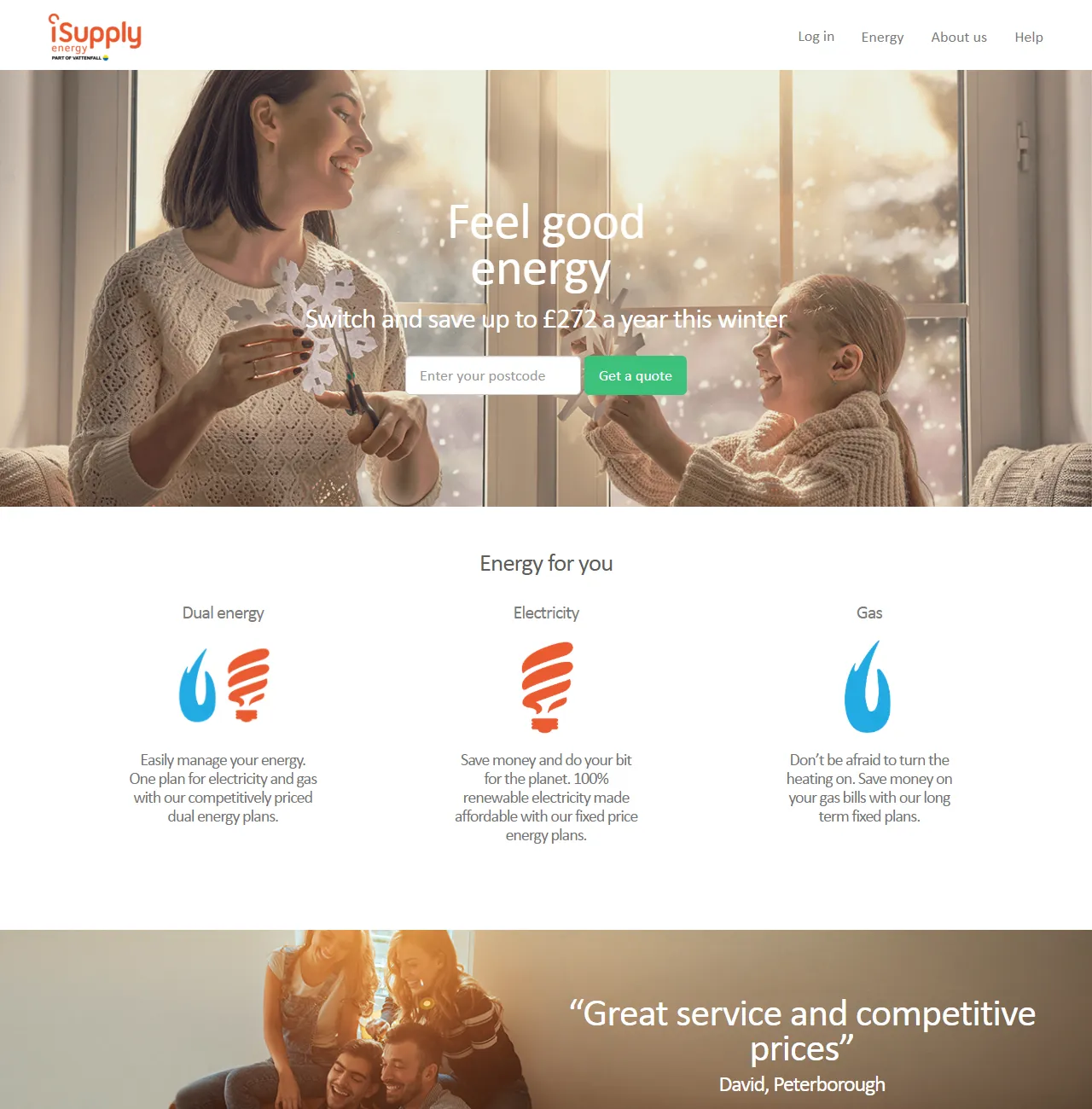
In June 2017 it was bought by Vattenfall, the Swedish state-owned utility, which was entering UK household supply for the first time. The brand kept its own name and logo, with "part of Vattenfall" added underneath.
Three years later Vattenfall changed its mind. On 12 March 2020 it announced that EDF would take on iSupplyEnergy's roughly 190,000 customer accounts, with the transfer running from April to June 2020. EDF was explicit about what it was buying: the customer contracts, not the company. iSupplyEnergy stopped taking on new customers and wound down.
It was wound up solvent
This is worth spelling out, because it is the difference between this page and almost every other page on this site.
When a supplier fails, it goes into administration or has its licence revoked, Ofgem appoints a supplier of last resort, and customers find out on the day. None of that happened here. What happened instead, on the public record at Companies House, was a members' voluntary liquidation:
- 5 January 2021, the members passed a special resolution to wind the company up
- 12 January 2021, a voluntary liquidator was appointed
- 3 February 2021, a declaration of solvency was filed
- 27 February 2025, the return of final meeting was filed
- 27 May 2025, the company was dissolved
A members' voluntary liquidation is only available to a solvent company, and the declaration of solvency is a statutory statement by the directors, sworn on penalty, that the company can pay its debts in full within twelve months. A company that cannot do that goes down a different road entirely, with creditors in charge instead of members.
So iSupplyEnergy did not run out of money. Its owner decided to stop, sold the customers to somebody who wanted them, paid what it owed, and took four years to close the company properly.
What its customers got
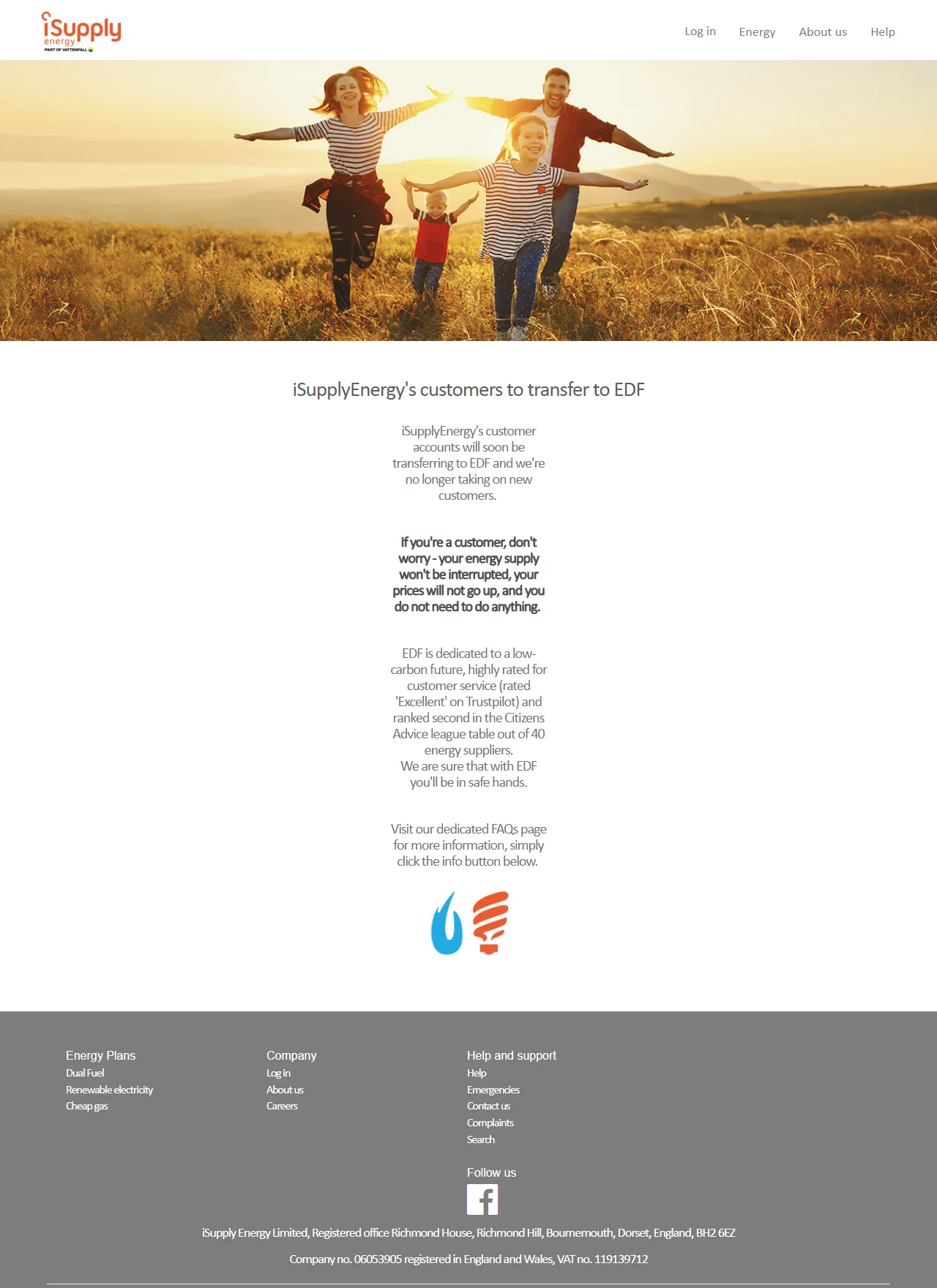
Nothing to do, and nothing lost. iSupplyEnergy put the position on its own homepage in plain words: "your energy supply won't be interrupted, your prices will not go up, and you do not need to do anything."
Customers kept the same terms, existing direct debits transferred to EDF automatically for the same amounts on the same dates, and accounts moved in batches between April and June 2020 rather than all at once. Vattenfall's own statement promised customers "will pay no more for energy supplied by EDF".
Compare that with what happens when a supplier collapses. Customers are moved to a supplier of last resort they did not choose, usually onto a deemed rate rather than the tariff they were on, and business credit balances are not protected at all. Being sold is not the same as being rescued, and the gap between the two is mostly price.
Why Vattenfall left
Vattenfall did not leave Britain. It left British households.
Its stated reason for selling was to concentrate on what it called its core UK businesses: renewable power generation, heating, business to business sales and distribution. Household supply was the piece that did not fit, and it had only been in it for three years.
That is the same judgement Drax reached about small business supply when it wound down Opus Energy, and the same one Shell reached about households when it sold its retail arm to Octopus. Large energy groups keep arriving in retail supply and leaving again, and the customers move each time without ever being asked.
Key dates
| Date | What happened |
|---|---|
| 16 January 2007 | Incorporated as Energy Coop Limited |
| 20 May 2013 | Renamed I Supply Energy Limited |
| 2015 | Adds gas, having supplied only electricity until then |
| 1 July 2017 | Vattenfall UK Sales Limited takes control from Gilmond Holdings Limited |
| 12 March 2020 | Vattenfall announces the sale of the customer book to EDF |
| April to June 2020 | Around 190,000 accounts transfer to EDF in batches |
| 5 January 2021 | Members pass a special resolution to wind the company up |
| 3 February 2021 | Declaration of solvency filed |
| 27 May 2025 | The company is dissolved following a solvent liquidation |
What it means for a business
iSupplyEnergy sold to households, so no business was on its books. Two things here are still worth a business reader's time.
The first is that Vattenfall kept its business to business energy arm when it sold the household one. A group leaving one market is not leaving the other, and the name over your commercial contract can carry on while the same group's domestic brand disappears entirely.
The second is the checking method above. If you want to know whether the supplier holding your contract is in trouble, the filings tell you far more than the marketing does. Business customers have no protection equivalent to the domestic safety net, so knowing which way a supplier is heading is worth more to you than it is to a household:
| What you get when the supplier goes | Household | Business |
|---|---|---|
| Supply continues either way | Yes | Yes |
| Credit balance protected if it fails | Yes, under Ofgem’s safety net | No |
| A cap on the rate you are moved to | Yes | No |
| Terms preserved if the book is sold | Usually, as part of the deal | Usually, as part of the deal |
| Exit fees to leave afterwards | None | None |
Where to start
- What a unit of business electricity costs today, plus the standing charge
- Gas for commercial premises, priced separately from power
- The suppliers currently quoting for businesses
If you were moved and never agreed new terms, see what a deemed rate is and how to leave it. For the failures this site mostly documents, start at the full record of suppliers that have gone.
iSupplyEnergy FAQs
Did iSupplyEnergy go bust?
Was iSupplyEnergy a supplier of last resort case?
Who took over iSupplyEnergy customers?
Did iSupplyEnergy customers lose money or pay more?
Who owned iSupplyEnergy?
Why did Vattenfall sell?
How can I check whether a supplier really failed?
Sources
- Vattenfall, Vattenfall sells energy retail business in the UK to EDF, 12 March 2020
- EDF, EDF acquires iSupplyEnergy's customer contracts, 12 March 2020
- Companies House, I Supply Energy Limited, company number 06053905, filing history, for the liquidation and declaration of solvency
- Companies House, persons with significant control, for the change of ownership on 1 July 2017
- Vattenfall, Vattenfall enters UK energy retail with acquisition of iSupplyEnergy, 2017