

Angelic Energy closed in September 2020, when the company that actually held its supply licence was sold. Islington Council launched it in 2017 as a not-for-profit brand for Londoners, but the energy behind it came from Robin Hood Energy, Nottingham City Council's supplier. When Nottingham sold that business to British Gas, Angelic Energy had nothing left to sell.
It is the first of ten council white-label brands on this site that ended the same way, on the same day, for the same reason. The mechanic is the point, and it matters to anyone buying energy under a brand that is not the licence holder. If you want to know who would actually supply your business, you can see the suppliers quoting for non-domestic contracts.
What happened to Angelic Energy?
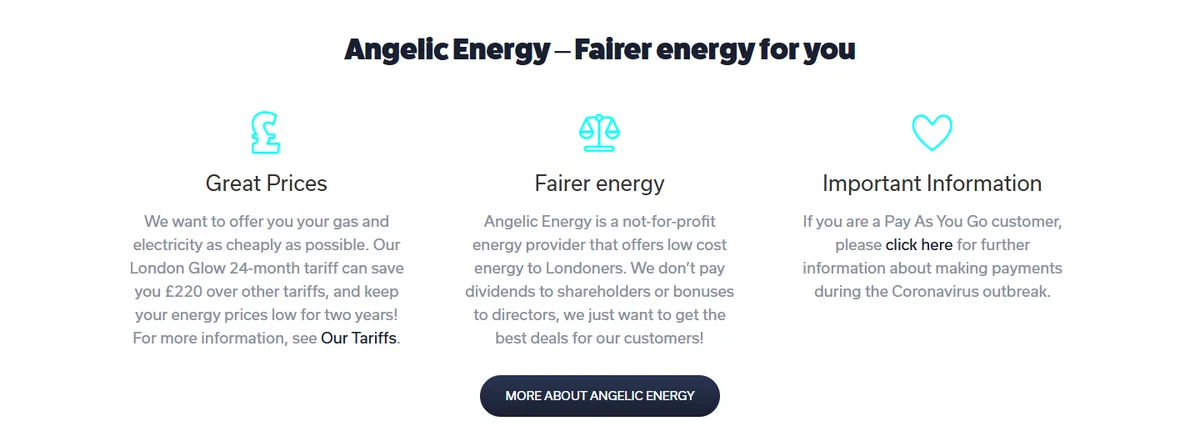
Islington Council launched Angelic Energy in 2017 to sell cheaper energy to Londoners and to do something about fuel poverty. It was open to anyone in London, not just Islington residents, and it was explicit about how it differed from the big suppliers: "Angelic Energy is a not-for-profit energy provider that offers low cost energy to Londoners. We don't pay dividends to shareholders or bonuses to directors, we just want to get the best deals for our customers."
The product was a household one. The site sold "energy for your home", led on a "London Glow" 24-month fixed tariff it said could save £220 against other tariffs, and had no business offer anywhere on it.
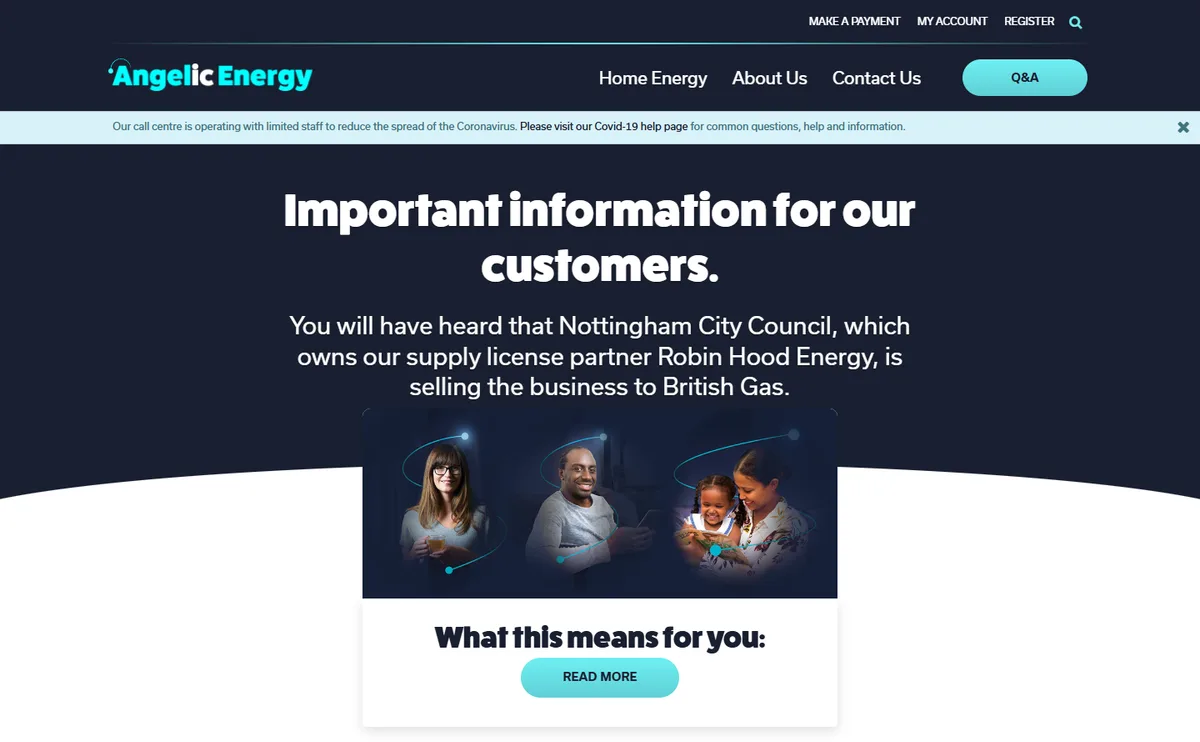
What it did not have was a supply licence. The gas and electricity were supplied under the licence of Robin Hood Energy, Nottingham City Council's supplier. On 4 September 2020 Nottingham announced it was selling that business to British Gas, and Angelic Energy ended with it. It sits on our record of every UK supplier and brand that has closed since 2016.
What a white label actually is
A white label is a brand on somebody else's supply. The brand owner does the marketing and owns the customer relationship. A licensed supplier does the actual supplying, holds the Ofgem licence, buys the energy and carries the risk.
Angelic Energy described the arrangement in its own closing notice, and the phrase is the clearest summary of it anywhere: Robin Hood Energy was "our supply license partner".
Four parties were involved and only one of them was regulated as a supplier:
| Who | What they actually did |
|---|---|
| Islington Council | Owned the Angelic Energy brand and sold the tariffs |
| Robin Hood Energy | Held the gas and electricity supply licences and supplied the energy |
| Nottingham City Council | Owned Robin Hood Energy, and decided to sell it |
| Ofgem | Regulated the licence holder, not the brand |
That is why the decision that ended Angelic Energy was taken in Nottingham. Islington owned the name and the customers, but it did not own the thing the customers were actually buying.
Angelic was one of ten such brands running on Robin Hood Energy's licence, alongside White Rose Energy in Leeds, The Leccy in Liverpool, RAM Energy in Derby and six others. All ten ended at once.
Why it ended
Angelic Energy did not fail. The company supplying it was sold, and a brand with no licence cannot carry on alone.
Islington Council's statement on 5 September 2020, the day after the sale was announced, made its position clear and was not especially diplomatic about it: "We are disappointed that Nottingham City Council were not in a position to continue financially supporting Robin Hood Energy, which has led to its business being purchased by British Gas." It added that the council was "carefully reviewing our options and are in discussions with Nottingham City Council and Robin Hood Energy", and that customers' "energy supplies will be unaffected by the sale".
The dispute that followed
The relationship did not end amicably. Islington's environment committee met on 29 September 2020 and its minute records that "Robin Hood Energy had breached the terms of their contract with the Council and this was being pursued".
That is one council's account of a dispute with another, recorded in its own minutes, and we have not seen Nottingham's answer to it. We quote it and leave it there.
The same meeting shows what Islington did next: it agreed to point customers at SHINE, the local advice service, to help them switch, and invited a representative of London Power, the Mayor of London's white-label supplier, to its next meeting.
What its customers got
Angelic Energy had around 3,000 customers and all of them were households. None of them had to do anything.
Because Robin Hood Energy's customer book was sold as a going concern rather than collapsing, no supplier of last resort process was involved. British Gas bought the accounts and offered customers rates equal to or better than the tariffs they were already on, with no exit fees for anyone who preferred to go elsewhere. Supply was never at risk.
What did go was the proposition. Customers had chosen a not-for-profit council brand with a London focus, and ended up with the largest energy supplier in the country. Nobody lost money on it, but nobody who signed up for the reasons Angelic advertised got to keep them.
Key dates
| Date | What happened |
|---|---|
| 2017 | Islington Council launches Angelic Energy as a white label on Robin Hood Energy’s licence |
| 4 September 2020 | Nottingham City Council announces the sale of Robin Hood Energy to British Gas |
| 5 September 2020 | Islington Council says it is "disappointed" and reviewing its options |
| 18 September 2020 | The Angelic Energy site carries a notice to customers about the sale |
| 29 September 2020 | Islington’s committee records that Robin Hood Energy "had breached the terms of their contract with the Council" |
What it means for a business
Angelic Energy never sold to businesses. It was a domestic brand from start to finish, so no business customer was caught up in this directly.
The reason it belongs on a business energy site is the structure, because white labels are not a council invention and they did not disappear in 2020. Brokers, retailers, trade bodies and affinity schemes all sell non-domestic energy under their own names on somebody else's licence. If you buy that way, the question worth asking before you sign is the same one Angelic's customers found out the answer to late:
- Which licensed supplier will actually hold the contract
- What happens to your contract if that supplier changes hands or fails
- Who you contact when something goes wrong, the brand or the supplier
And if the licence holder does fail rather than being sold, the ordinary position applies, and it is the same one that runs through every page on this site:
| When your supplier fails | Household | Business |
|---|---|---|
| Supply continues | Yes | Yes |
| Ofgem protects your credit balance | Yes, under the safety net | No |
| A cap limits the rate you move onto | Yes | No |
| You are charged to leave that rate | No | No |
Where to start
- What electricity costs a business per kWh, unit rate and standing charge
- Business gas prices as quoted today, bought in a separate market
- The licensed suppliers behind business contracts, so you know who you are dealing with
Our guide explains the rate that takes over when an agreement runs out.
For the company whose licence this ran on, see Robin Hood Energy and the ten brands it carried, and for the other council supplier, Bristol Energy, sold in two halves.
Angelic Energy FAQs
What happened to Angelic Energy?
Who took over Angelic Energy customers?
Was Angelic Energy a real energy supplier?
Did Angelic Energy customers lose money?
Did Angelic Energy supply businesses?
Why did Islington Council fall out with Robin Hood Energy?
How many other councils ran brands like this?
Sources
- Islington Council, Statement: Angelic Energy, 5 September 2020
- Islington Council, Angelic Energy: update to committee, 29 September 2020
- Islington Council, Angelic Energy
- Internet Archive, angelicenergy.co.uk as captured on 14 August 2020 and on 18 September 2020