

Some of the people who lost their supplier when Brilliant Energy failed had never heard of Brilliant Energy. Their bills said Northumbria Energy, a brand Brilliant supplied under a white label arrangement.
What happened next is the part worth knowing. Brilliant went under and its customers were handed to SSE. Northumbria Energy did not go under. It carried on trading, behind a different company, and then another, and then another.
What happened to Brilliant Energy?
Brilliant Energy Supply Limited ceased trading on 11 March 2019 with around 17,000 domestic customers. Ofgem announced on 14 March that it had appointed SSE Electricity Limited and Southern Electric Gas Limited as the new supplier, and revoked Brilliant's gas and electricity licences. SSE took the customers on from Friday 15 March.
The outcome for customers was a good one. SSE agreed to honour credit balances for current and past customers alike, and it did so explicitly including everyone who had signed up under the Northumbria Energy brand. Customers landed on a deemed tariff and were free to leave without exit fees. As always, the balance you eventually received was net of energy you had used but never been billed for, which the administrators had to calculate first.
The brand that outlived its supplier
Northumbria Energy was not a company that failed in March 2019. It was a name.
Until 15 March 2019, anyone who signed up with Northumbria Energy was supplied by Brilliant Energy Supply Limited, which held the licence, bought the energy and held the money. Ofgem's guidance for Brilliant's customers spells it out: SSE would honour balances owed to Brilliant's customers "including those that had signed up to be supplied under a 'white label' arrangement with Northumbria Energy".
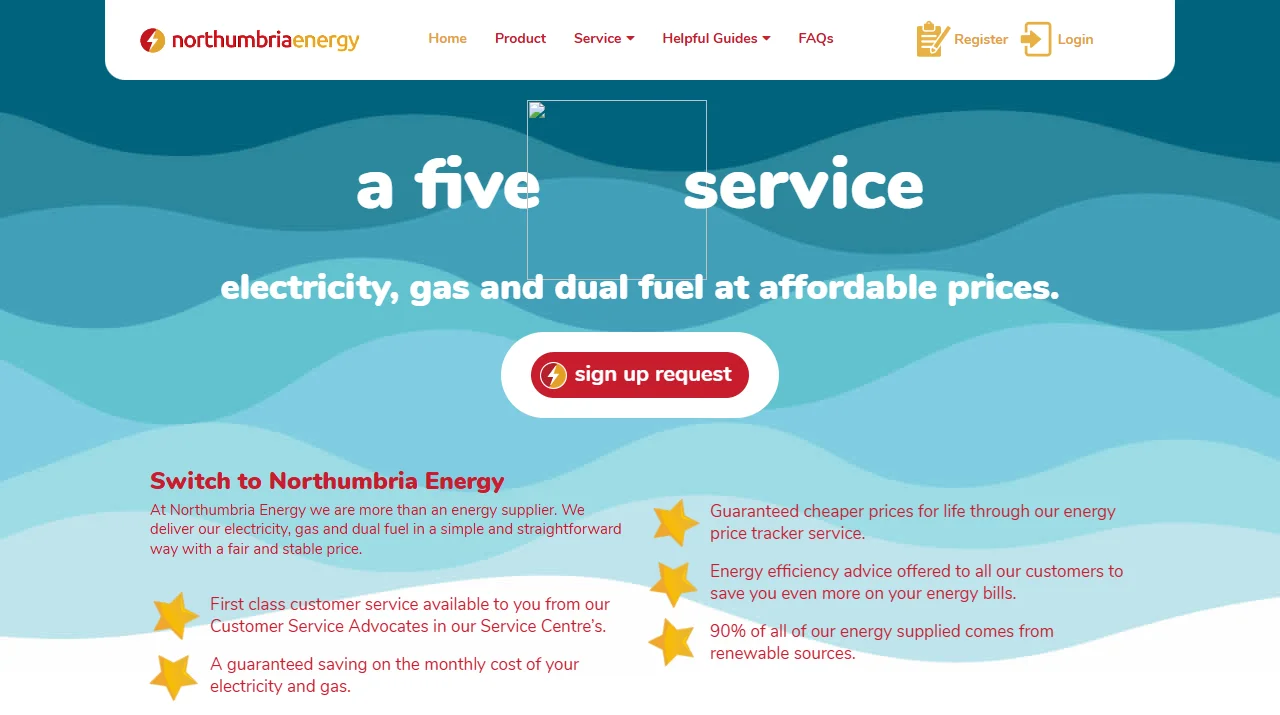
A month after Brilliant collapsed, northumbriaenergy.co.uk was still live and still signing people up. The branding was identical. The small print at the bottom of the page was not.
| Date | The company trading as Northumbria Energy |
|---|---|
| Until 15 March 2019 | Brilliant Energy Supply Limited (white label arrangement) |
| April 2019 | Euston Energy Ltd |
| December 2019 | Euston Energy Ltd |
| May 2021 | Northumbria Energy Retail Ltd |
| April 2022 | Neo Energy Gas & Shipping Limited |
Those are taken from the footer of the company's own website on each of those dates, as preserved by the Internet Archive. We make no claim about how the brand moved between them, whether it was sold, licensed or simply re-registered, or whether any of these companies shared owners. We only know who was trading under the name, and that it changed at least three times while the logo stayed the same.
What a white label actually is
A white label is a brand that sells energy without holding a supply licence. Someone else does the supplying.
The licensed supplier buys the energy, takes the regulatory obligations, holds your credit balance and is the company that can fail. The brand handles the marketing and often the customer contact. For the customer the arrangement is usually invisible, because the bills, the website and the phone line all carry the name you signed up with.
This matters in exactly one situation, which is this one.
- Your protection follows the licence, not the brand. Ofgem's safety net applies because the licensed supplier failed. If you were a Northumbria customer, your credit balance was protected because Brilliant held the licence and Brilliant went under.
- You can be moved by a failure you never heard about. Northumbria Energy's 2019 customers were transferred to SSE because of a company whose name was not on their bill.
- The brand surviving does not mean your account survives. Northumbria Energy kept trading throughout. That did nothing for the people who had been supplied by Brilliant under its name.
- You cannot tell from the front of the website. The only reliable place to look is the small print: the licensed entity is usually named in the footer or the terms, in the form "X Limited trading as Y".
White labelling is not a trick and it is entirely legitimate. It was how a long list of council backed suppliers reached customers, including Robin Hood Energy, which supplied several of them. The point is simply that if you want to know how exposed you are, the brand is the wrong thing to look at.
How Ofgem chooses a rescuer
Every entry on this record says Ofgem appointed somebody. Brilliant is the case where Ofgem published a full account of how it decided, so it is worth setting out properly. Nine suppliers submitted bids to take on Brilliant's customers.
These are the things Ofgem weighed, in its own words.
Who volunteered
Ofgem's guidance gives preference to suppliers who volunteer for the role rather than having to be directed into it. Of the bids received, a minority, including SSE, volunteered.
Who would honour the money
After continuity of supply, Ofgem said, "protecting consumers' money (of existing and past customers), was one of the most important factors in our decision". It asked separately about current customers and about former customers who had already switched away but were still owed a refund, and a majority of bidders, including SSE, agreed to both.
Who would charge it to the levy
This is the part that gets no attention and matters a great deal. A rescuer can claim its unavoidable costs back through an industry levy, which is paid by the gas transporters and electricity networks and reaches the public through the charges on every bill. Ofgem is explicit that it would rather they did not: its preference is "for the SoLR to not make any claim under the levy (or to minimise the amount of such claim) ... we want to reduce the costs smeared across the rest of the market".
Most of the bidders who were willing to honour credit balances intended to charge that cost to the levy. SSE offered to make what Ofgem called "a material contribution towards covering credit balances, thereby reducing costs to all consumers". It paid for part of it itself.
What customers would be charged afterwards
The deemed tariff a rescued customer lands on must not reflect "more than the reasonable costs of supply ... together with a reasonable profit". Ofgem worked out a typical annual bill for each bid and preferred cheaper ones, with one important condition: that the price was not cheap only because the supplier planned to recover its costs from the levy instead.
Whether they could actually cope
Ofgem assessed each bidder's ability to onboard a large number of accounts at no notice and to answer the questions that follow, and its ability to buy the extra energy without putting its existing customers at risk, looking at working capital, guarantees, access to wholesale markets and how much of its demand it had already hedged.
SSE won on a combination of volunteering, honouring balances for current and former customers, absorbing part of that cost rather than levying it, an acceptable deemed tariff and a strong onboarding plan.
Key dates
| Date | What happened |
|---|---|
| 11 March 2019 | Brilliant Energy Supply Limited ceases trading with around 17,000 domestic customers |
| 14 March 2019 | Ofgem appoints SSE after assessing nine bids, and revokes Brilliant’s gas and electricity licences |
| 15 March 2019 | SSE takes on the customers, including everyone supplied under the Northumbria Energy brand, and agrees to honour current and former credit balances |
| April 2019 | Northumbria Energy is still trading and signing up customers, now as a brand of Euston Energy Ltd |
| 2 May 2019 | Ofgem publishes its reasons for appointing SSE |
| May 2021 | Northumbria Energy is trading as a brand of Northumbria Energy Retail Ltd |
| April 2022 | Northumbria Energy is trading as a brand of Neo Energy Gas & Shipping Limited |
What it means for a business
Brilliant's book was domestic, and there is no sign it supplied businesses. The lesson transfers anyway, and it is sharper in the business market than the domestic one.
Business energy is sold under a great many names that are not licensed suppliers. Some are white labels in the Northumbria sense. Many more are brokers and third party intermediaries, which is a different arrangement again: a broker arranges your contract with a licensed supplier and is paid a commission, usually built into your unit rate. In both cases the company you deal with is not the company supplying you.
Three practical consequences.
- Know which licensed supplier you are actually contracted to. It is on your bill and in your contract, and it is the only name that matters if anything goes wrong. Ask directly if it is not obvious.
- Your position in a failure depends on that company, not on the brand. And for a business it is weaker to begin with, because the credit balance guarantee that protected Brilliant’s households has never applied to non-domestic accounts.
- A deemed contract is where you land. Rescued customers go onto a deemed tariff. For a household that is capped. For a business it is not, and it is normally the most expensive rate the supplier offers.
| If the licensed supplier behind your brand fails | Household | Business |
|---|---|---|
| Supply continues | Yes | Yes |
| Credit balance guaranteed | Yes | No |
| Moved to a deemed contract | Yes, price capped | Yes, not capped |
| Free to leave without exit fees | Yes | Yes |
Where to start
- What a business pays per kWh for electricity
- Business gas prices and standing charges
- The suppliers quoting for business contracts
If you were moved by a failure and never agreed anything, read how deemed rates are set. For what a rescue costs once it is paid for, see the published bill for GOTO Energy.
Brilliant Energy FAQs
What happened to Brilliant Energy?
What happened to Northumbria Energy customers?
Did Northumbria Energy go out of business?
What is a white label energy supplier?
Were credit balances protected?
How does Ofgem decide which supplier takes over?
Did Brilliant Energy supply businesses?
Sources
- Ofgem, Appointment of SSE as Supplier of Last Resort, decision letter, 2 May 2019
- Ofgem, Brilliant Energy customers: your questions on new supplier SSE
- Ofgem, Ofgem protects customers of failed supplier Brilliant Energy, March 2019
- northumbriaenergy.co.uk, captures of April 2019, December 2019, May 2021 and April 2022, Internet Archive