

GB Energy Supply stopped trading on 26 November 2016, taking about 160,000 customers with it. Ofgem ran a competitive process, appointed Co-operative Energy, and customers moved four days later on the same price they had been paying.
It is the oldest failure on our list and the only one from 2016, which makes it the benchmark. Its customers were treated markedly better than anyone who lost a supplier in 2021, and comparing the two tells you what the protections are really worth. If you are pricing a supply now, you can see the suppliers quoting for business energy today.
What happened to GB Energy Supply?
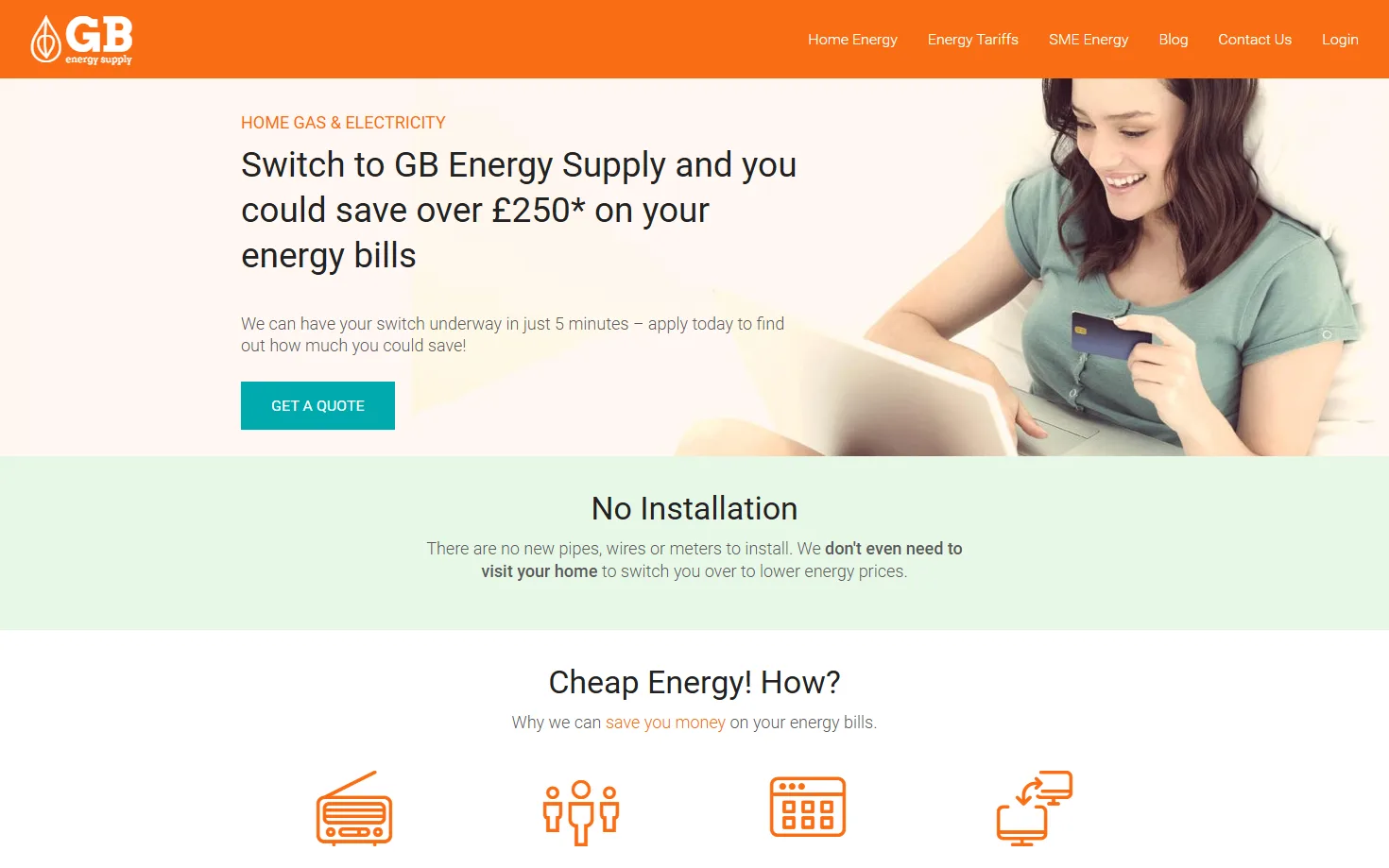
GB Energy Supply Ltd was a Preston-based challenger that sold on price, promising savings of over £250 a year and a switch that took five minutes. By late 2016 it had around 160,000 customers.
On 26 November 2016 it stopped trading. Ofgem announced the same day that it would run a process to find a replacement, and it appointed Co-operative Energy after what it described as a competitive process to get the best deal for those customers. They were switched on Wednesday 30 November, four days after the announcement.
It is the earliest entry on our record of every supplier that has left the UK market since 2016, and the only one that year.
Why did it stop trading?
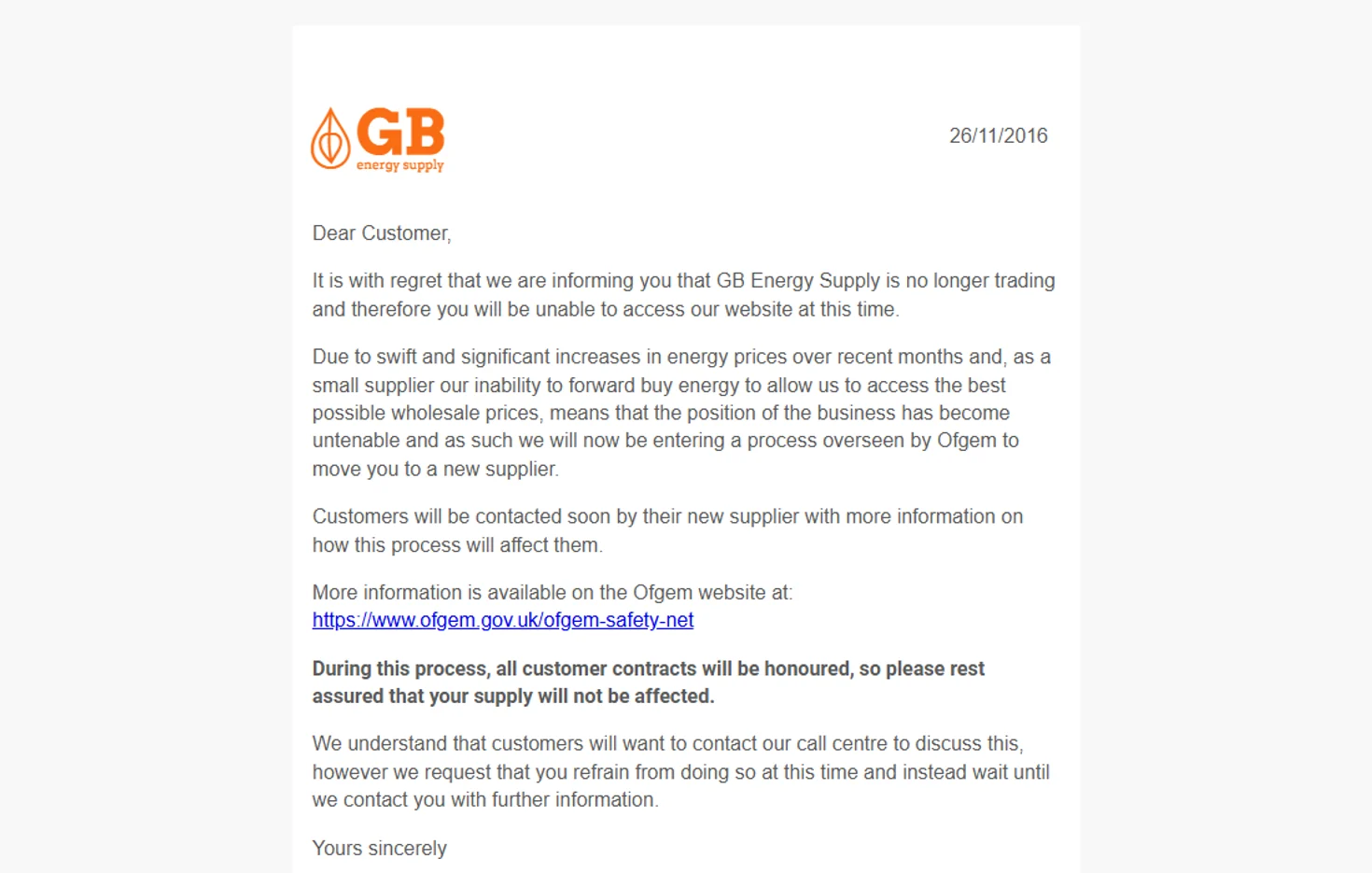
Unusually, the company said so itself, and the statement was archived the day it went up. The website was replaced with a letter to customers dated 26/11/2016 and signed by the managing director, Luke Watson.
The reason it gave was "swift and significant increases in energy prices over recent months and, as a small supplier our inability to forward buy energy to allow us to access the best possible wholesale prices", which had left the position of the business "untenable".
That is the mechanism behind most small supplier failures, described from the inside. Forward buying, or hedging, is how a supplier fixes the cost of the energy it has already promised customers at a fixed price. A supplier that cannot do it is exposed to every move in the wholesale market while its own prices stay put.
What its customers got
Nobody lost supply, and on this occasion nobody lost money or moved onto a worse rate either.
The same price they were already on
Ofgem's guidance at the time was explicit: "Co-operative Energy will be offering the same price as you were paying before with GB Energy Supply, whether you were on a fixed or standard variable tariff." That is not what normally happens. In the 2021 failures customers were moved onto deemed contracts, which are usually dearer than the deal they replaced.
Credit balances honoured in full
Current customers had any credit on their account offset against future energy use. Past customers, who were no longer with GB Energy Supply but were still owed money, had refunds processed. No exit fees were charged to anyone who then wanted to move elsewhere.
How 2016 compares with 2021
Setting the two side by side shows what changed as failures went from occasional to routine.
| GB Energy Supply, 2016 | The 2021 failures | |
|---|---|---|
| Suppliers failing | One that year | 28 that year |
| Rate customers moved onto | The same price they were paying | A deemed contract, usually dearer |
| Time to transfer | Four days | Days to a few weeks |
| Domestic credit balances | Honoured, including former customers | Protected by the safety net |
| Business credit balances | Not addressed publicly | Not protected; part honoured at best |
The 2016 terms reflect a market where one failure could be absorbed by a competitor that wanted the customers. By 2021 the wholesale market had moved so far that no incoming supplier could offer to match the old prices, and the safety net became the floor rather than the starting point.
Key dates
| Date | What happened |
|---|---|
| 26 November 2016 | GB Energy Supply stops trading; Ofgem announces it will appoint a replacement |
| 26 November 2016 | The company posts a letter to customers in place of its website |
| Late November 2016 | Ofgem runs a competitive process and selects Co-operative Energy |
| 30 November 2016 | Customers are switched to Co-operative Energy on their existing prices |
What it means for a business
GB Energy Supply carried an SME section alongside its home offer, so it sold to small businesses as well as households. Everything Ofgem published about the failure addresses domestic customers, and no non-domestic customer figure was released, so what a business customer received is not on the public record.
That gap is itself the point. Domestic outcomes are documented because they are regulated; business outcomes are not.
| If your supplier stops trading | Household | Business |
|---|---|---|
| Your supply continues | Yes | Yes |
| Ofgem protects a credit balance | Yes, under the safety net | No |
| A cap limits the rate you land on | Yes | No |
| You are charged to leave that rate | No | No |
Where to start
- Current electricity prices for business premises per kWh, with the daily standing charge alongside
- Where business gas rates sit today, which follow a separate market
- The suppliers taking on business supply now, if you want to see the field first
Our guide covers how a deemed contract works when you are moved to a new supplier.
For what the same process looked like once failures became routine, see Ampower, which missed a £3.59m deadline, Neon Reef, Zebra Power, and Better Energy, which left of its own accord.