

Fosse Energy closed in September 2020, when Robin Hood Energy, the supplier whose licence it ran on, was sold to British Gas. Leicester City Council and Leicestershire County Council had set it up together in 2018 as a not-for-profit brand aimed at fuel poverty.
Two things make it worth its own page. It is the only one of the ten council brands built by two authorities of different types working together. And it is the one that raises the question nobody else answers: if you still had an unresolved complaint when the brand disappeared, who were you supposed to complain about? If you want to know which licensed supplier would hold your own contract, you can see who is quoting for business sites.
What happened to Fosse Energy?
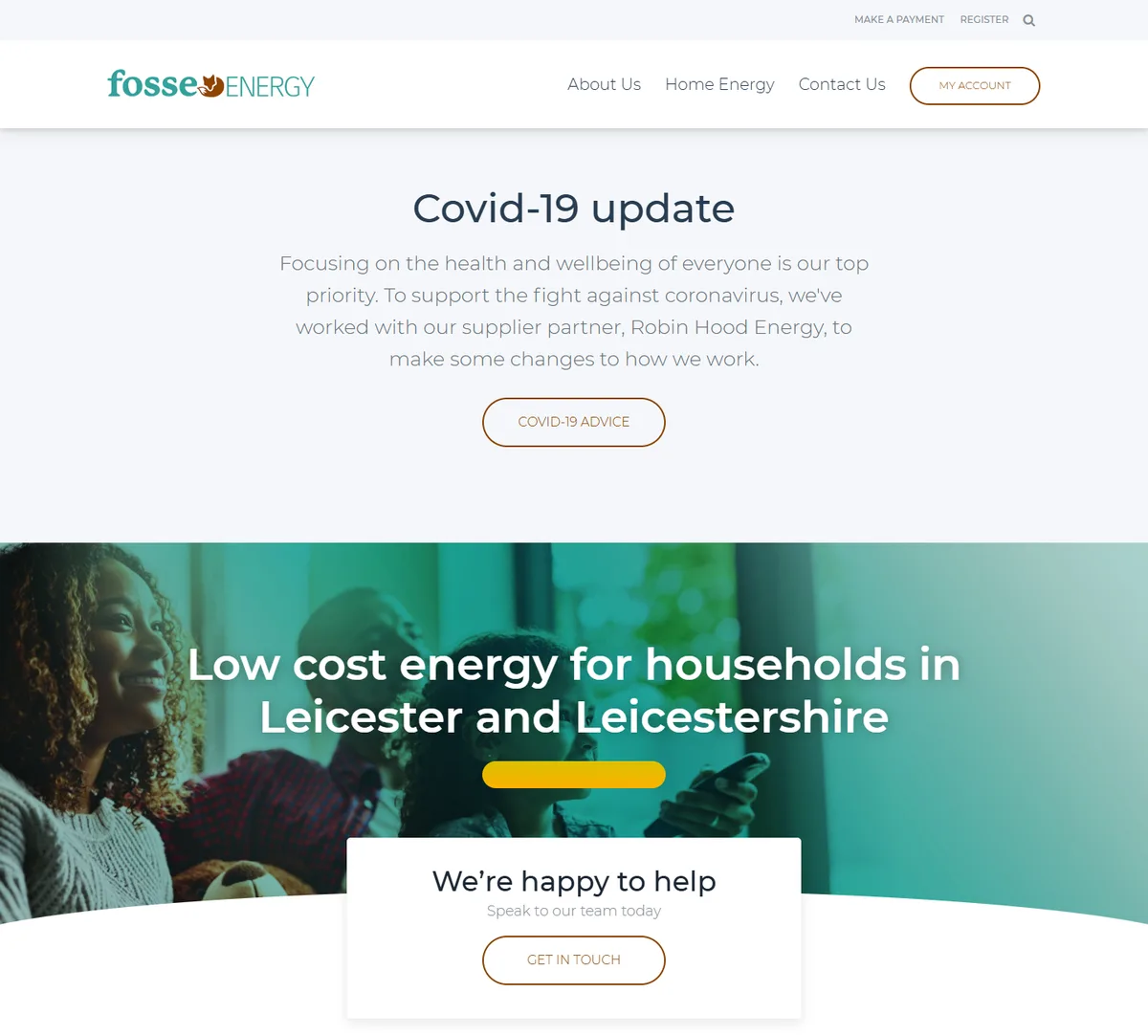
Fosse Energy took its name from the Fosse Way, the Roman road that runs through Leicestershire, and it was set up to do what the other council brands were set up to do. Leicestershire County Council's own description is plain enough: it "aims to tackle fuel poverty by offering competitively priced energy to domestic customers", and it promised "some of the cheapest gas and electricity on the market".
Customers choosing its green tariff would "get electricity which will be certified as being sourced from UK-based wind and solar generators", and the tariffs were open to "anyone living in the city, the county and the wider East Midlands".
Like the Islington brand Angelic Energy, Beam Energy and CitizEn Energy, it held no supply licence of its own. The energy was supplied under the licence of Robin Hood Energy in Nottingham. When Nottingham City Council sold that business to British Gas on 4 September 2020, Fosse Energy ended with it, along with the nine other brands running on the same licence. It sits on our record of every UK supplier and brand that has stopped trading since 2016.
A city and a county together
This is the part that is genuinely unusual. Angelic Energy was Islington's. Beam Energy was Barking and Dagenham's. CitizEn Energy was Southampton's, built so that others could join later. Fosse Energy was built by two authorities at once, and they were not the same kind of authority.
Leicester City Council is a unitary authority. Leicestershire County Council is a county council covering the districts around it. They are separate bodies with separate budgets, separate politics and separate boundaries, and they set this up jointly under a formal Leicester and Leicestershire Energy Supply Partnership.
The practical result was reach. A brand owned by two authorities could sell across both their areas and the wider East Midlands, rather than being a single borough's offer. It is the most sensible version of the council energy idea on this list, and it made no difference at all to how it ended.
What its customers got
Fosse Energy's customers were households, and they moved to British Gas along with everyone else on Robin Hood Energy's book.
Because the customer base was sold as a going concern rather than collapsing, no supplier of last resort process was involved. Customers were offered rates equal to or better than the tariffs they were already on, and nobody was charged an exit fee for going elsewhere instead. Supply was never interrupted.
What they lost was the reason for choosing it. A customer who had picked a not-for-profit brand run by their own county and city councils, reinvesting locally and selling certified renewable electricity, ended up with the largest energy supplier in the country. That is not a complaint about British Gas; it is simply that none of the things Fosse Energy advertised about itself survived the transfer.
Where a complaint goes when the brand has gone
Here is the question the other white-label pages do not answer. If you were partway through a dispute with Fosse Energy when it disappeared, who do you take it to?
The Energy Ombudsman still lists Fosse Energy, and its guidance is worth knowing because the answer is not intuitive. It notes first that "Fosse Energy has left the energy market, so we may not be able to review your dispute", and explains the background: "Robin Hood Energy also powered several regional energy companies under a white label arrangement (including this supplier)".
Then it tells you what to do, and the instruction is specific: customers who transferred should "register your dispute against British Gas, even if your dispute is about the time you were this supplier".
In other words the complaint follows the customer to whoever holds the account now, not the brand the problem happened under. Which is logical once the brand no longer exists, but it means raising a dispute against a company you may feel did nothing wrong.
There is a gap in it, though, and it catches exactly the people who acted early:
| Your situation when the brand closed | Where the Ombudsman points you |
|---|---|
| You transferred to British Gas with everyone else | Raise the dispute against British Gas, even for the Fosse Energy period |
| You had already switched to another supplier before the takeover | The Ombudsman may not be able to help |
| Your dispute was already open and unresolved | It follows the account, not the brand |
A customer who saw the news, shopped around and left before the handover completed could end up with no route to an ombudsman for something that happened while they were a customer. Leaving early is usually the right move on price. It is worth settling anything outstanding first.
Key dates
| Date | What happened |
|---|---|
| 2018 | Leicester City Council and Leicestershire County Council launch Fosse Energy under Robin Hood Energy’s licence |
| 4 September 2020 | Nottingham City Council announces the sale of Robin Hood Energy to British Gas |
| September 2020 | Fosse Energy closes; customers transfer to British Gas with the rest of the book |
| Since | The Energy Ombudsman directs former customers to raise disputes against British Gas |
What it means for a business
Fosse Energy sold to households, so no business was a customer. The structure is the reason it belongs here, and this page adds a wrinkle worth carrying into any non-domestic contract signed under a brand rather than a licence.
The Energy Ombudsman covers microbusinesses as well as households, so a small firm buying through a broker-badged or affinity-branded tariff faces the same question Fosse Energy's customers did: if the brand vanishes, the dispute route moves to whoever holds the account afterwards, and leaving early can cut you off from it. Settle anything outstanding before you switch, not after.
The Angelic Energy page explains who actually does what in a white label. And if the licence holder fails rather than being sold, the ordinary split applies:
| When your supplier fails | Household | Business |
|---|---|---|
| Supply continues | Yes | Yes |
| Ofgem protects your credit balance | Yes, under the safety net | No |
| A cap limits the rate you move onto | Yes | No |
| You are charged to leave that rate | No | No |
Where to start
- Business electricity rates across the market, unit price and standing charge
- Commercial gas prices per kWh, set in a separate market
- The licensed suppliers open to business customers, so you know the name on the contract
Our guide explains the rate that applies before a new contract starts.
For the licence every one of these brands ran on, see Robin Hood Energy and the ten council brands.
Fosse Energy FAQs
What happened to Fosse Energy?
Who took over Fosse Energy customers?
Who ran Fosse Energy?
I had a complaint about Fosse Energy. Who do I take it to?
Was Fosse Energy a real energy supplier?
Did Fosse Energy customers lose money?
Did Fosse Energy supply businesses?
Sources
- Leicestershire County Council, Fosse Energy
- Leicester City Council, Executive report: Leicester and Leicestershire Energy Supply Partnership
- Energy Ombudsman, Fosse Energy complaints