

White Rose Energy closed in September 2020, when Robin Hood Energy, the supplier whose licence it ran on, was sold to British Gas. Leeds City Council had launched it in September 2016, with Bradford and Calderdale councils partnering to deliver it across Yorkshire and Humber. It was the first of the Robin Hood white labels and the only one backed by three authorities.
It also did two things none of the others managed: it sold to non-domestic customers as well as households, and it wrote down what it expected from the supplier behind it. If you buy energy under a brand rather than a licence, you can see which suppliers hold licences for business supply.
What happened to White Rose Energy?
White Rose Energy launched in September 2016, taking its name from the emblem of Yorkshire and its strapline from its purpose: "for you, not profit". Leeds City Council set it up to supply "fair and competitively priced energy to households across the Yorkshire and Humber region", and said that "any small margins that are generated, once the costs of running the scheme are covered, will be reinvested into initiatives to reduce fuel poverty".
It was the first brand to run on Robin Hood Energy's licence, six months ahead of Liverpool's, and it was open to anyone in Yorkshire rather than just the three council areas behind it.
On 4 September 2020 Nottingham City Council announced it was selling Robin Hood Energy to British Gas. White Rose Energy ended with the nine other brands on that licence, and Leeds published the news the same day. It sits on our record of the UK suppliers and brands that have stopped trading since 2016.
Three councils, one brand
Most of these brands belonged to one authority. Fosse Energy had two, Leicester City and Leicestershire County. White Rose Energy had three.
Leeds City Council held the contract with Robin Hood Energy. Bradford Council and Calderdale Council partnered with Leeds to deliver the scheme across their areas, giving the brand a reach across Yorkshire and Humber that none of the single-borough brands had.
When it ended, Leeds was explicit about what that structure had and had not exposed the three councils to: "The 'white label' arrangement between Leeds, Calderdale and Bradford councils and Robin Hood Energy means that the West Yorkshire councils will not be affected financially."
That is the same position Liverpool reported for the LECCY, and the opposite of what happened to the two councils that owned suppliers outright rather than renting a licence.
The one that wrote down what it expected
Every brand in this group depended on a supplier it did not control. White Rose Energy is the only one that publicly described what it had contracted for, and the wording is worth reading:
"We work in partnership with Robin Hood Energy, through an endorsement, that is formalised under a contract. Our agreement means that our tariff prices must always stay consistently low and our customer service levels have to be of a very high quality."
So the arrangement was not just a logo on someone else's tariff. Leeds had bound its supplier to price and service standards, and told customers so. That is genuinely better practice than the rest of the group, and it is worth being clear about what it protected against and what it did not.
| Risk | Did the contract deal with it? |
|---|---|
| The supplier charging too much | Yes: prices had to stay consistently low |
| The supplier giving poor service | Yes: service levels had to be high |
| The supplier being sold | No |
What its customers got
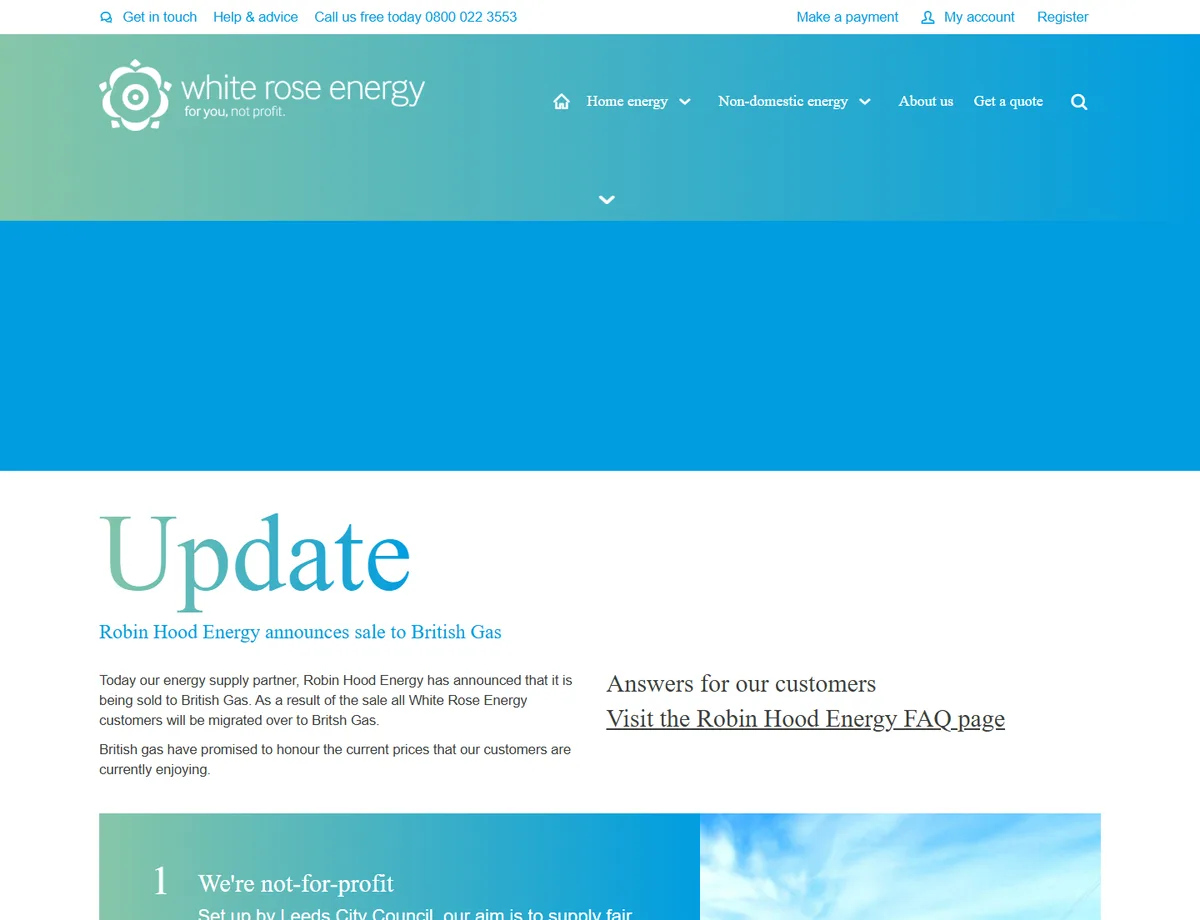
White Rose Energy put the news on its own homepage under a single word, "Update", and told customers plainly what was happening: "Today our energy supply partner, Robin Hood Energy has announced that it is being sold to British Gas. As a result of the sale all White Rose Energy customers will be migrated over to Britsh Gas."
It added the thing customers most wanted to know: "British gas have promised to honour the current prices that our customers are currently enjoying."
Leeds said the same in its own announcement: "existing customers will be offered rates that are equal to or better than their current tariffs by British Gas. Alternatively, customers can choose to switch to a different provider without any exit fees." The council also pointed people at its Green Doctor service and the Leeds Money Information Centre for help.
Because the book was sold as a going concern rather than collapsing, no supplier of last resort process applied and nobody was moved onto a deemed rate.
Key dates
| Date | What happened |
|---|---|
| September 2016 | White Rose Energy launches, the first brand on Robin Hood Energy’s licence |
| 2016 to 2020 | Runs across Yorkshire and Humber with Bradford and Calderdale alongside Leeds, selling to households and non-domestic customers |
| 4 September 2020 | Nottingham City Council announces the sale of Robin Hood Energy to British Gas |
| 4 September 2020 | Leeds confirms White Rose Energy will be discontinued and that the West Yorkshire councils are not affected financially |
| September 2020 | Customers migrate to British Gas on prices matched or bettered |
It sold to businesses too
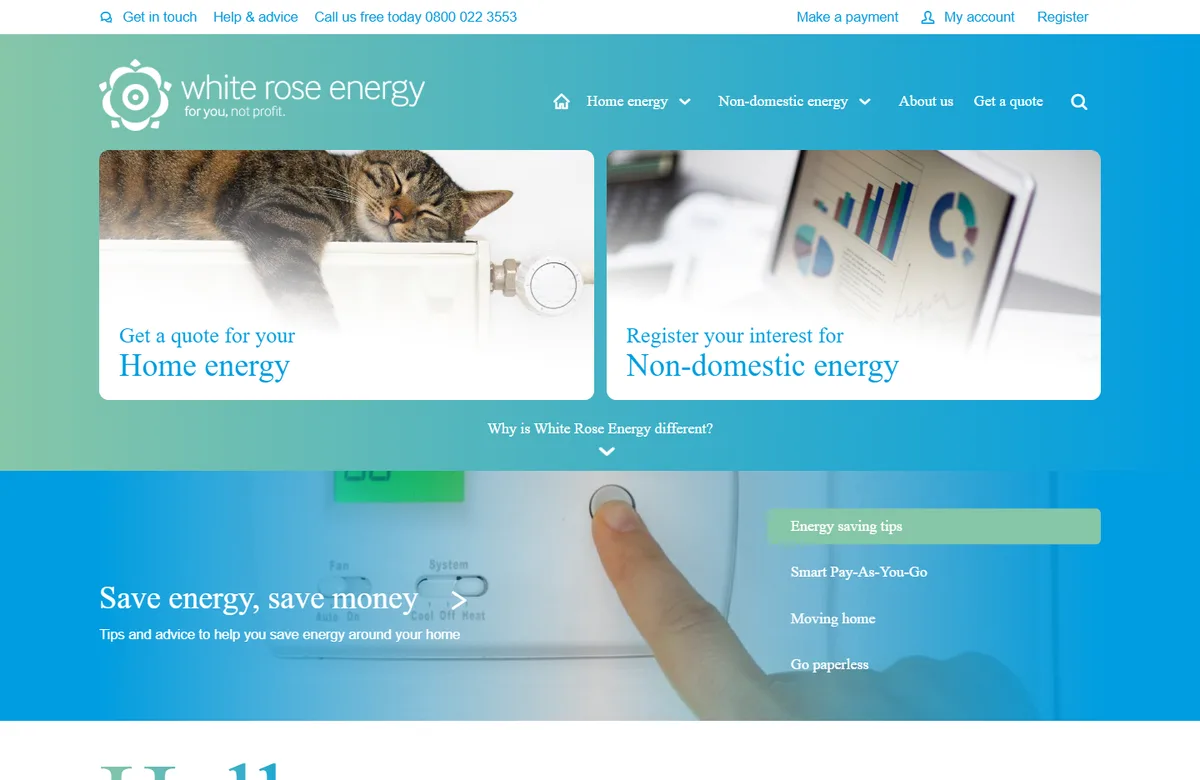
Five of the ten council brands were household-only. White Rose Energy was not: its navigation carried "Non-domestic energy" alongside "Home energy", with its own help and advice and energy saving sections underneath. Southend Energy also ran a business tariff in its OVO years, and Your Energy Sussex went furthest of the three with a dedicated business and charity tariff.
So a Yorkshire business could buy electricity from a council-backed brand whose price and service terms were contractually guaranteed, and still have the arrangement end at a month's notice because a council in another city sold the company underneath it. The guarantees were real. They covered the wrong risk.
That is the whole argument for knowing which licensed supplier stands behind any brand you buy from. And if that supplier fails rather than being sold, the protections split like this:
| When your supplier fails | Household | Business |
|---|---|---|
| Supply continues | Yes | Yes |
| Ofgem protects your credit balance | Yes, under the safety net | No |
| A cap limits the rate you move onto | Yes | No |
| You are charged to leave that rate | No | No |
Where to start
- What business electricity is quoted at per kWh, with the standing charge
- Business gas rates in the current market, priced separately from electricity
- Licensed suppliers serving non-domestic sites, rather than the brands in front of them
Our guide explains the rate that applies when a contract ends without a replacement.
White Rose Energy FAQs
What happened to White Rose Energy?
Which councils were behind White Rose Energy?
Did the councils lose money?
Did White Rose Energy supply businesses?
Who took over White Rose Energy customers?
Was White Rose Energy a real energy supplier?
When did White Rose Energy launch?
Sources
- Leeds City Council, White Rose Energy to be discontinued following the sale of Robin Hood Energy, 4 September 2020
- Leeds City Council, Scrutiny briefing on the closure of White Rose Energy
- Internet Archive, whiteroseenergy.co.uk as captured on 5 August 2020 and on 20 September 2020