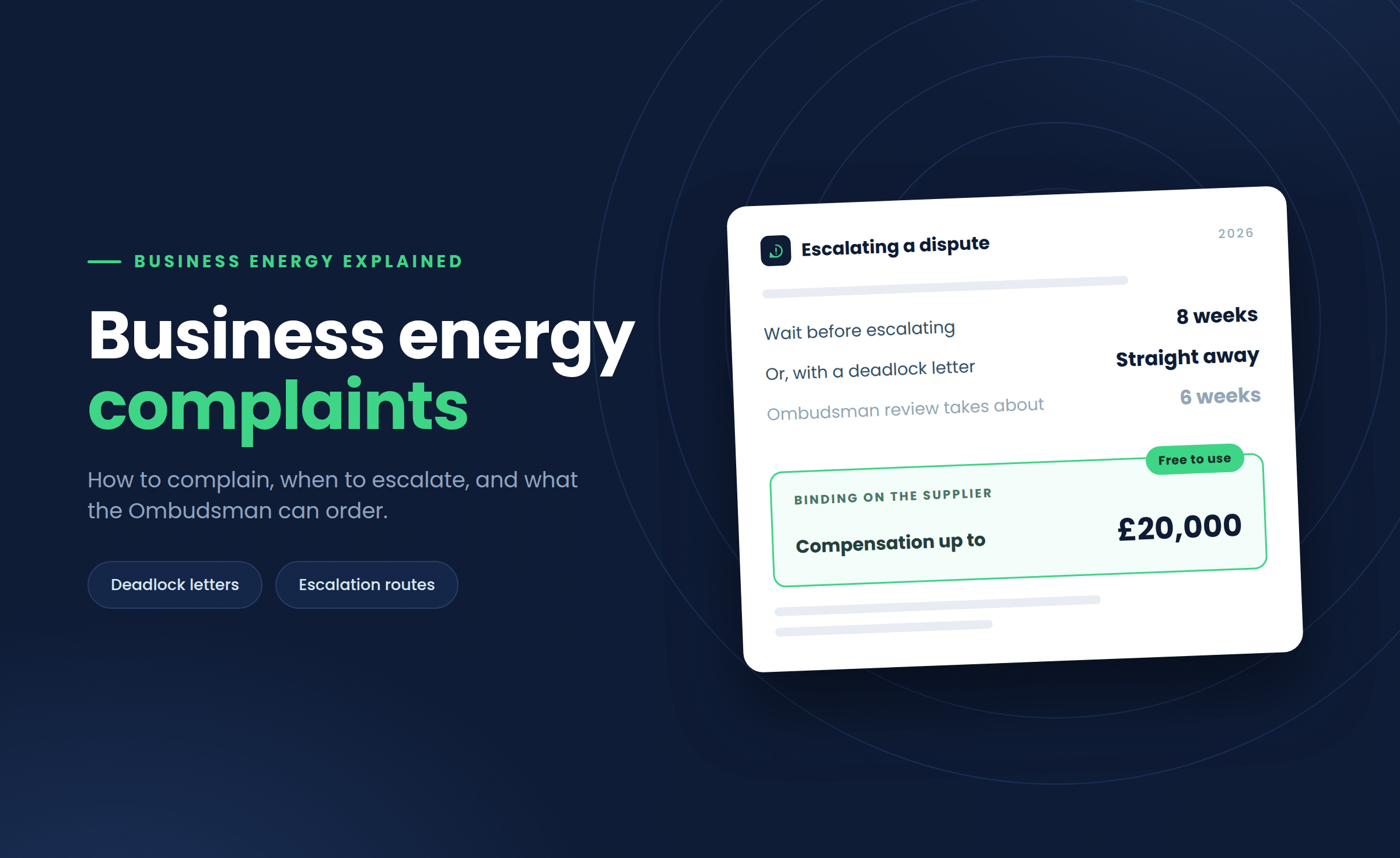

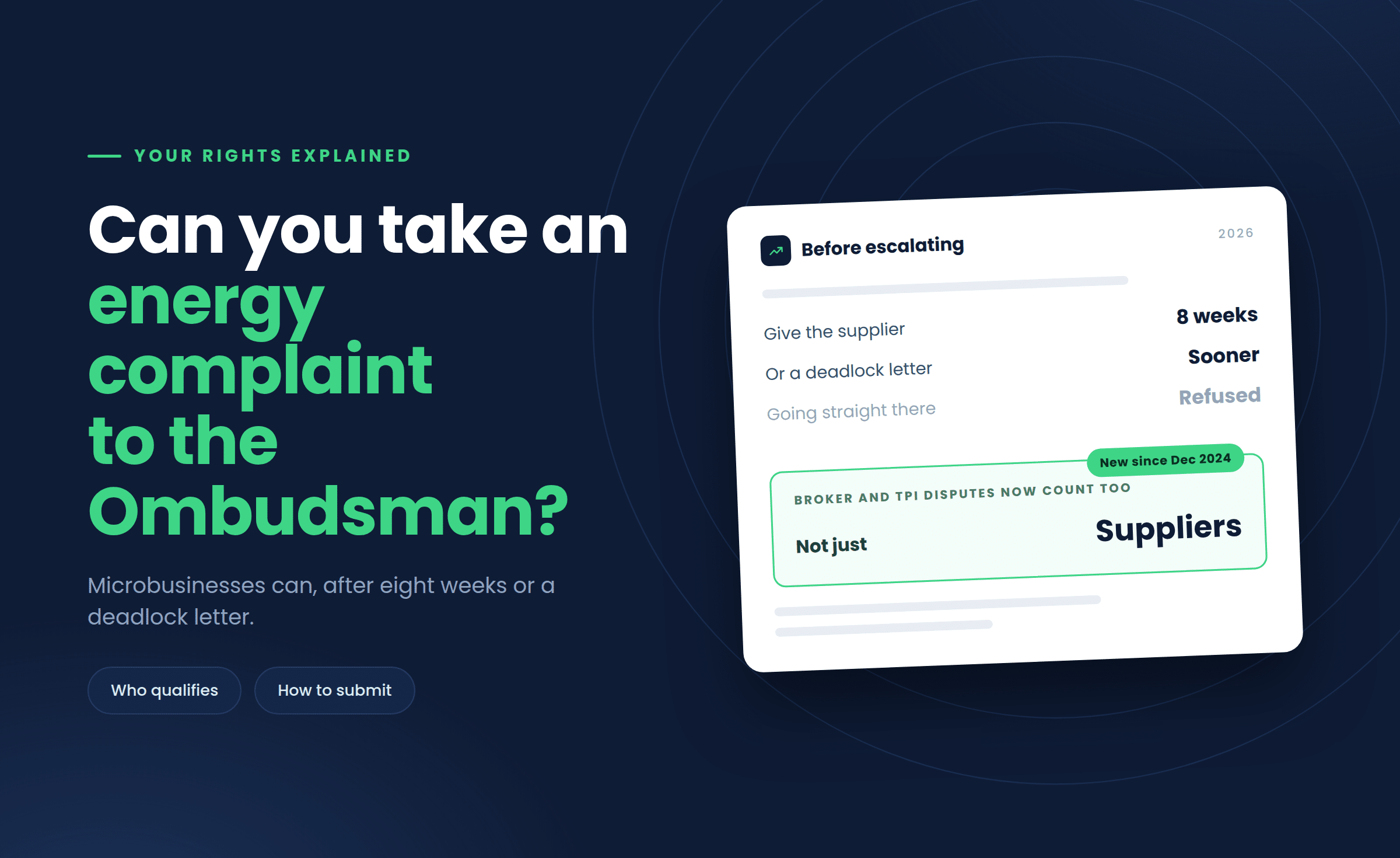
Yes, if you are a microbusiness. You can take an unresolved complaint about your supplier, and since December 2024 about a broker too, to the Energy Ombudsman once eight weeks have passed or you have received a deadlock letter, whichever comes first.
Business energy complaints do not always get the attention they deserve, mostly because most people do not know there is a formal escalation route beyond the supplier’s own complaints team.
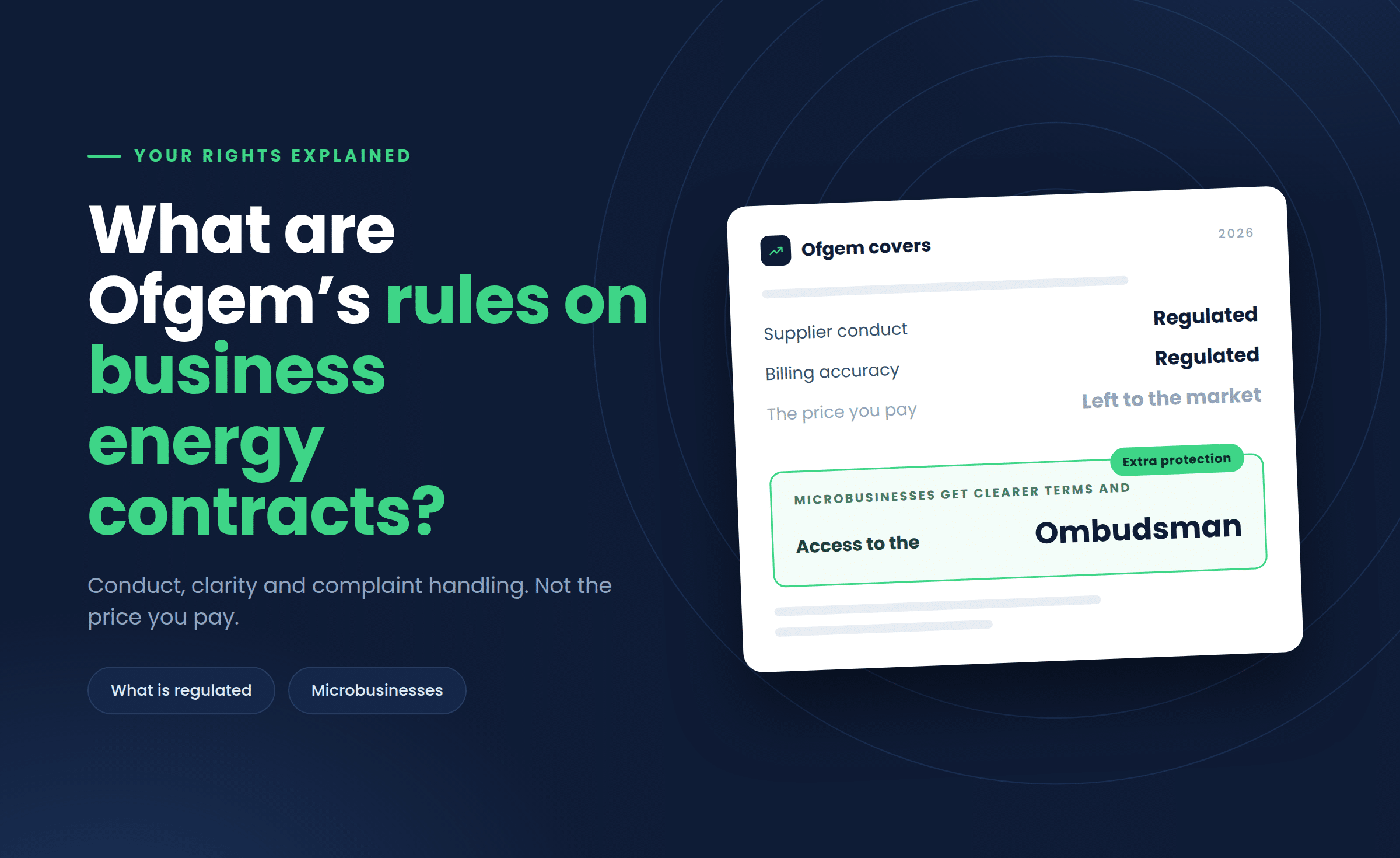
The Ombudsman has handled domestic complaints for a long time, but extending that route to broker disputes for microbusinesses is a recent and major change, as our guide to Ofgem’s rules explains.
Not every business qualifies, and there is a specific process to follow first. Skipping the first step is the most common reason a complaint gets rejected.
This guide covers who is eligible, what the eight-week rule means, and how to put together a complaint the Ombudsman can act on.
Who can take a business energy complaint to the ombudsman?
Microbusinesses, broadly those with fewer than 10 employees or usage under 100,000 kWh electricity and 293,000 kWh gas a year, can use the Energy Ombudsman.
Why larger businesses are excluded
Larger businesses sit outside this protection and rely on commercial negotiation, legal advice or their contract terms. The scheme was built around customers without the resources for a formal legal dispute, as our guide to micro business energy details.
- Employee count: fewer than 10, or full-time equivalents.
- Usage: electricity under 100,000 kWh, or gas under 293,000 kWh a year.
- Scope: a complaint about your supplier or, since December 2024, your broker.
| Test | Microbusiness threshold |
|---|---|
| Employees | Fewer than 10 (or FTE) |
| Electricity use | Under 100,000 kWh a year |
| Gas use | Under 293,000 kWh a year |
| Meeting any one | Usually enough to qualify |
What is the eight-week rule for energy complaints?
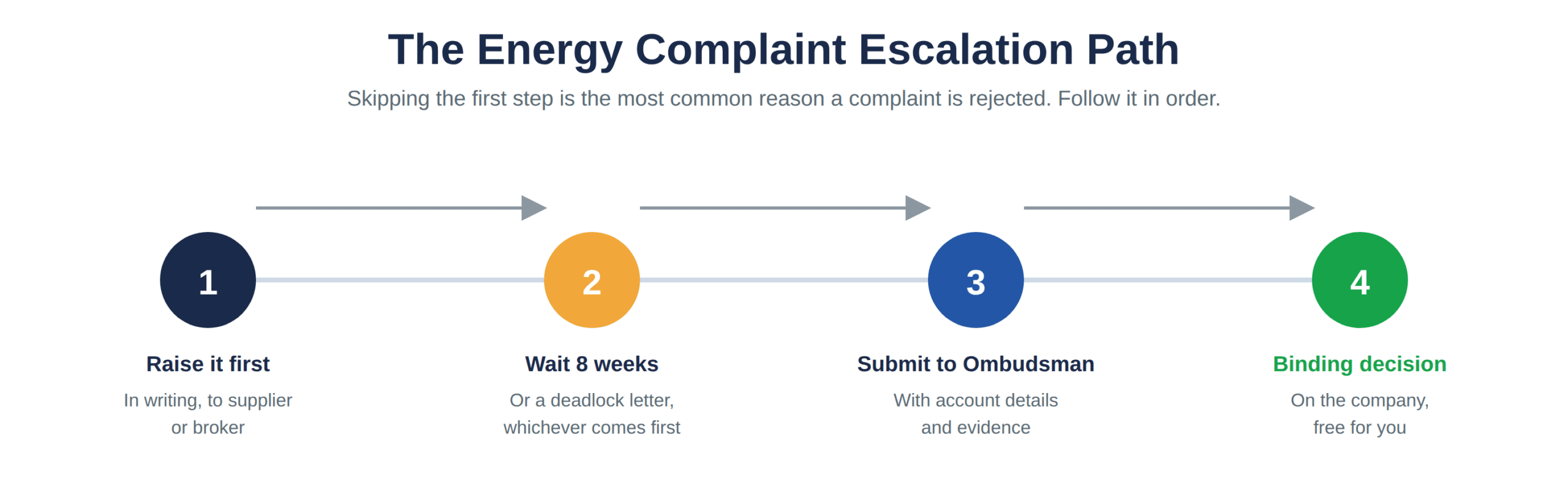
You must give your supplier or broker eight weeks to resolve your complaint before the Energy Ombudsman will accept it, unless they issue a deadlock letter sooner.
If your supplier stays silent
This is not a hurdle for its own sake. It gives the company a genuine chance to fix the problem, and most complaints handled well never reach this stage.
If you have heard nothing after eight weeks, you do not need a deadlock letter to escalate. The Ombudsman accepts the case on the basis that the time limit has passed.
A deadlock letter is simply the company confirming it has done all it will do. Getting one sooner than eight weeks lets you escalate earlier, so it is worth asking for if talks have clearly stalled.
Can you complain about a broker, not a supplier?
Yes. Since December 2024, microbusiness customers can take unresolved disputes with a broker or TPI to the Energy Ombudsman, not just disputes with a supplier.
What a broker complaint can cover
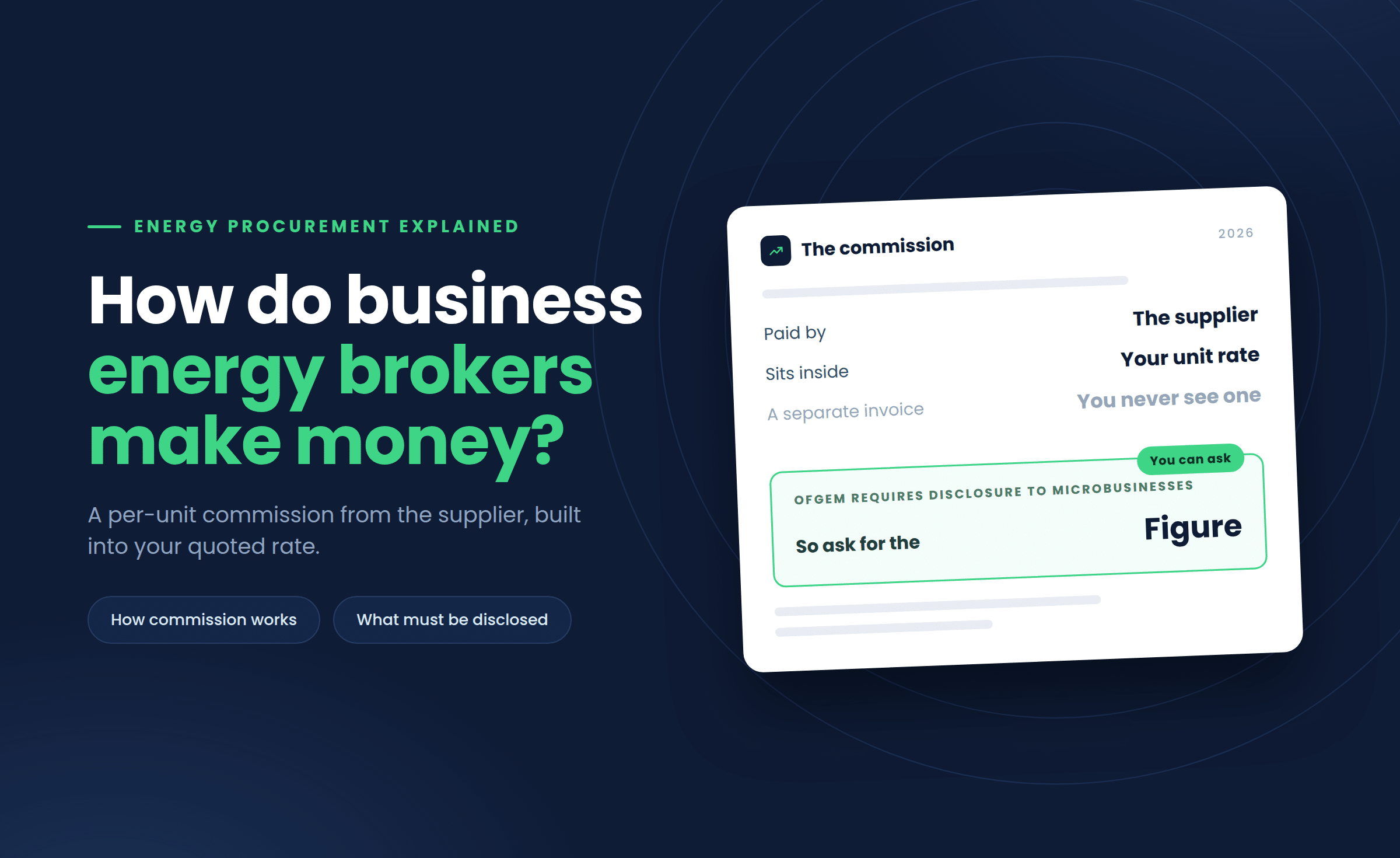
This closed a real gap. Before it, a customer with a grievance against a broker over hidden commission or a misleading switch had far fewer options, as our guide to how brokers make money explains.
- Hidden commission: undisclosed or unclear broker fees.
- Unauthorised switch: being moved without proper authorisation.
- Misleading sales: inaccurate information given during the process.
How do you submit a complaint to the energy ombudsman?
Submit online or by phone with your account details, a summary of the issue, and evidence that eight weeks have passed or you have received a deadlock letter.
What to have ready
Having your paperwork organised makes the process smoother. The Energy Ombudsman will ask for specifics, not a general summary of frustration, and our business energy complaints guide covers building the file.
- Account details: your number and the supplier or broker involved.
- A clear timeline: what happened and when.
- Evidence: relevant emails, letters or the deadlock letter.
- Your desired outcome: refund, correction, apology or compensation.
What can the ombudsman do about your complaint?
The Ombudsman can direct a supplier or broker to apologise, correct a billing error, refund money, or pay compensation, and its decision is binding on the company if you accept it.
Free, independent and binding on the company
It is an independent, free service for eligible microbusinesses, and its decisions carry real weight. If a company does not comply, Ofgem treats that as a compliance issue.
- Fix the bill: correct an incorrect or backdated charge.
- Refund: return an amount wrongly taken.
- Compensate: order payment for distress or inconvenience.
- Change practice: require the company to alter a specific behaviour.
The decision is not binding on you, so if you are not satisfied you can still pursue the matter elsewhere, including through the courts for larger disputes.
One caveat is worth keeping in mind: if your real issue is the rate you are on rather than a service failure, it is usually quicker to compare and switch than to wait out a complaints process. The Ombudsman route is for genuine disputes, not a substitute for shopping around.