
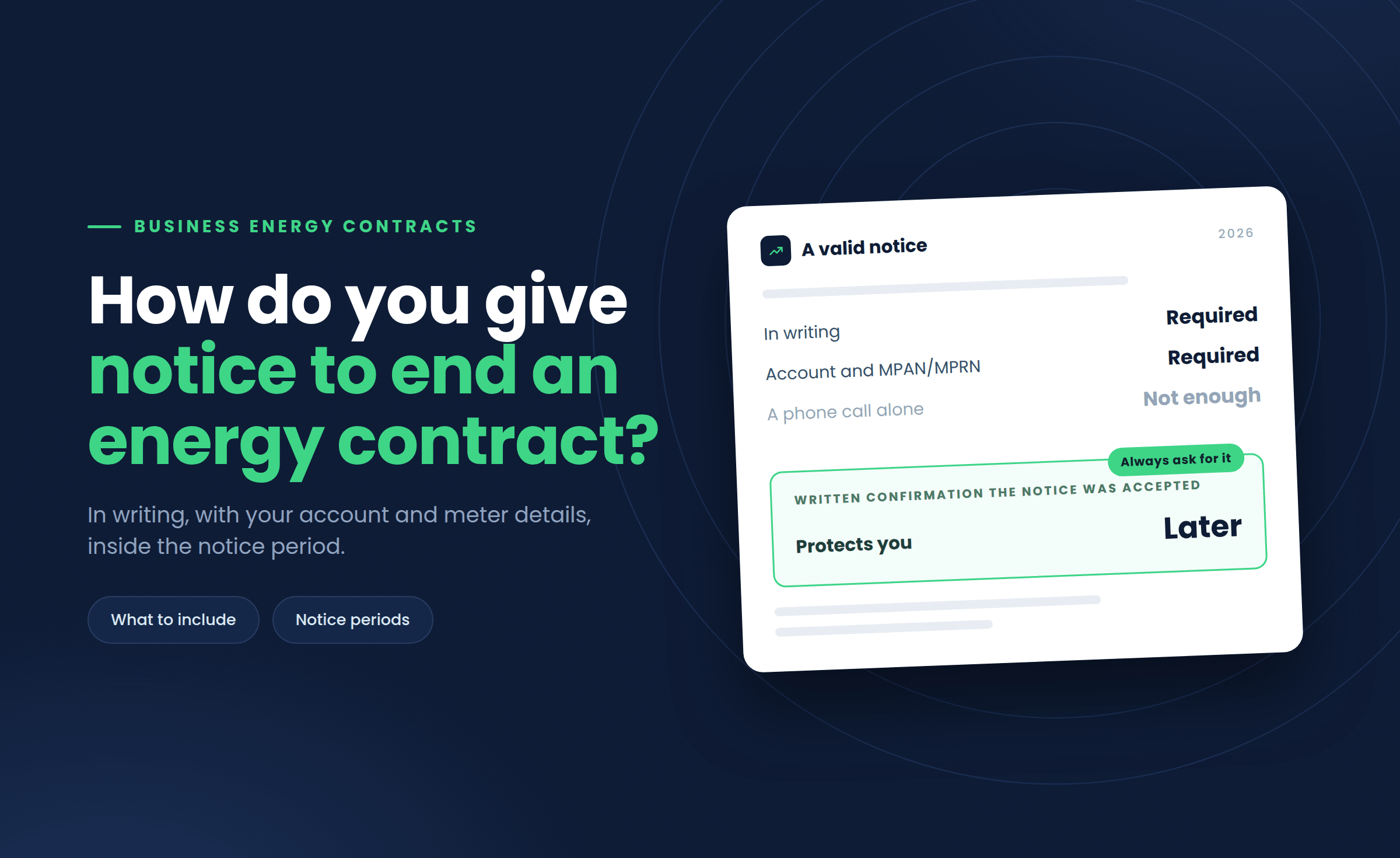
To terminate a business energy contract, you write to your supplier within the notice window stated in your terms, quoting your MPAN or MPRN reference and the date you want the contract to end. Verbal requests are not usually enough on their own.
This process trips businesses up more often than it should, usually because the notice period is shorter than people expect. A phone call to say you are leaving does not always count as valid notice.
Getting the paperwork right the first time avoids a delayed exit, an unwanted rollover, or a dispute with your supplier later. None of it is complicated once you know the order to do things in.
This guide walks through what you need before you start, how to send valid notice, and what happens once your supplier accepts it, alongside our wider guide to business energy contracts.
What information do you need before you terminate a business energy contract?
Gather your account number, your MPAN (electricity) or MPRN (gas) reference, your contract end date and your notice period before you contact your supplier.
The four details to have ready
All of this sits on a recent bill or your original contract confirmation. Having it ready means your supplier can process the request in one exchange rather than several.
- Account and address: your account number and the site address.
- Meter reference: the MPAN or MPRN for the meter in question.
- Contract dates: your end date and the required notice period.
- Intended end date: the date you would like the contract to actually stop.
How do you send valid notice to terminate energy agreements?
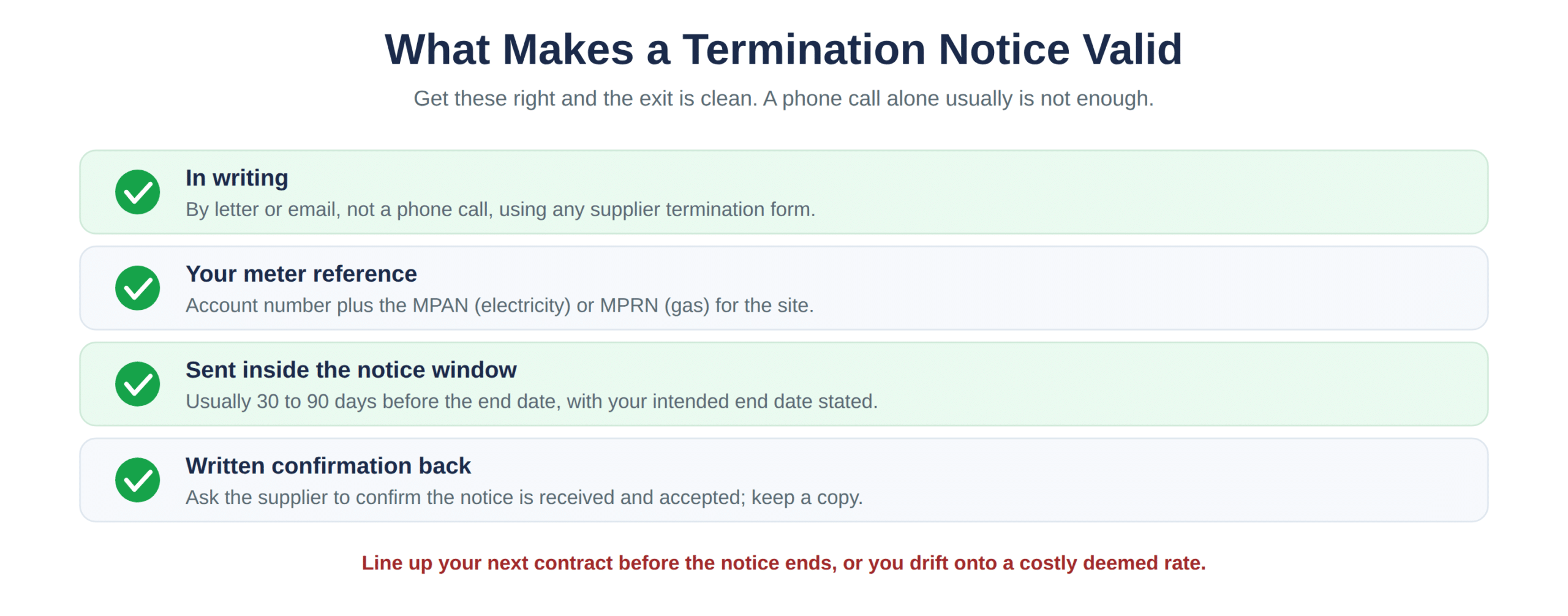
Send written notice, by letter or email, stating clearly that you want to terminate, your account details, and your intended end date. Ask for written confirmation that the notice has been received and accepted.
Do you need to name a new supplier?
Most suppliers have a specific termination form or a dedicated email address, so check your terms before sending a general enquiry that could get lost. Keep a copy of everything, and our guide to business energy complaints explains the Energy Ombudsman route if a supplier does not cooperate.
Naming a new supplier is not always required, but it helps: if you are switching, the new supplier often handles much of the transfer, including notifying your outgoing supplier. Either way, put the request in writing yourself so nothing falls through the gap between the two parties.
Send the notice by a method that leaves a record, such as email or recorded delivery. A dated, written trail is what protects you if the supplier later claims notice was never received.
What notice period applies to most business energy contracts?
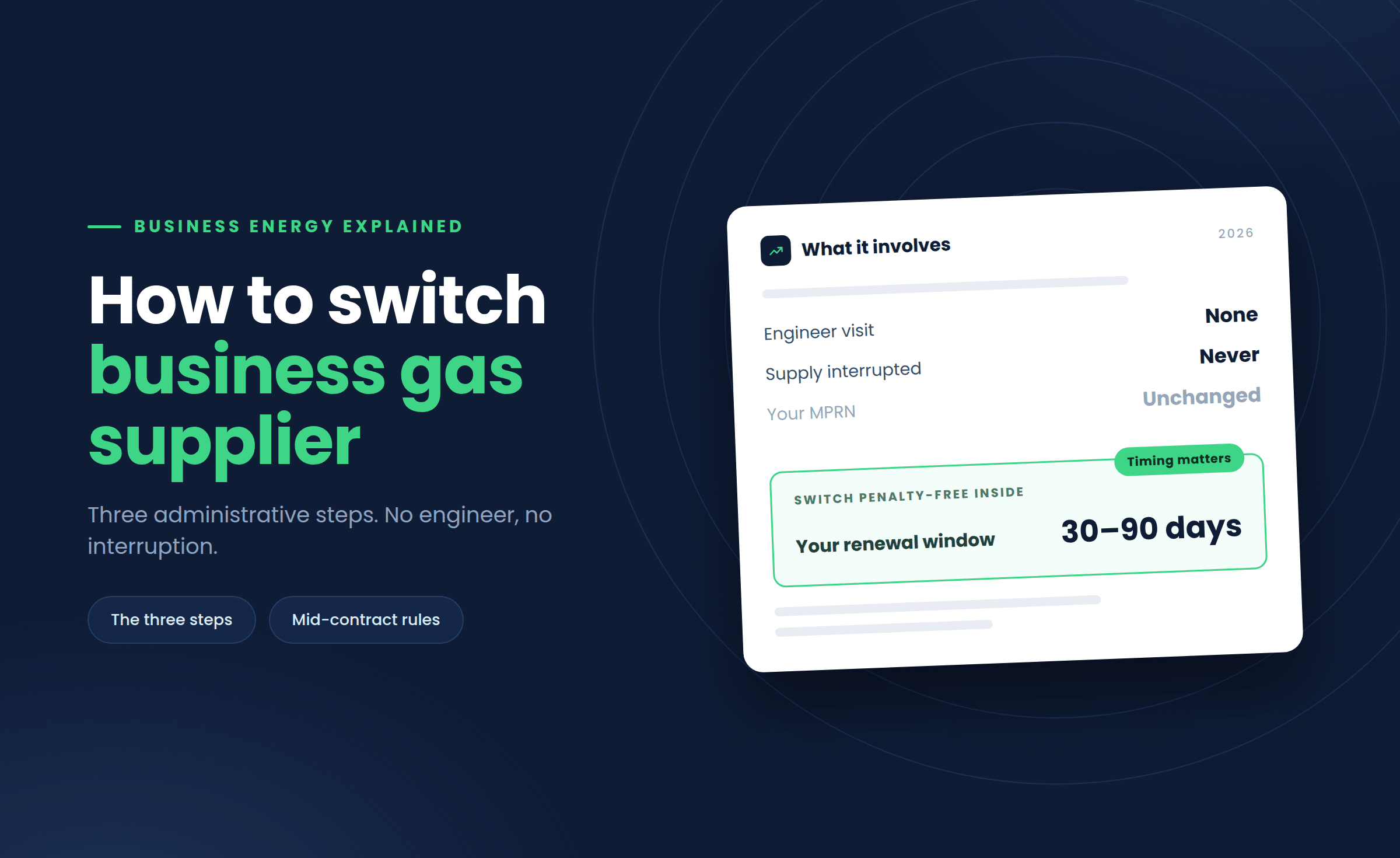
Most business energy contracts require 30 to 90 days’ written notice before the end date, though the exact figure varies by supplier and contract type.
Notice period by business size
| Business size | Typical notice period | Where to check |
|---|---|---|
| Micro and small | 30 to 60 days | Contract terms or recent bill |
| Medium | 60 to 90 days | Contract terms, confirm with supplier |
| Large / half-hourly | 60 to 120 days | Contract terms, often confirmed by broker |
Half-hourly metered and larger sites sometimes carry longer notice than smaller accounts, so confirm your specific figure. Our guide to half-hourly meters explains why those sites are treated differently.
Can you terminate a business energy contract early without a penalty?
Usually not, unless your supplier fails, breaches its licence conditions, or you are moving under specific circumstances like a change of tenancy. Otherwise, ending a fixed term early normally triggers an early termination charge.
The exceptions that do apply
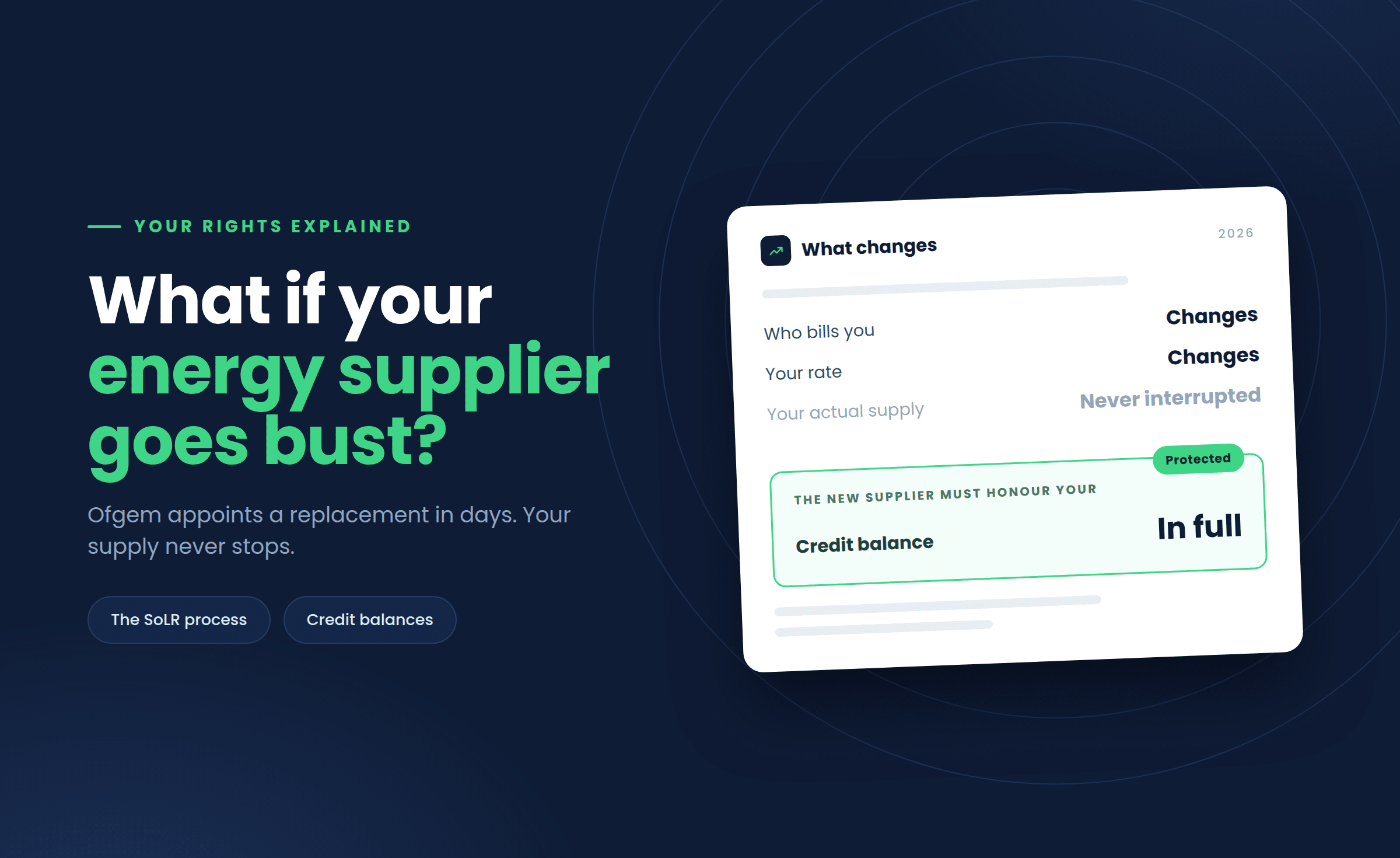
If your supplier has gone out of business, Ofgem’s Supplier of Last Resort process moves your account automatically and different rules apply, as Ofgem’s guidance sets out. Our guide to failed energy companies covers the steps.
Moving premises entirely is a separate scenario, governed by change of tenancy rules rather than standard termination notice. Check your contract’s wording before assuming either exception applies to you.
What happens after your supplier accepts your termination notice?
Your supplier confirms your end date in writing, and if you are switching, the new supplier takes over the meter from that date without any interruption to your actual energy supply.
Have your next deal ready
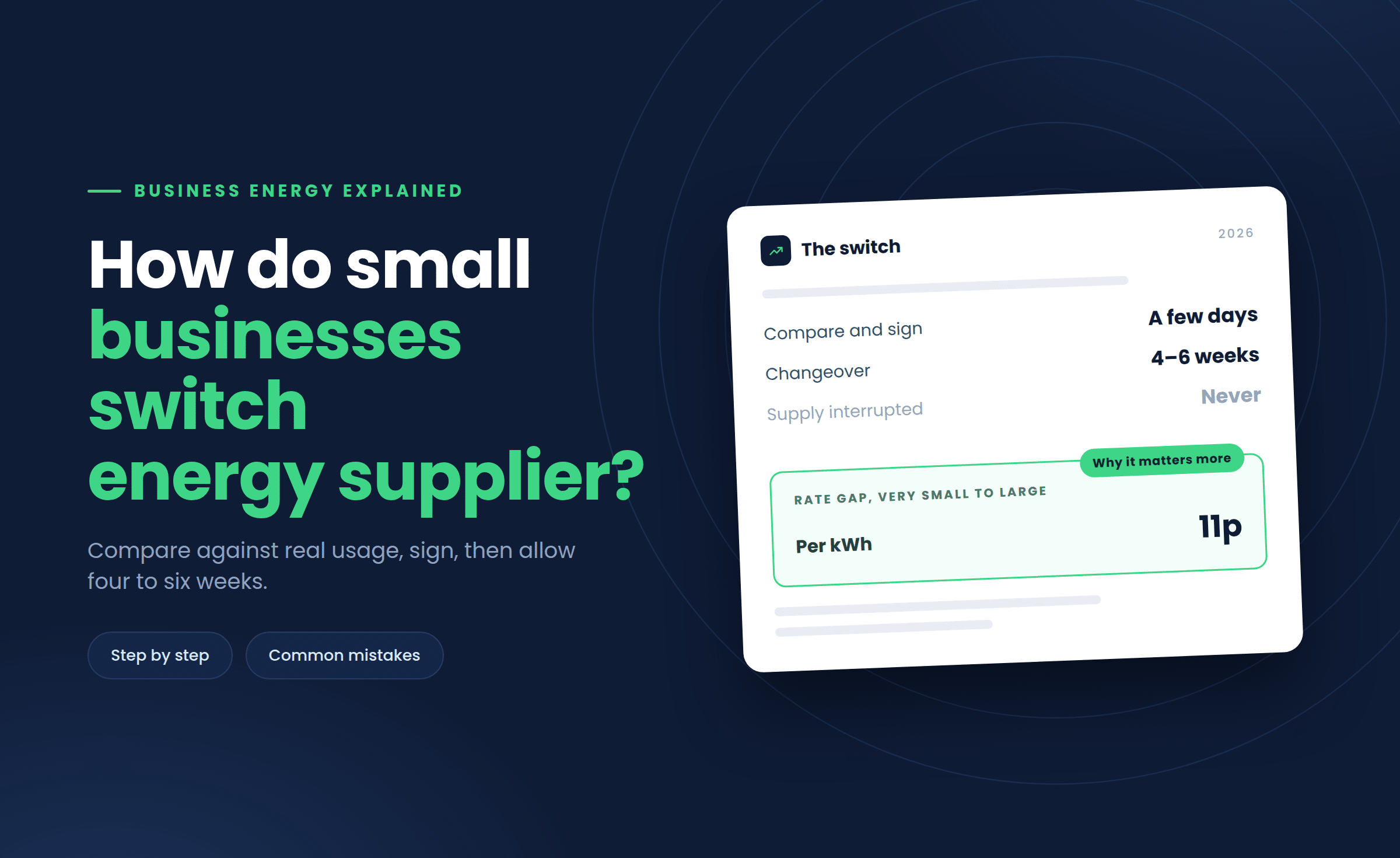
A full switch typically takes four to six weeks from confirmation to completion. If you have not lined up a new deal by the time your notice runs out, you move onto a deemed contract, so it pays to compare business electricity rates before your notice takes effect.
That deemed rate is rarely competitive, which is exactly why it is worth having your next contract agreed before your termination notice takes effect, not after.
Treat the termination window as the moment to compare the whole market, not just a box to tick before renewing with the same supplier. Businesses that shop around at this point tend to land on noticeably better terms.