
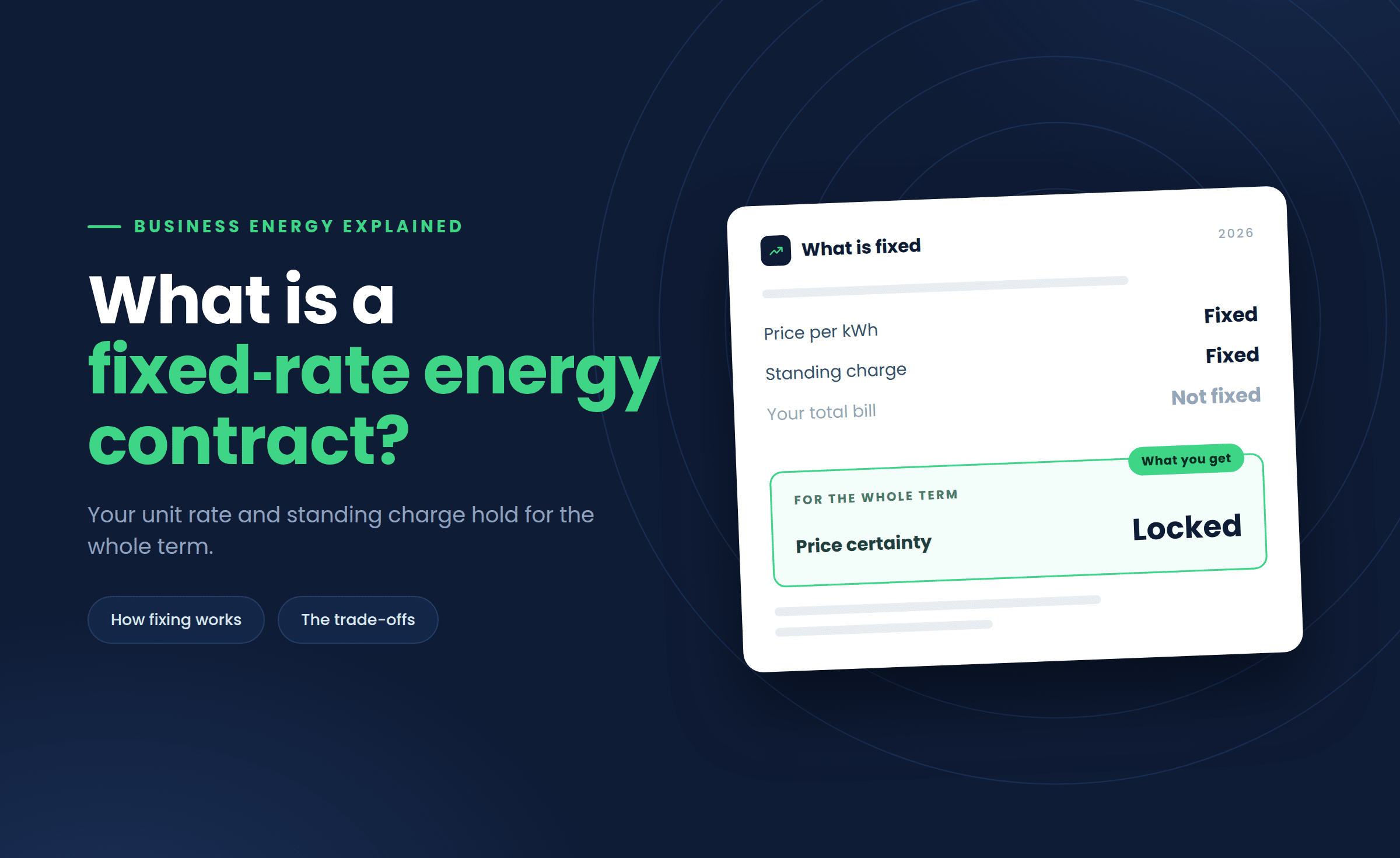
A fixed-rate business energy contract locks in your unit rate and standing charge for an agreed term, usually one to five years, so your price per kWh does not move even if wholesale markets do. It is the most common way UK businesses buy electricity and gas.
Price certainty is the whole appeal. Once your rate is agreed, it is agreed, whatever happens to wholesale prices over the following months.
That does not mean fixing is automatically the right choice for every business. It suits some usage patterns and risk appetites better than others.
Suppliers on the Utility Saving Expert panel all offer fixed-term options, though rates and terms differ between them. Here is how a fixed business energy tariff works, where it beats the alternatives, and when it does not.
How does a fixed business energy tariff actually work?
You agree a unit rate and standing charge with a supplier for a set term, and that price stays the same for every unit you use across the whole contract.
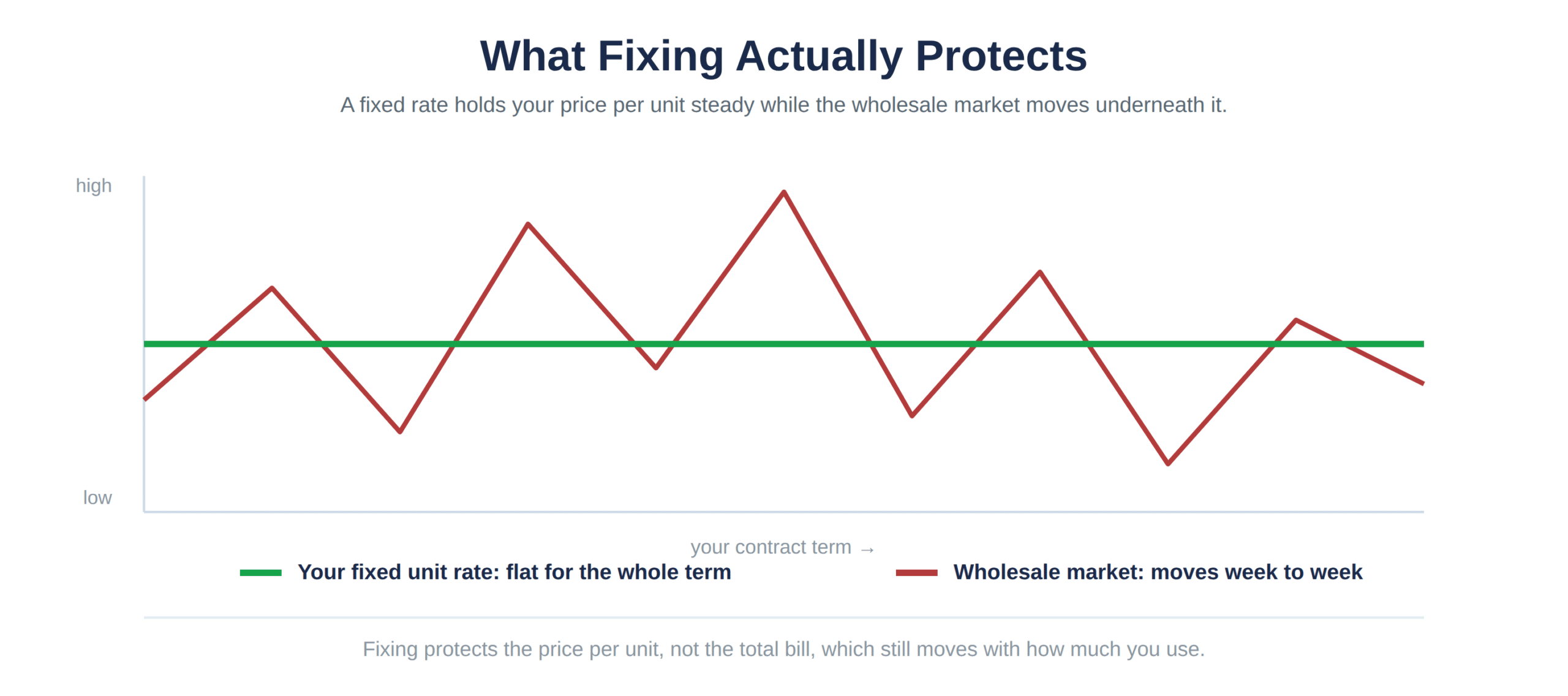
Fixed protects the price, not the total bill
Your bill still moves month to month because usage changes with the seasons, but the rate charged per kWh does not. That is the distinction worth holding onto.
Your MPAN identifies your electricity supply point and your MPRN your gas supply point, and both sit on every quote and bill. Our guide to what an MPAN number is covers where to find yours.
What are the main benefits of fixing your rate?
The main benefit is budgeting certainty: you know your energy cost per unit for the length of your term, which makes forecasting and pricing your own products or services considerably easier.
Less admin, more reassurance
It also removes a recurring decision from your workload. Once signed, you are not tracking wholesale prices weekly, just watching your renewal window.
- Predictable budgeting: a known unit rate for the full contract term.
- No spike exposure: wholesale price jumps do not reach you once signed.
- A quotable figure: clean overheads for lenders, landlords or your own pricing.
Are there any downsides to a fixed term energy contract?
The main downside is that you are locked in even if wholesale prices fall, and exiting early usually triggers a termination charge.
Timing is the real risk
Fix at the wrong point in the market cycle and you could be paying above the going rate for the rest of your term, with no option to renegotiate until it ends. Comparing business gas quotes alongside electricity helps you judge the wider market before committing.
Longer fixes amplify both the certainty and the risk. A five-year term locks in more of both than a one-year deal does, so comparing business electricity rates across terms before you sign is worth the time.
How does fixing compare with a variable or deemed rate?
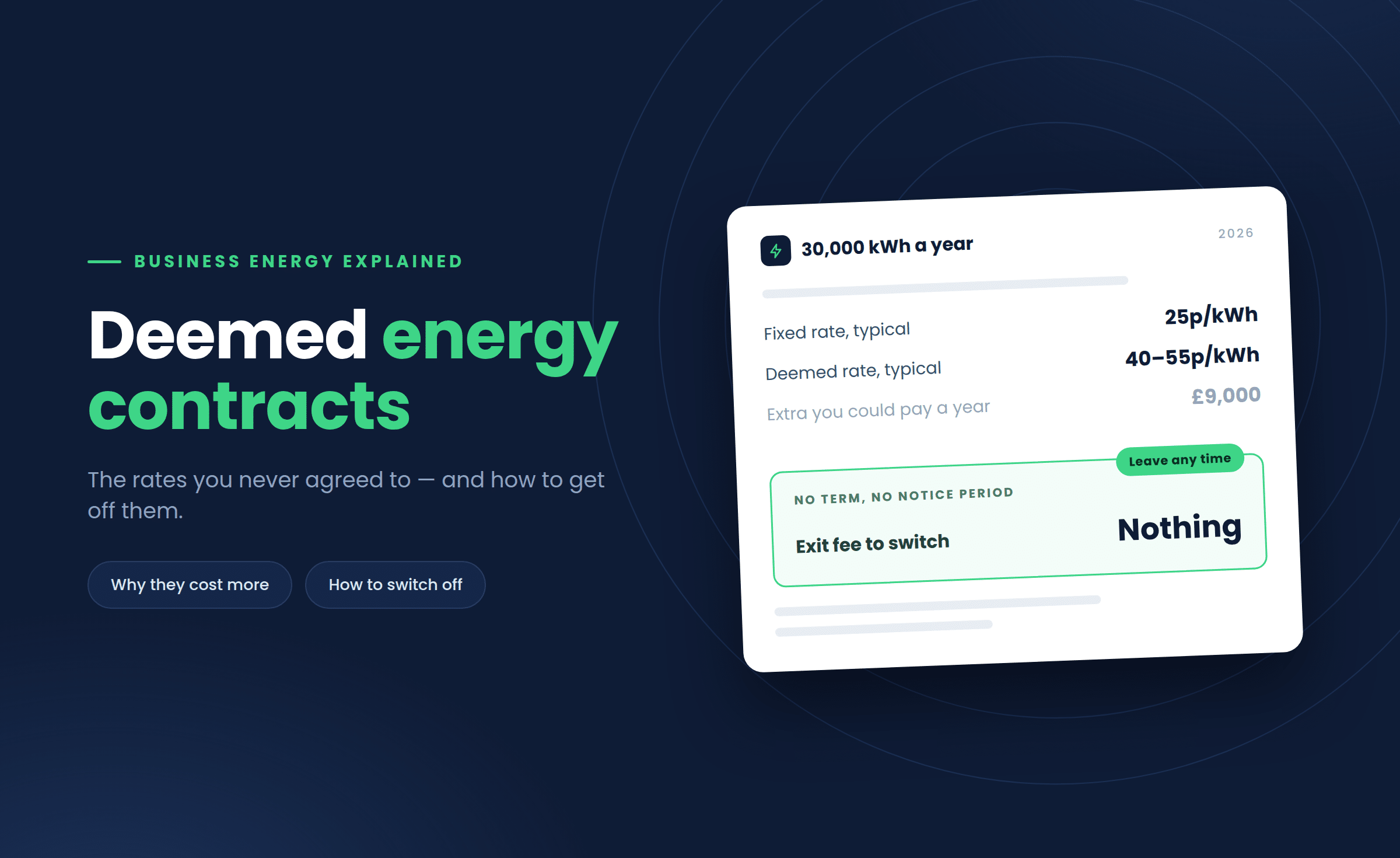
A fixed tariff holds your rate steady for the term, a variable tariff moves with wholesale prices, and a deemed rate applies automatically when there is no agreed contract at all, usually at a much higher price.
Why most businesses fix
| Tariff type | Rate behaviour | Typical UK average | Best suited to |
|---|---|---|---|
| Fixed term | Locked for the whole contract | 24.14p elec, 5.17p gas | Most businesses wanting certainty |
| Variable | Moves with the wholesale market | Rare on business market | Firms comfortable tracking prices |
| Deemed / out-of-contract | Set by supplier by default | 40% to 80% above negotiated | Nobody, by design |
Those UK averages come from DESNZ quarterly data, and very few business suppliers now offer a genuinely variable tariff. Most customers choose between fixing and drifting onto a deemed contract or out-of-contract rate by default, the outcome fixing is designed to avoid.
When is the right time to lock in a fixed rate?
The best time is 60 to 90 days before your current deal ends, giving you enough runway to compare properly without drifting into a rollover or deemed rate.
Does contract length change the rate?
Yes, usually. Suppliers price shorter and longer fixed terms differently depending on how they hedge, so it is worth comparing 1, 2 and 3-year quotes side by side rather than assuming one length is always cheaper.
New businesses can fix from the moment they take on a site, with little benefit in trading on a deemed rate while they decide. Half-hourly metered sites sometimes see fixed terms priced differently, since Elexon settlement treats them differently behind the scenes.