
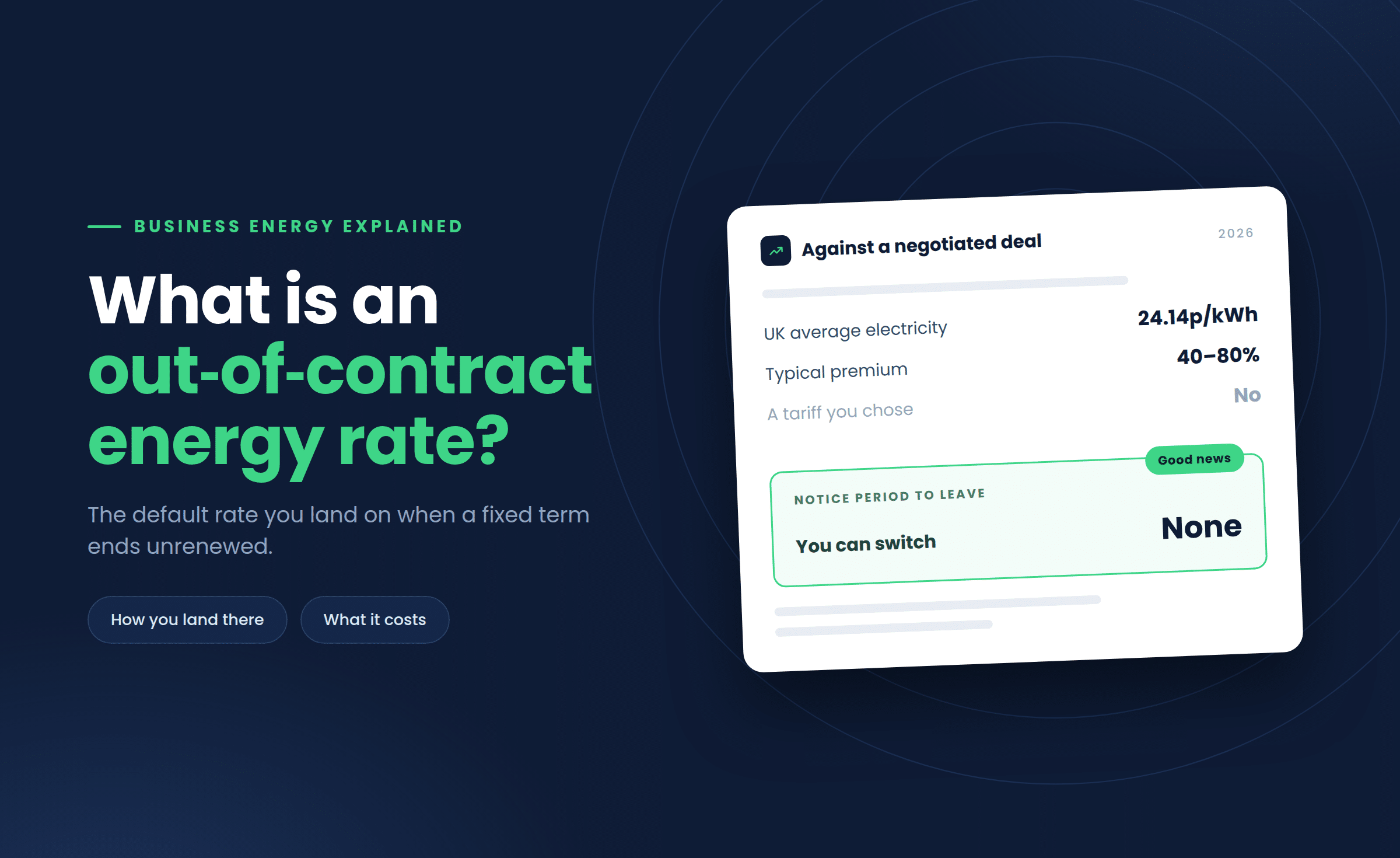
An out-of-contract rate is the higher, deemed rate your supplier moves you to automatically once a fixed-term deal ends without a new contract in place. It typically runs 40% to 80% above a properly negotiated rate.
It happens quietly. No fixed term, no exit fee to trigger a conversation, just a contract that expires while the business carries on as normal.
Supply does not stop, which is exactly why it is easy to miss. Your meter keeps running and your supplier keeps billing you, only at a much less competitive rate than before.
Out-of-contract rates are not a penalty in the strict sense. They are a default position, close to a deemed contract, that suppliers apply once your agreed pricing has lapsed.
How does a business end up on an out-of-contract rate?
Most businesses land here simply by letting a fixed-term deal expire without agreeing a new one, often because a renewal letter went unread or was sent to an old contact.
The common triggers
- A missed renewal letter: sent to a previous manager or an old email address.
- A change of tenancy: a new occupier inherits a deemed contract from day one.
- An assumption: that the current deal simply continues at the same rate.
Suppliers are expected to contact you ahead of your end date, but acting on that notice sits with the business, as our guide to business energy renewals explains. If nobody replies, the contract rolls onto the deemed rate automatically.
It also happens after a change of tenancy, where a new occupier inherits a deemed contract until fresh terms are arranged. A supplier failure can lead here too, since a Supplier of Last Resort transfer places you on a deemed contract until you agree new terms.
Why are out-of-contract rates so much higher than a negotiated deal?
They are priced without the certainty of a fixed term, so suppliers build in a margin that reflects the short-notice, no-commitment nature of the arrangement rather than a genuine jump in the cost to serve you.
Where the extra cost comes from
There is no wholesale hedging advantage for the supplier, unlike a fixed-term deal signed well in advance. The pricing reflects risk and inconvenience as much as anything else.
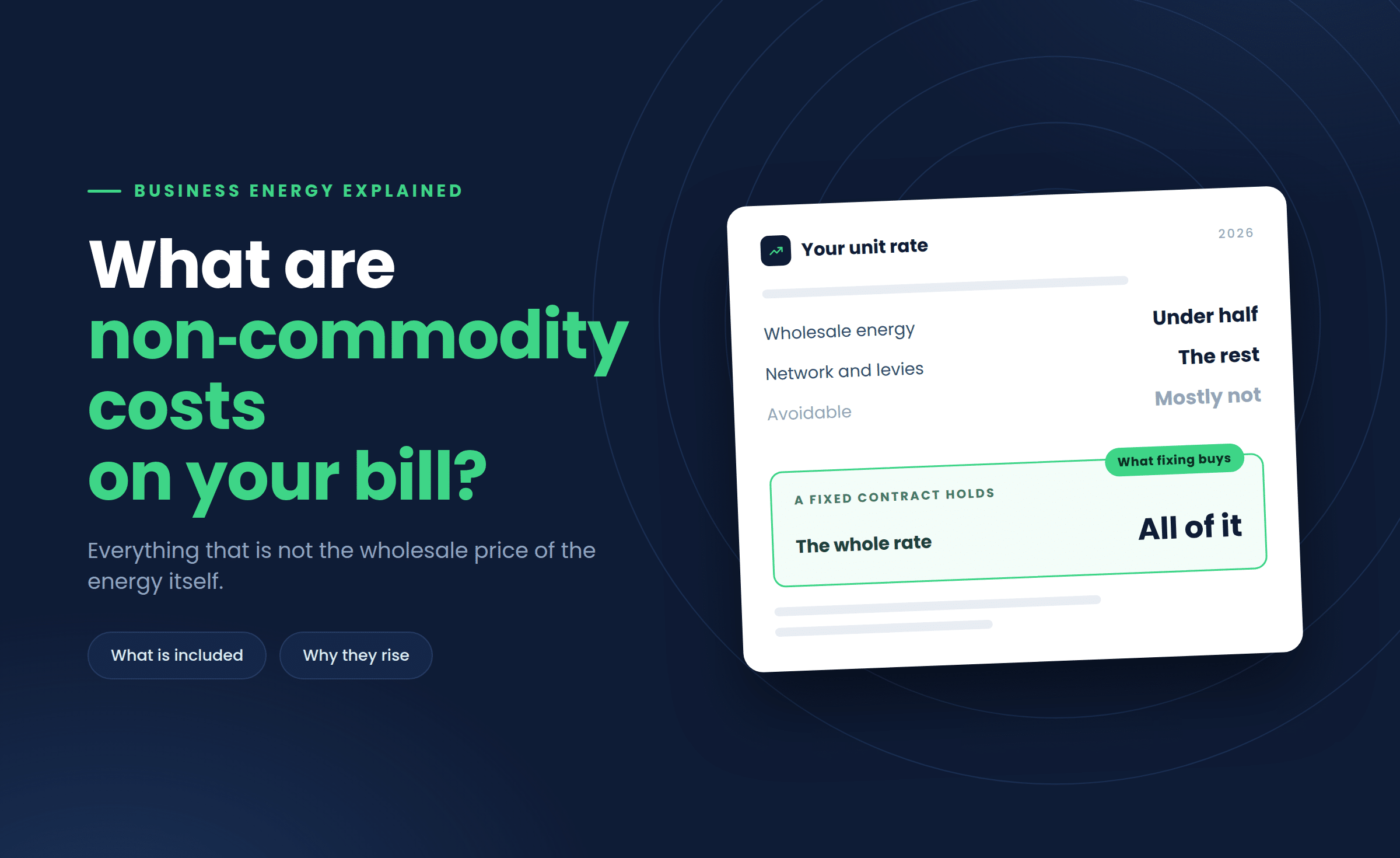
Network charges set by your local distribution operator and settlement costs coordinated through Elexon still apply underneath either rate. It is the supplier’s own margin that moves the most once you are out of contract, not those underlying network costs.
How much extra could an out-of-contract rate be costing you?
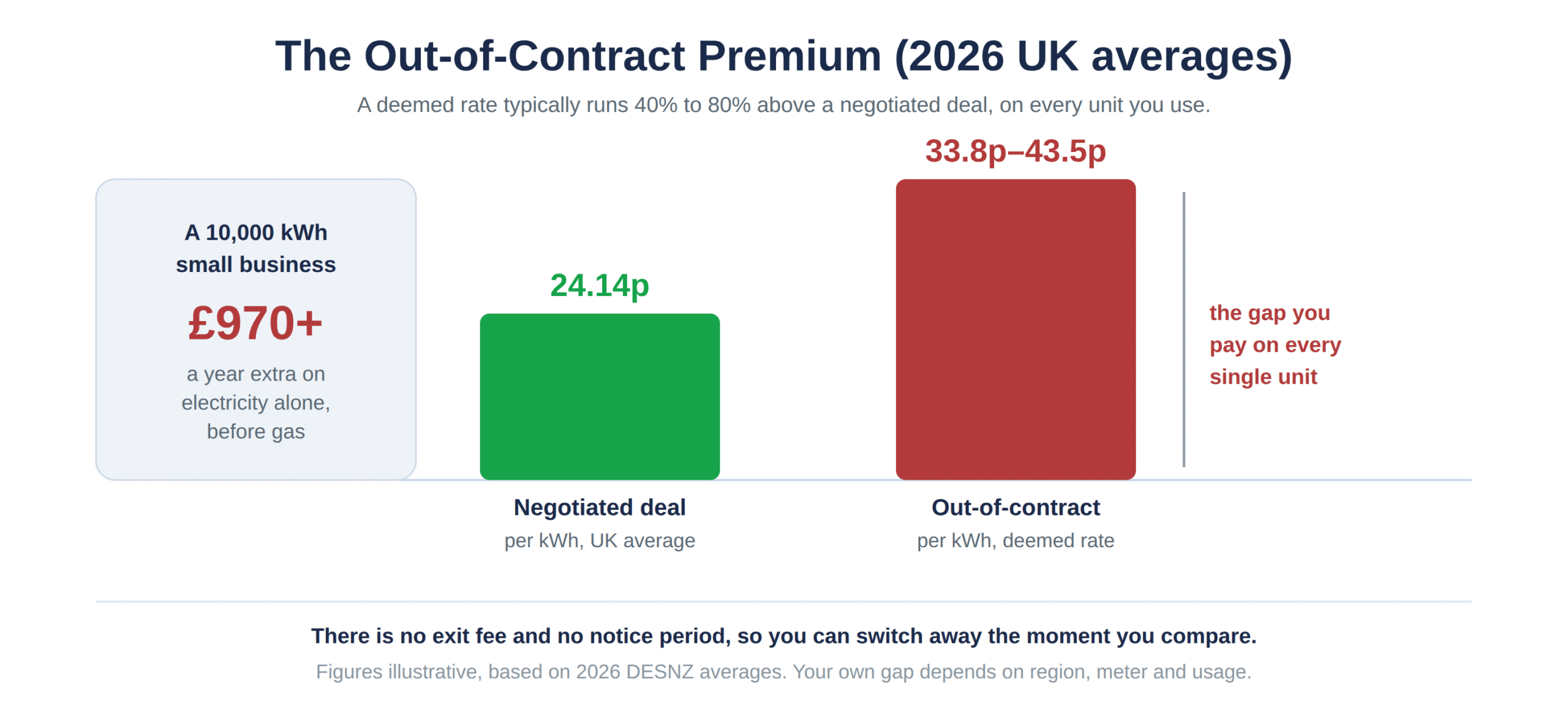
On 2026 averages, a rate 40% to 80% above the negotiated UK average of 24.14p/kWh electricity works out at roughly 33.8p to 43.5p/kWh, a substantial gap on every unit used.
What this looks like in pounds
| Business size | Negotiated average rate | Typical out-of-contract rate (40% to 80% higher) |
|---|---|---|
| Small (20 to 499 MWh) | 28.76p/kWh | Approx. 40.3p to 51.8p/kWh |
| Medium (2,000 to 19,999 MWh) | 25.00p/kWh | Approx. 35.0p to 45.0p/kWh |
| UK average, all businesses | 24.14p/kWh | Approx. 33.8p to 43.5p/kWh |
Scale that gap across a small business using around 10,000 kWh a year and the difference runs into hundreds of pounds annually. UK averages come from DESNZ quarterly data, on top of whatever gas is doing the same thing.
These figures are averages, not a quote. Actual rates vary by region, meter type, consumption and supplier, so a live comparison against a recent bill is the only way to see your own number.
How quickly can you get off an out-of-contract rate?
There is no notice period or exit fee to work through, because an out-of-contract rate is not a fixed term to begin with. A switch to a new negotiated deal typically completes within 4 to 6 weeks of comparing and signing.
The three things to have ready
- A recent bill: including your MPAN or MPRN, to get an accurate quote.
- Your current unit rate: checked against the 2026 averages, which our guide on how to read a business energy bill helps you find.
- A confirmed start date: from your new supplier, so there is no gap or overlap in billing.
The switch runs on the same timeline whether you compare yourself or use a broker. Ofgem’s business energy advice sets out your rights during the move, and if you were tied into a fixed deal our guide on exiting a fixed-term contract covers that separate situation.