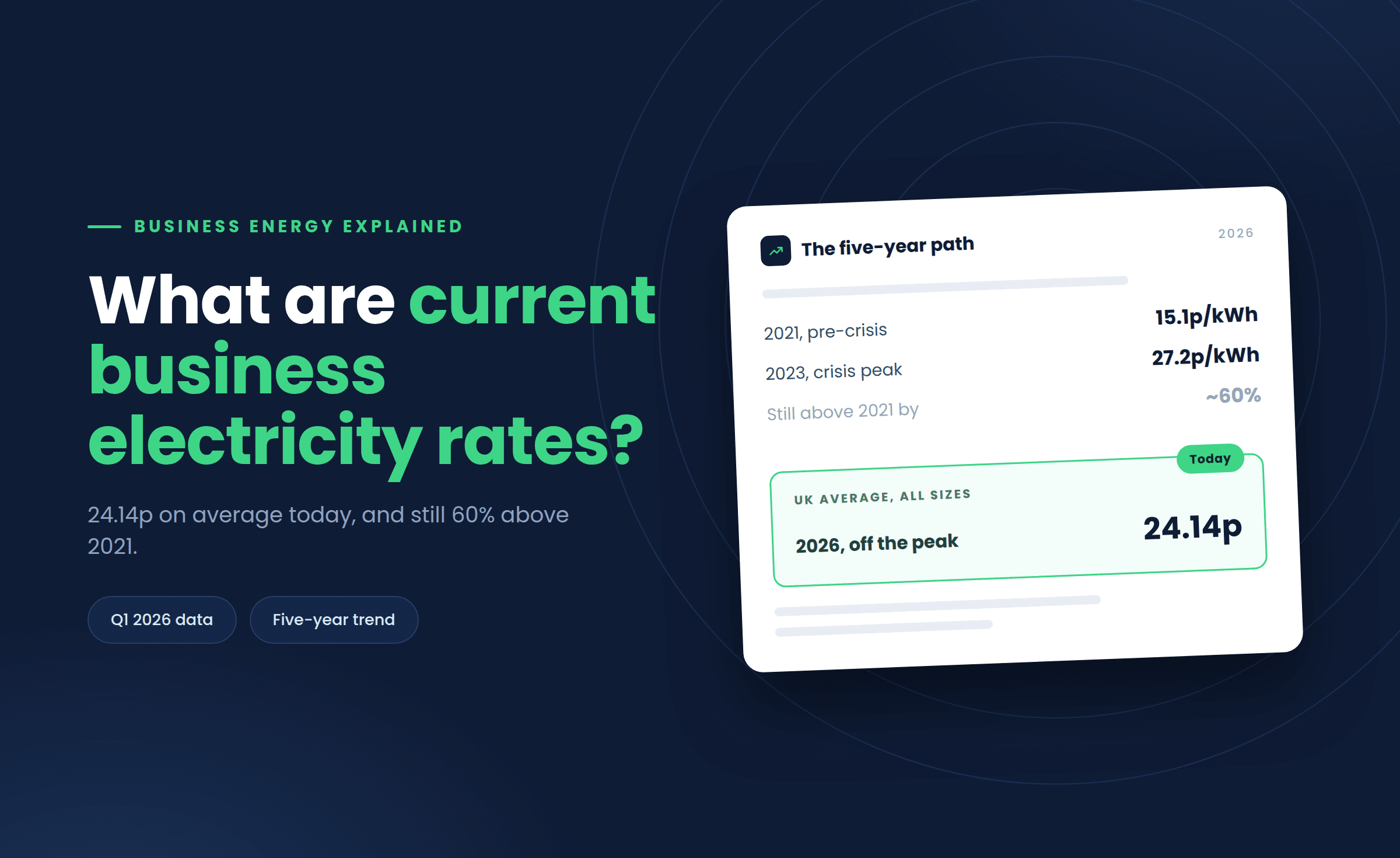

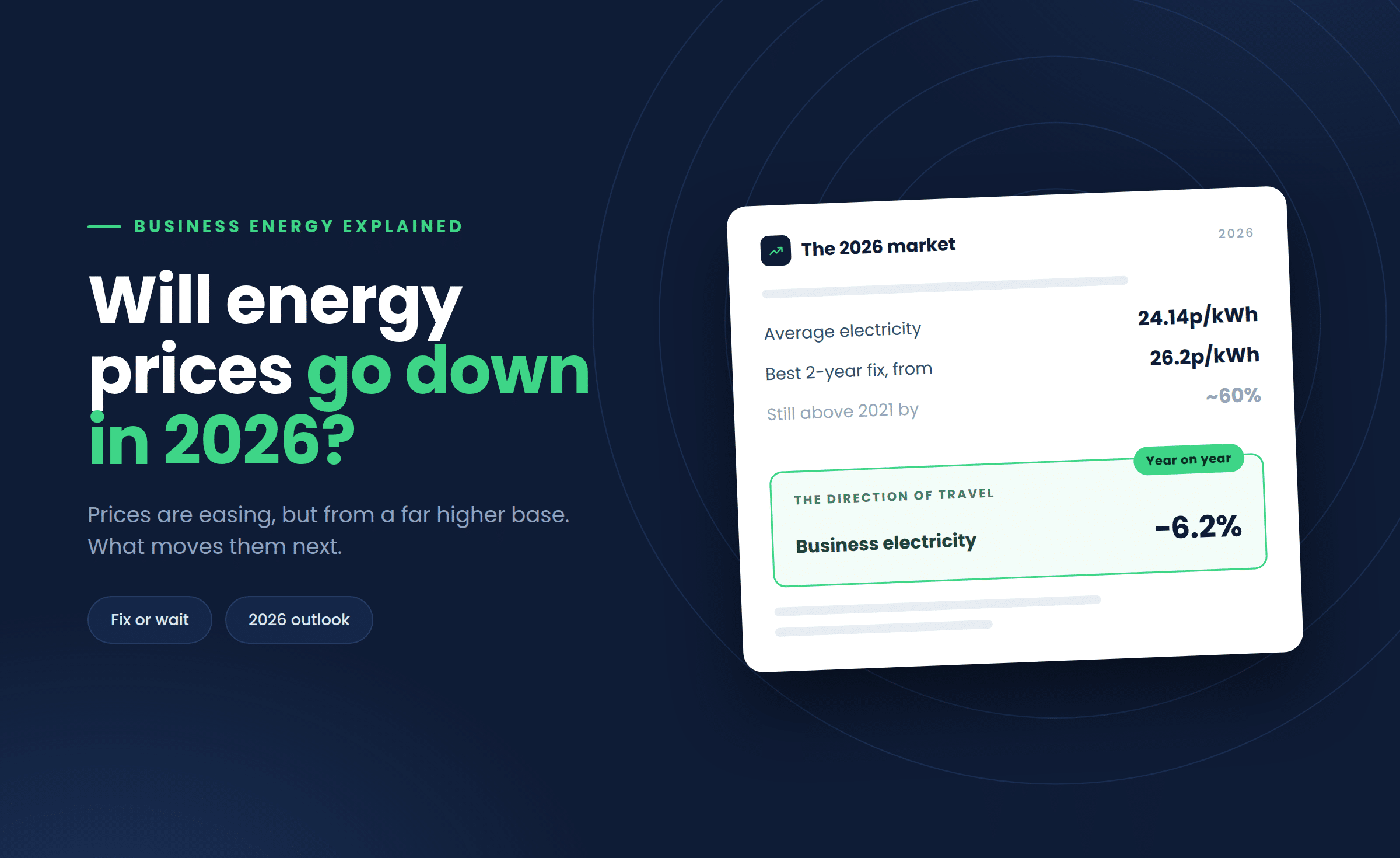
Business energy prices have already started to ease. Average business electricity is down 6.2% on the year, though it is still around 60% above 2021 levels, and further falls in 2026 depend heavily on wholesale gas.
Every owner signing a contract faces the same question: fix now and risk missing a better rate later, or wait and risk the market moving against you. There is no crystal ball for energy markets.
What there is, though, is a clear direction of travel and a set of factors that move prices either way. This guide looks at where things stand, drawing on government price data, and what it means for your next renewal.
Are business energy prices falling right now?
Yes, on average. UK average business electricity has fallen 6.2% year on year, though it remains well above where the market sat before the 2021 to 2023 energy crisis.
The current trend
The fall is real and welcome, but it has not undone the underlying shift in what a normal business energy bill looks like. The table below sets out the market as it stands.
| Market metric | 2026 figure |
|---|---|
| Average business electricity rate | 24.14p/kWh |
| Change year on year | Down 6.2% |
| Change versus 2021 | Up around 60% |
| Best 2-year fixed electricity, from | 26.2p/kWh |
| Best 2-year fixed gas, from | 7.9p/kWh |
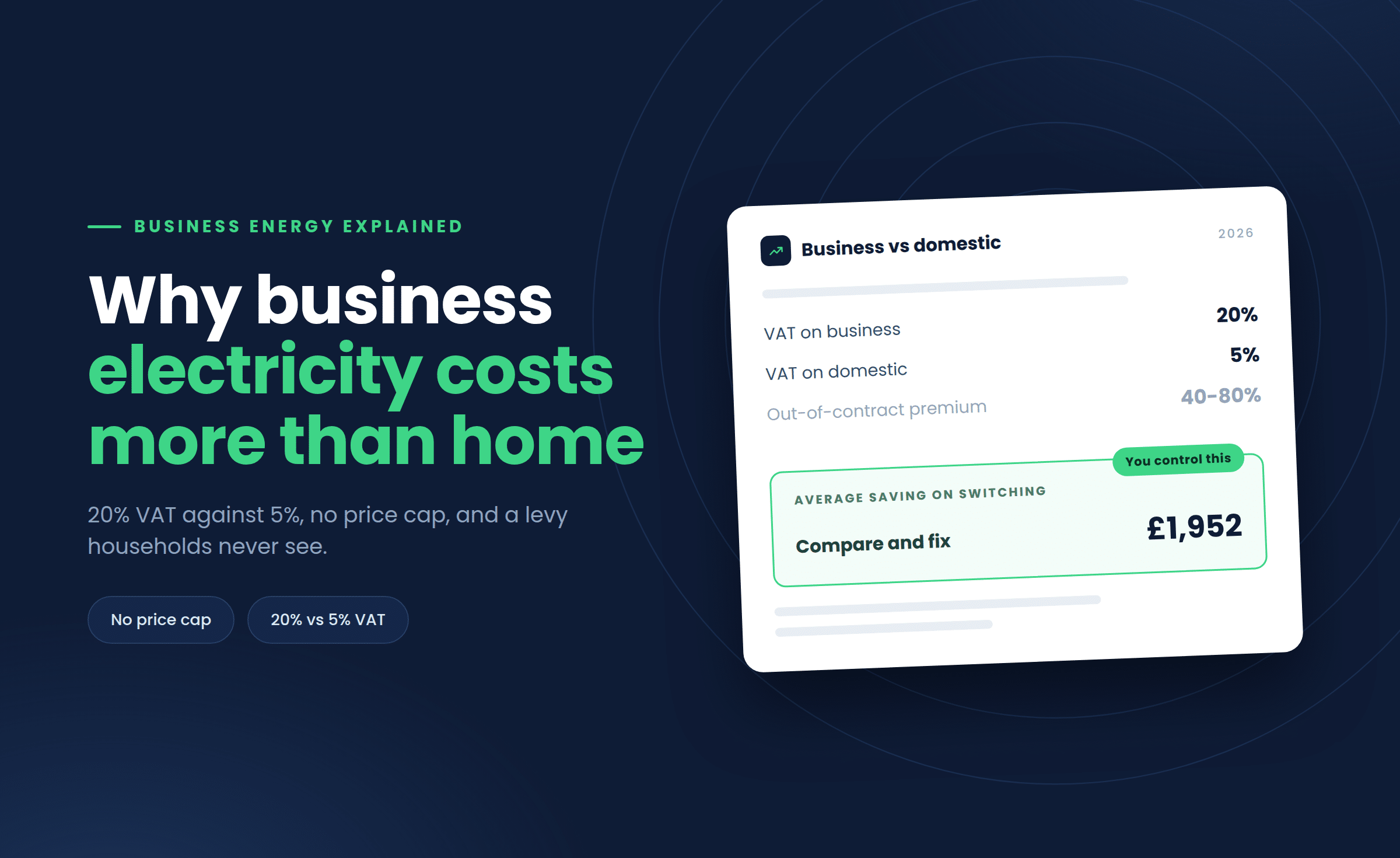
| Out-of-contract premium | 40% to 80% higher |
| Average saving switching via USE | £1,952 a year |
| Typical switch transfer time | About 5 working days |
Down from a much higher base
A 6.2% fall sounds modest next to a rise of around 60% over five years, and it is. It is progress, but the level is still elevated, which is part of why business energy prices feel so high.
What would need to happen for prices to fall further in 2026?
Sustained falls generally need calmer wholesale gas markets, stable gas storage, and no fresh supply shocks in Europe or globally. Gas is the single biggest swing factor.
Gas is the swing factor
Gas still sets the price for a large share of UK electricity, so wholesale gas drives any forecast. Network charges and the balancing costs managed by the system operator move far more slowly and predictably by comparison.
What pushes prices each way
The graphic below sets out the forces that could pull 2026 prices down against those that could push them back up.
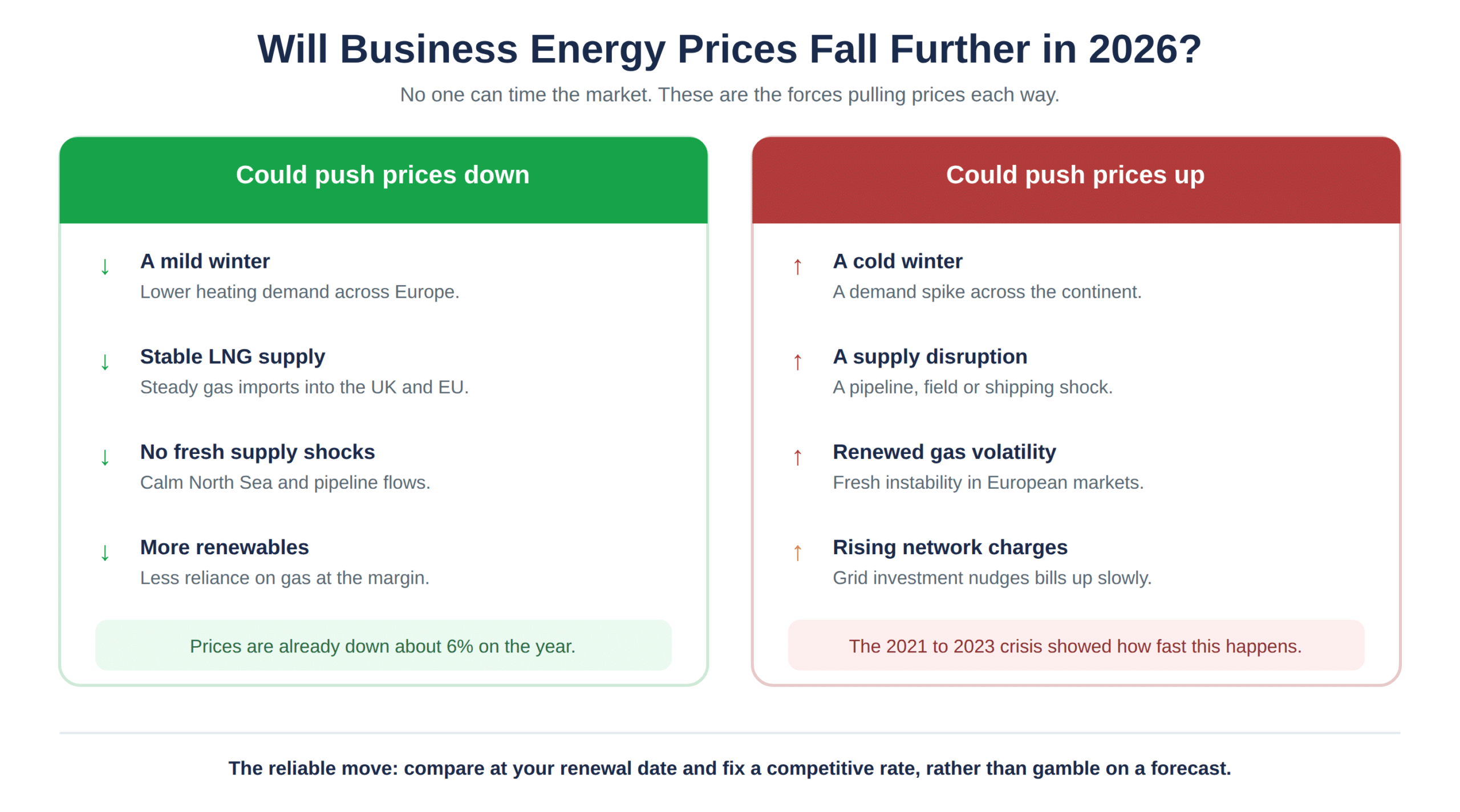
On the downward side, a mild winter, stable LNG supply, calm gas flows and more renewable generation would all help. None of them are guaranteed.
What could push business energy prices back up?
A cold winter, a supply disruption, or renewed volatility in European gas markets could each reverse the current downward trend quickly. Energy markets do not move in a straight line.
Market shocks
The 2021 to 2023 period showed how fast prices can spike when supply and demand fall out of balance. That risk has not disappeared, and it is why suppliers hedge their buying months or years ahead.
Rising network charges
Network charges also tend to rise over time as operators invest in the grid for electric vehicles and renewable connections. That puts gentle upward pressure on bills whatever wholesale gas is doing.
These charges move slowly and are set well ahead, so they rarely cause sudden jumps. The sharp moves almost always come from wholesale gas rather than the network side of your bill.
Should you fix your rate now or wait for a better one?
Most businesses are better off locking in a competitive fixed rate when one is available rather than gambling on a forecast. The best two-year fixed rates start from around 26.2p per kWh for electricity.
The risk of waiting
Waiting only pays off if prices fall and you time your switch correctly. Waiting badly risks rolling onto an out-of-contract rate 40% to 80% higher than a negotiated deal, which wipes out any theoretical saving many times over.
Comparing the full panel of business energy suppliers at renewal removes that risk, whichever way the market moves next.
Compare at renewal, not on a hunch
A comparison at renewal time beats a guess about where the market is heading. You can run a business energy comparison in 60 seconds, or call our UK team on 01242 32 31 31, and our guide to business energy renewals covers the timing in full.
How does the outlook affect your contract length?
If you expect prices to keep falling, a shorter fix lets you renegotiate sooner. If you value budget certainty, a longer fix locks in today’s rate whatever happens next.
Choosing a term
There is no universally right answer. A firm with tight cash flow often prefers a longer fix, while one willing to actively manage renewals might prefer shorter terms, which our guide to business energy contracts explores in more detail.
| Contract term | Trade-off |
|---|---|
| 1-year fix | More flexibility to re-quote, but more renewal admin |
| 2-year fix | The current sweet spot for most of the best rates |
| 3-year plus fix | Maximum certainty, less able to capture future falls |
Half-hourly and larger sites
Larger sites on a half-hourly meter are exposed to the market more directly, because their usage is settled in 30-minute periods rather than estimated. For most smaller firms on standard meters, the practical takeaway is simpler: watch your renewal date, not the daily wholesale price, and switch in good time.