
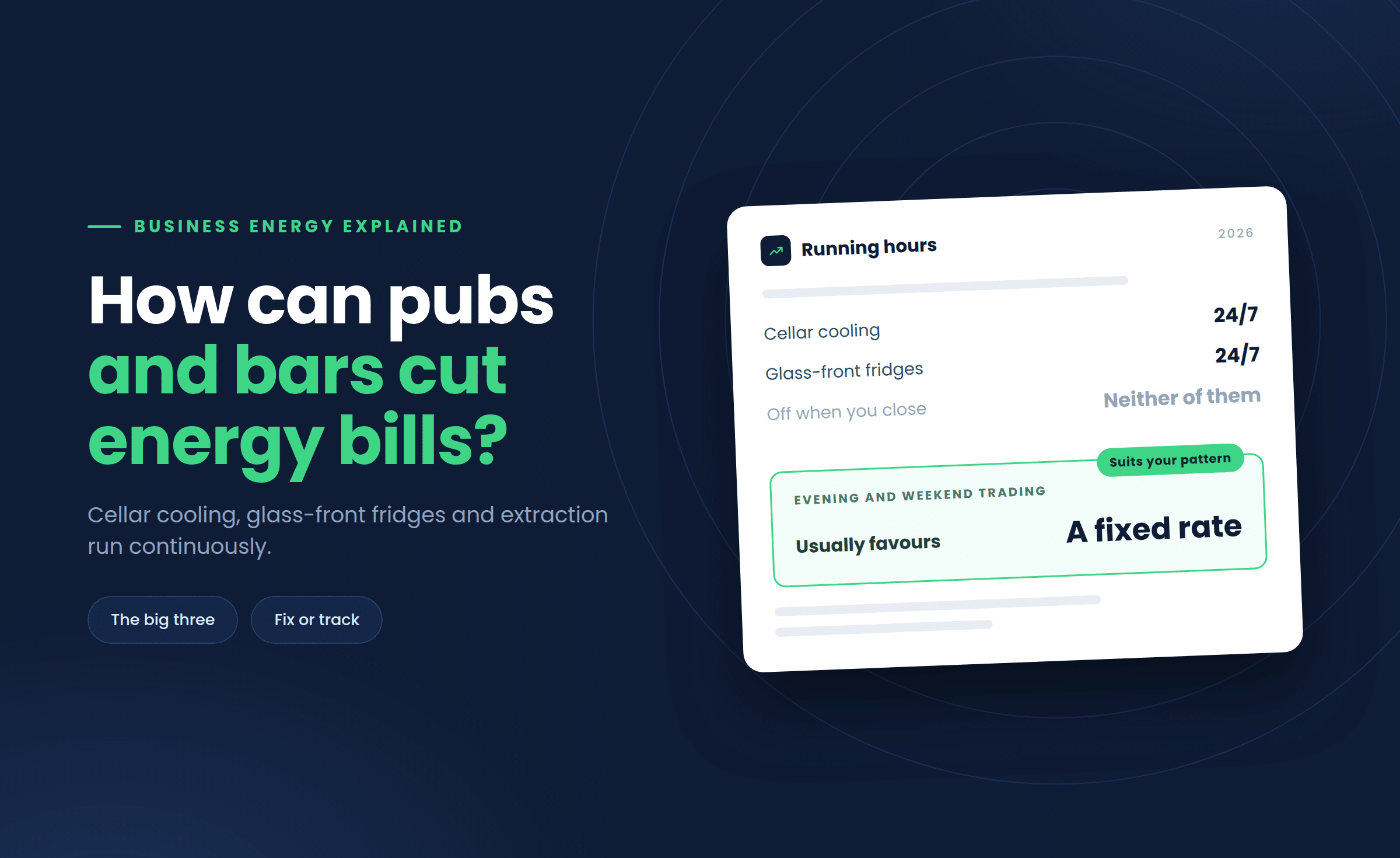
Pubs and bars cut energy costs fastest by tackling cellar cooling, glass-front fridges and extraction, since these run continuously and drive the bulk of a typical pub energy bill. Evening and weekend trading patterns also mean fixed-rate contracts usually suit better than tracking wholesale prices.
Anyone running a pub knows the bill does not track opening hours the way you would expect. Cellar cooling, fridges and glasswashers keep drawing power long after last orders, whether the place is heaving or empty.
That is a very different energy profile to an office or shop, which is why generic advice about switching off lights barely scratches the surface for a hospitality and leisure venue like a pub or bar.
Trading patterns matter too. A city-centre bar doing most of its business on Friday and Saturday nights has a completely different load curve to a village pub doing steady lunchtime and evening trade all week.
What drives a pub’s energy bill?
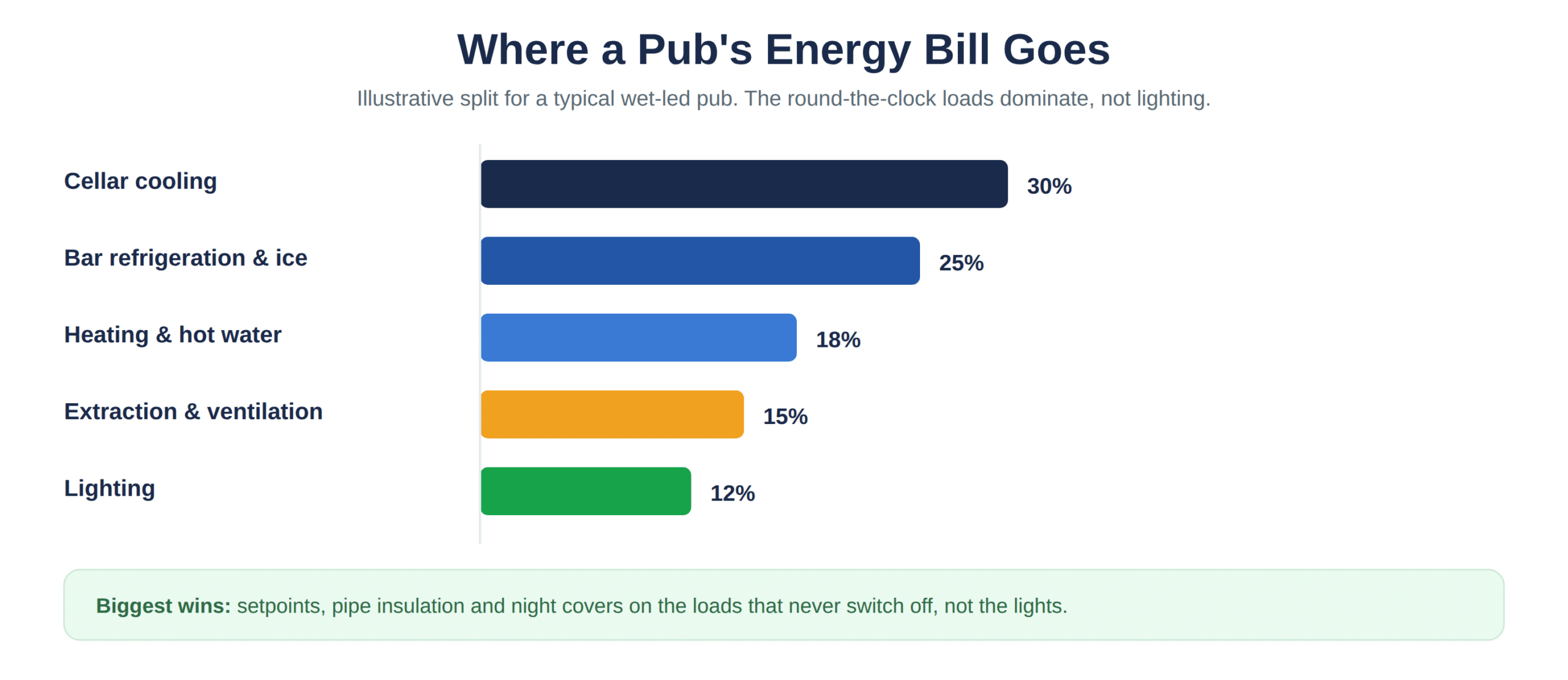
Cellar cooling, drinks refrigeration and extraction are usually the biggest components of a pub energy bill, because unlike lighting or heating, they run continuously regardless of whether the pub is open, busy or empty.
The loads that never switch off
A cellar cooling system holds cask and keg temperature around the clock. It does not get a quiet Tuesday afternoon off just because footfall has dropped.
- Cellar cooling: continuous, temperature-critical, hard to switch off even briefly.
- Drinks refrigeration: glass-front units, back bar coolers and ice machines.
- Extraction and ventilation: kitchen extract if food is served, plus general ventilation.
- Lighting and heating: a real cost, but far more controllable than the above.
| Where the energy goes | What drives the cost | Quick fix worth trying |
|---|---|---|
| Cellar cooling | Runs continuously to protect stock | Check setpoint and pipe insulation |
| Bar refrigeration | Frequent door openings in service | Night covers, door seal checks |
| Kitchen extraction | Fixed high setting through service | Demand-controlled extraction |
| General ventilation | Air quality and heat management | Service and airflow rebalancing |
How can cellar cooling costs be brought down?
Servicing cellar cooling units, checking door seals and pipe insulation, and avoiding overcooling below the temperature the beer needs are the fastest ways to cut cellar cooling costs without any capital spend.
Fixing poor pipe insulation
It is common to find cellar cooling set colder than necessary, sometimes left over from a previous licensee’s preference rather than any technical requirement for the beer being stored.
Poor pipe insulation between the cellar and the bar taps forces the cooling system to work harder to offset heat gain along the run, a cheap fix with a real ongoing payback. Our energy-saving tips for small businesses cover maintenance principles that apply to any refrigeration plant.
Does extraction and kitchen equipment matter if you do not serve food?
Less than for a food-led pub, but general ventilation still runs to manage condensation, heat and air quality across a busy floor, so it should not be assumed negligible just because there is no kitchen extract.
A quick win for food-serving pubs
Wet-led pubs still need mechanical ventilation through service, particularly on busy nights when a packed room generates heat and moisture that natural ventilation alone will not clear.
For food-serving pubs, kitchen extraction is often one of the largest single loads, frequently running flat out regardless of activity. Demand-controlled extraction adjusts fan speed to actual cooking, and the Carbon Trust rates it among the better hospitality efficiency measures.
Why do fridges and glass-front coolers cost more than expected?
Glass-front fridges and back bar coolers are opened constantly through service, and every open door lets warm air in that the compressor then has to remove, which is why bar refrigeration often costs more per unit than a solid-door equivalent.
Night covers and seal checks
Night blinds or covers for display fridges, used outside trading hours, cut the compressor workload considerably by reducing the temperature swing overnight when nobody is browsing the drinks selection anyway.
Door seal condition matters here just as much as for cellar cooling. A worn seal on a glass-front unit is easy to miss because the unit still looks like it is working normally.
Bigger refrigeration or extraction upgrades may qualify for business energy efficiency grants, and trade bodies like UKHospitality often flag sector-specific funding before it is widely publicised.
Should a pub fix its energy contract or track wholesale prices?
Most pubs and bars benefit from a fixed-rate contract, since a predictable rate makes budgeting around evening and weekend trading peaks far easier than exposure to wholesale price swings that do not line up with when the pub earns.
Watch the renewal window
UK average business electricity currently sits at 24.14p/kWh, though the rate a pub secures depends on its usage profile, meter type and region, so a live comparison against your bill is the only way to know your position.
Businesses coming off an out-of-contract rate can be paying 40% to 80% more than a negotiated deal, a common trap for pubs that renew automatically. Our guide to business energy contracts explains fixed versus flexible options in more depth.