
You switch business electricity supplier by comparing quotes against your current usage, choosing a new deal, signing the contract, and letting the new supplier handle the transfer, which typically completes in 4 to 6 weeks without any interruption to your power.
Switching sounds like it should be simple, and once you have done it once it is. The friction usually comes from not knowing what information you need or when in your contract you are actually allowed to move.
Unlike switching a mobile contract, business electricity involves a fixed-term agreement, a specific notice window, and sometimes a broker or letter of authority. Miss the window and you can find yourself rolled onto a much higher rate.
None of that makes it complicated once you know the order of operations. It is a handful of steps, most of which take minutes rather than hours.
What do you need to prepare before switching business electricity supplier?
Before you switch, gather your MPAN, a recent bill showing your annual usage, your current contract end date and, if you are not the account holder, authority to act on the business’s behalf.
The four things to have ready
Your MPAN identifies your specific meter point and lets a new supplier quote accurately rather than estimating. Our guide to finding your MPAN without a bill covers what to do if you cannot lay hands on a recent invoice.
- Your MPAN: found on any recent bill, and explained in our MPAN guide.
- Annual consumption: in kWh, or the last 12 months of billed usage.
- Your end date: and the notice period on your current contract.
- A letter of authority: a signed letter of authority if a broker is switching for you.
How does the switching process work step by step?
The switching process runs through comparison, quote acceptance, contract signature and a handover between suppliers, and you do not need to contact your old supplier yourself to make it happen.
The five steps
| Step | What happens | Typical timeframe |
|---|---|---|
| 1. Compare | Quotes pulled against your MPAN and usage | Minutes |
| 2. Choose and sign | You accept a new contract | Same day |
| 3. New supplier notifies old | The objection window opens | A few days |
| 4. Meter reading taken | Final reading closes the old account | Around switch date |
| 5. Supply transfers | New supplier takes over billing | 4 to 6 weeks total |
You will typically get a welcome pack once step three clears, from your chosen business energy supplier. Keep it, since it is the easiest way to check the correct tariff has gone live.
How long does a business electricity switch take?
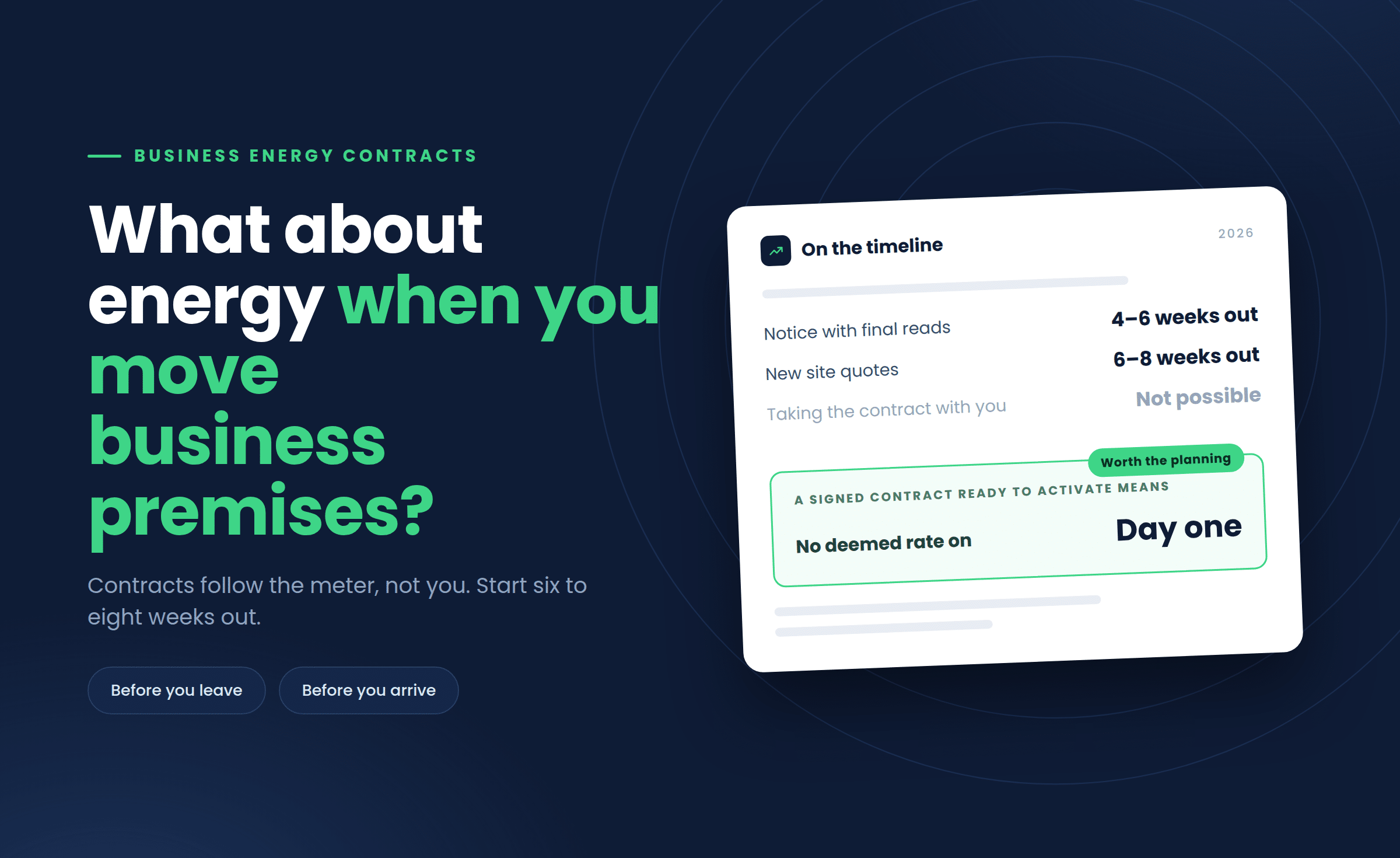
A business electricity switch usually takes 4 to 6 weeks from signing your new contract to the new supplier fully taking over billing.
If you’re already out of contract
That timeframe covers the notification period between suppliers, plus final meter readings and account reconciliation. It is rarely instant, which is exactly why comparing 2 to 3 months before your renewal date matters.
If you are switching because you are already out of contract, act sooner rather than later. Out-of-contract rates run 40% to 80% higher than a negotiated deal, so every week on that rate adds up.
Will your power be interrupted while you switch?
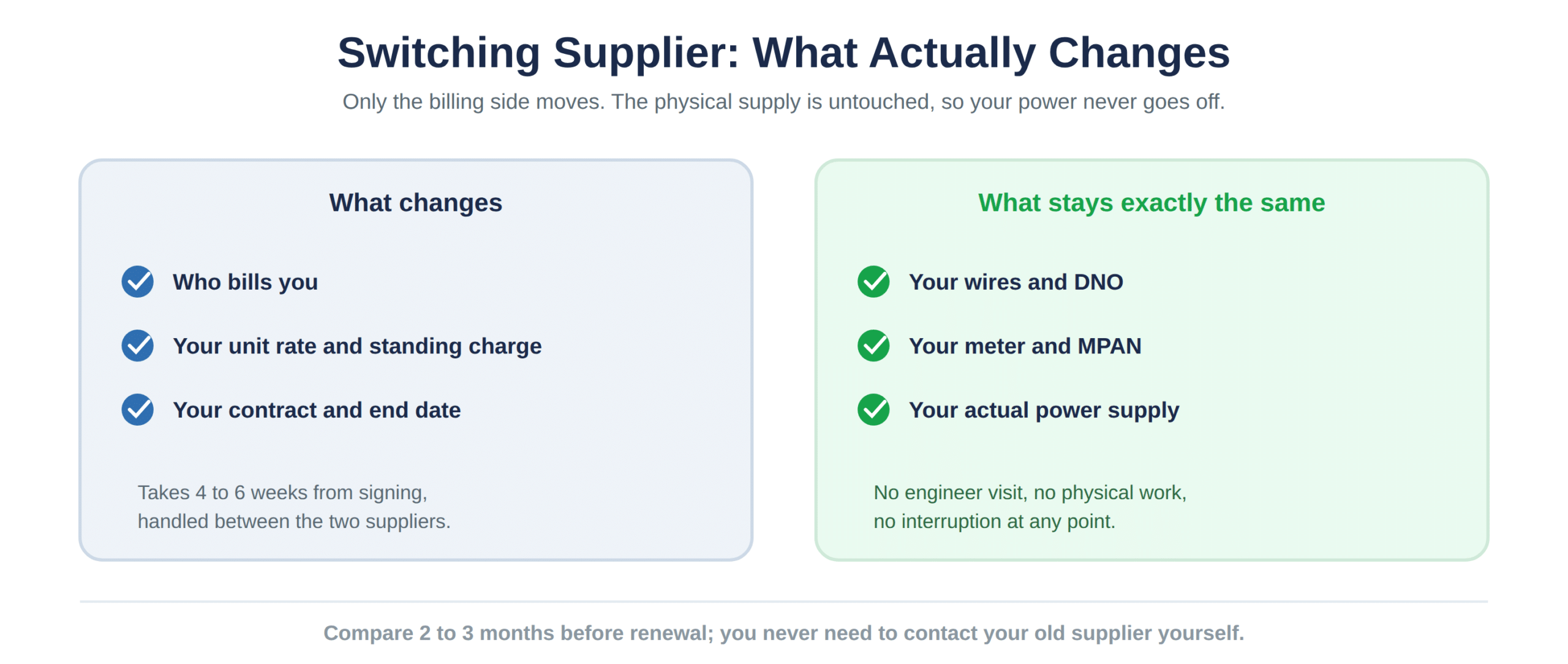
No. Switching business electricity supplier only changes who bills you and at what rate, it never involves any physical work on your meter or supply, so your power stays on throughout.
What if you’re on a half-hourly meter?
The wires delivering your electricity belong to your DNO regardless of who supplies you, and that never changes during a switch, as Ofgem’s business energy advice confirms. You will notice a change of billing name and a new rate, and nothing else.
Half-hourly settled sites switch the same way, though the process runs through your meter operator’s data rather than a standard reading. Our guide to half-hourly meters explains how that settlement works.
What can go wrong during a switch and how do you avoid it?
The most common problems are missing a notice deadline, switching without checking exit fees, or a new supplier’s objection failing because account details do not match your current bill exactly.
Four checks that prevent most problems
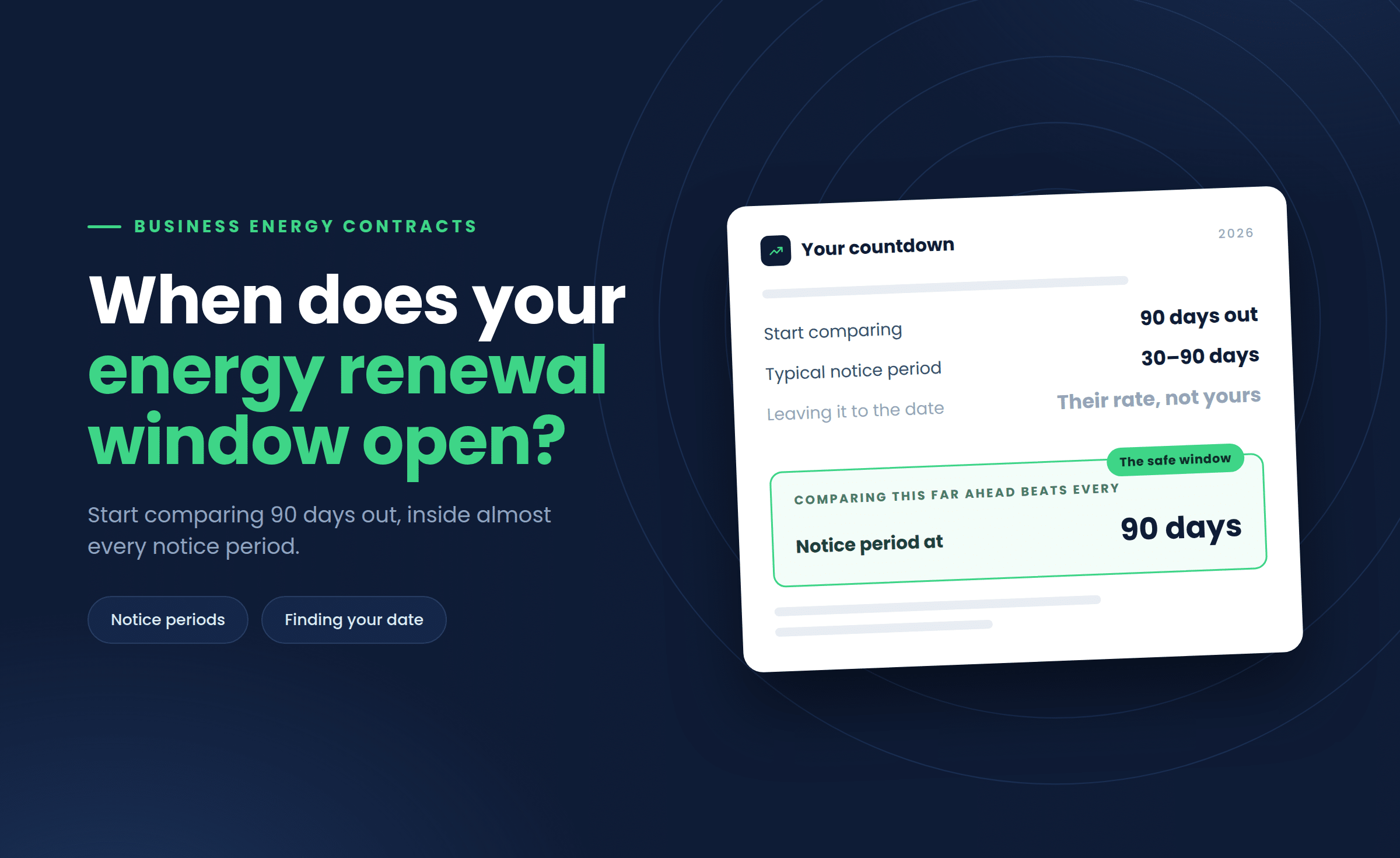
- Check your notice period: most business contracts need 30 to 90 days’ written notice.
- Match your details: business name and site address exactly as on your current bill.
- Ask about exit fees: if you are switching mid-contract rather than at renewal.
- Check the paperwork: that any broker’s letter of authority covers exactly what you agreed.
Micro businesses get extra protections under the Retail Energy Code around contract clarity and back-billing, but the switching mechanics are identical to any other business.