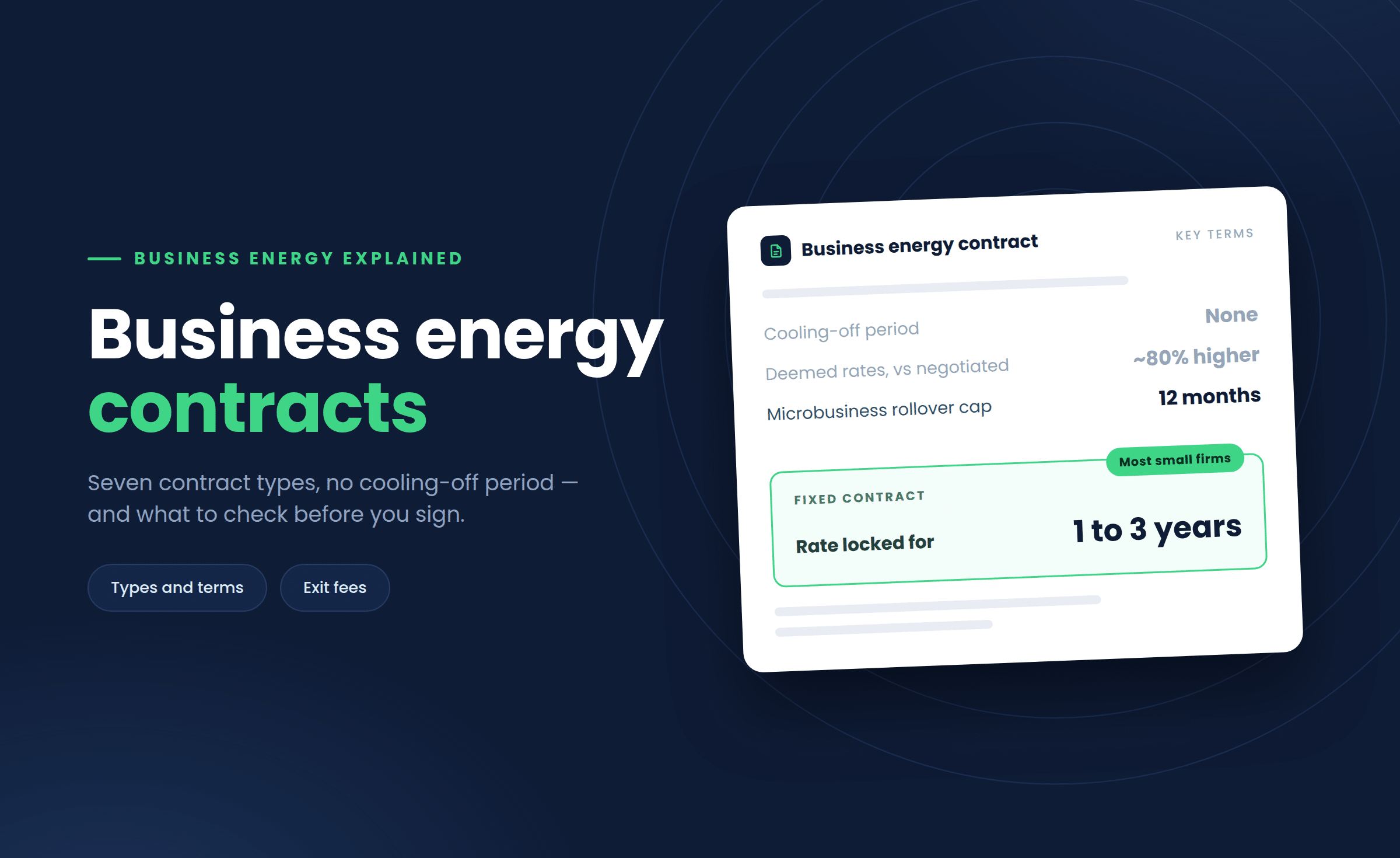

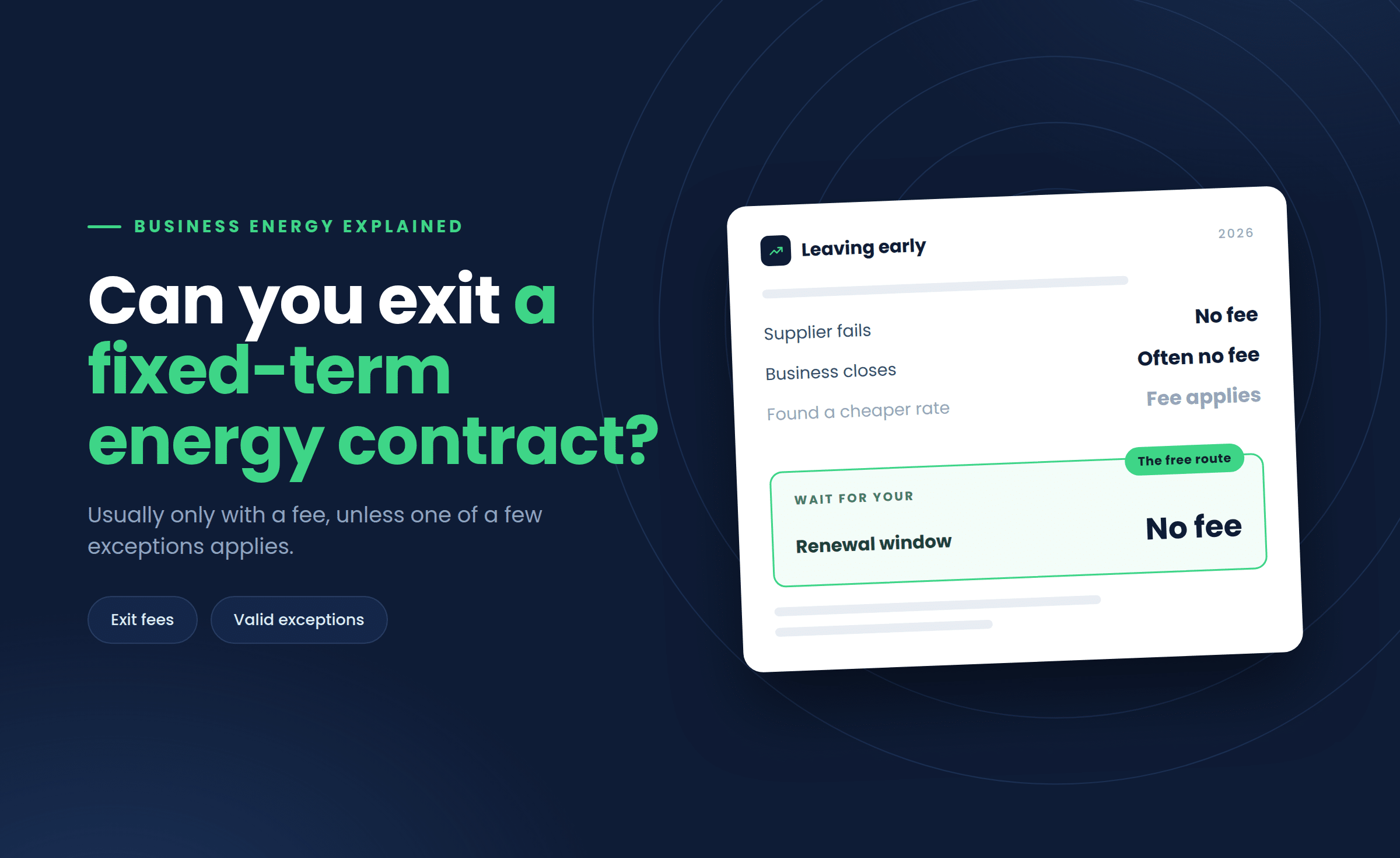
Usually not without a cost. Breaking a fixed-term business energy contract early almost always means paying an exit fee, though a handful of situations, such as your supplier failing, let you leave without one.
Circumstances change faster than most 2 or 3 year contracts allow for. A business might close a site, downsize, or find a much better rate elsewhere before the current term ends.
That does not mean you are automatically stuck: the exit route usually runs through a fee rather than a free pass, and it differs from a mid-contract switch in the detail.
What happens if you try to leave before your contract ends?
Your current supplier can charge an early termination fee, calculated against your remaining term and usage, and can keep billing you at the contracted rate until a new supplier formally takes over.
The switch has to complete properly
Simply telling your current supplier you are leaving does not end the contract. The switch has to be completed through your new supplier’s onboarding, or you risk being billed by both at once.
Suppliers vary in how strictly they enforce exit fees, and some negotiate, particularly if you are staying within the same supplier group. Your Meter Operator arrangement and any half-hourly settlement costs run separately from the supply contract, so check both before assuming you are fully clear of a site.
Are there situations where you can leave without paying an exit fee?
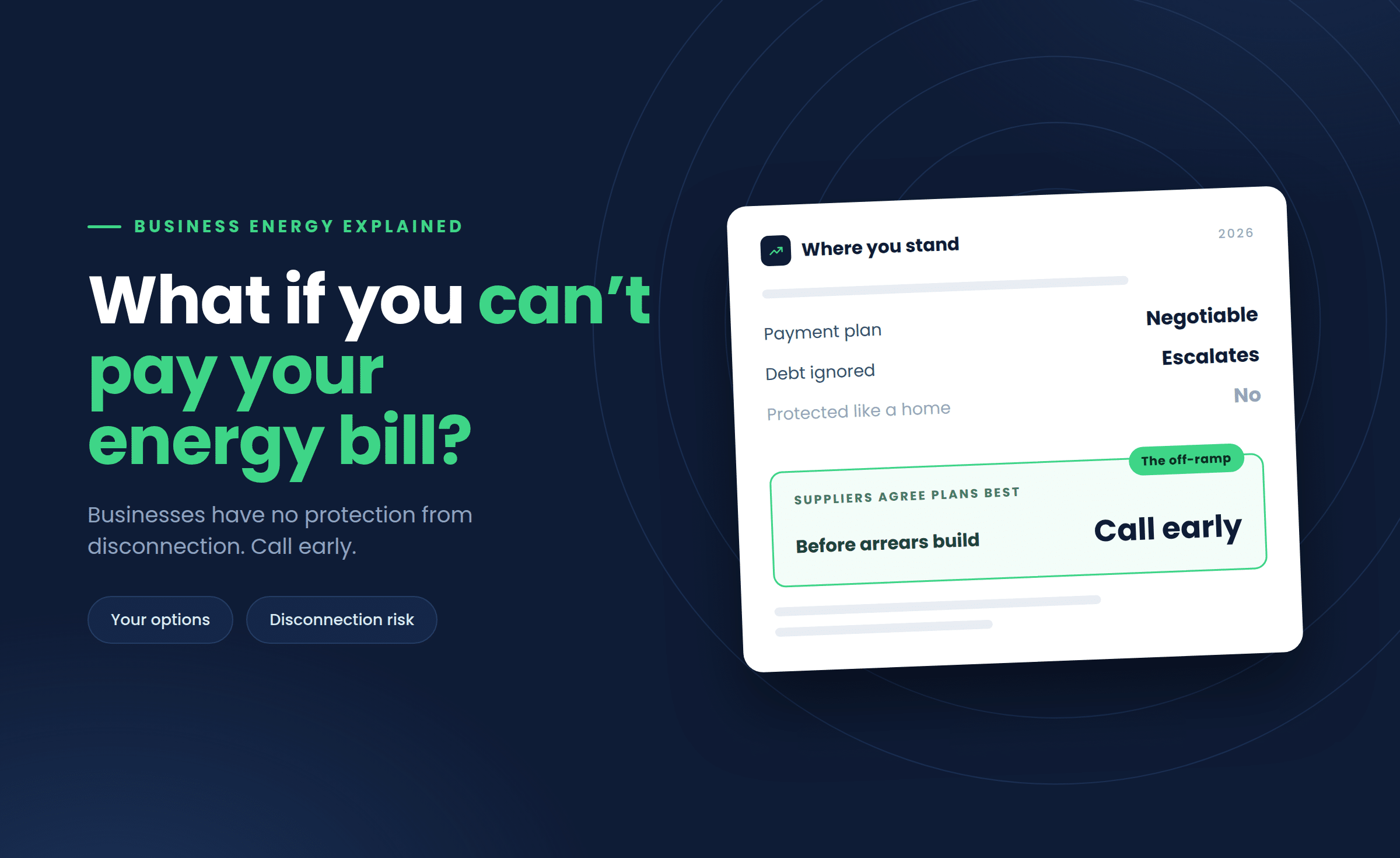
Yes. If your supplier goes into administration, if you are within a genuine renewal window, or if your business is closing or changing premises, you may be able to leave without the usual fee.
| Situation | Leave without a fee? | What happens instead |
|---|---|---|
| Mid-contract, no special reason | No | Exit fee, based on remaining term and usage |
| Supplier goes bust (SoLR) | Yes | Moved to a new supplier, no fee to the failed one |
| Within a renewal window (about 30 days) | Sometimes | Check your contract for a no-penalty window |
| Business closes or moves premises | Depends | Change of tenancy applies; final charges may still be owed |
Supplier failure and the Supplier of Last Resort process
If your supplier fails, Ofgem’s Supplier of Last Resort process moves your supply automatically. You will not owe an exit fee to the failed supplier, though your new deemed rate is a different matter, and our guide to failed energy companies covers the steps.
Renewal windows and change of tenancy
- A renewal window: often around 30 days before the end date, lets you give notice without a fee.
- Moving premises: closing or moving triggers a change of tenancy rather than a standard early exit.
- Genuine mis-selling: can sometimes be challenged, though that differs from wanting a lower rate.
How are business energy exit fees calculated?
Exit fees are usually calculated against your remaining contract value: the difference between your contracted rate and current wholesale prices, multiplied by your estimated remaining usage.
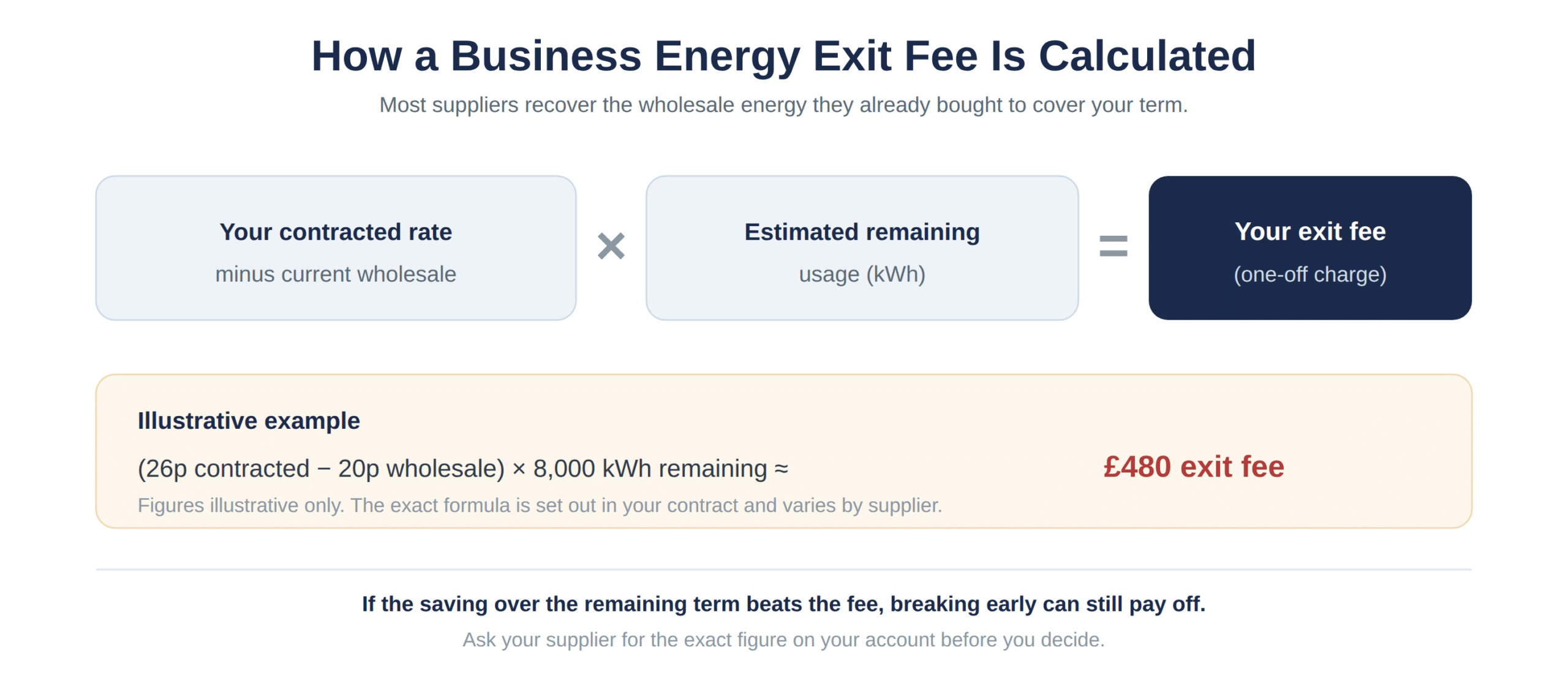
The rough formula
The exact formula varies by supplier and is set out in your contract terms, alongside your wider contract rights. Ask your supplier for a figure on your specific account before deciding.
What’s the safer way to move supplier without breaking your contract?
Wait for your renewal window if the cost of breaking now outweighs the saving, and use the time to compare properly so you are ready to switch the moment you are free to move.
| Factor | Break early now | Wait for renewal |
|---|---|---|
| Upfront cost | An exit fee | None |
| When it goes live | Sooner | At your contract end date |
| When it wins | Saving over the term beats the fee | Fee beats the saving, or renewal is close |
Wait, compare, then switch
Run the numbers first: if a lower rate would save more over the remaining term than the exit fee costs, breaking early can still make sense. If it does not, diarise your renewal date and treat the wait as a chance to compare thoroughly.
Compare business gas quotes alongside electricity so both contracts end up aligned. A broker can sometimes time a new deal to start the day your current one ends, avoiding both an exit fee and a gap onto an out-of-contract rate.
If you believe poor service amounts to a breach, Ofgem’s business energy advice and the Energy Ombudsman set out how to challenge it, separately from any exit fee.