
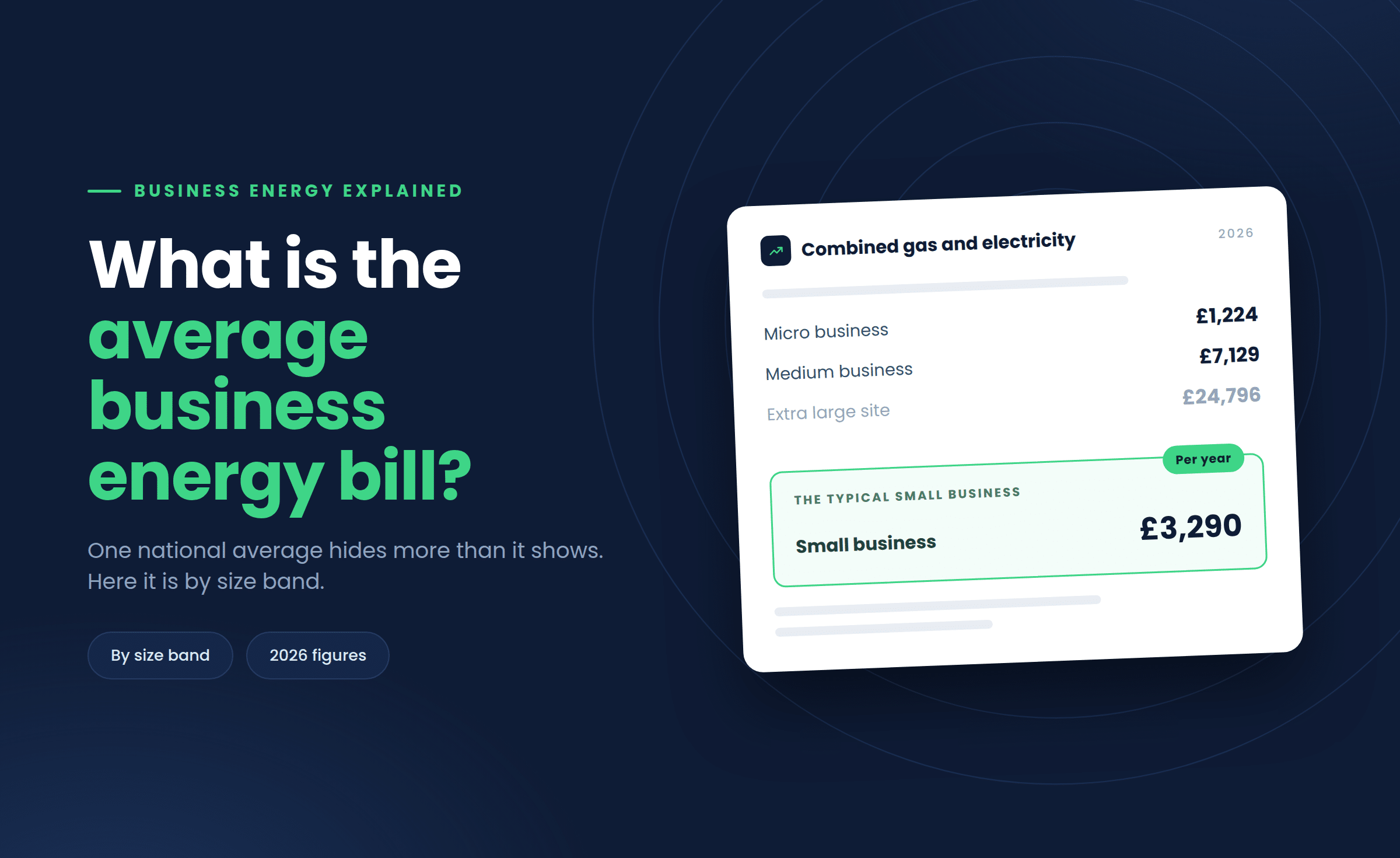
A typical small business pays around £3,290 a year for combined gas and electricity, and a medium-sized business closer to £7,129, but the average business energy bill swings widely with size, sector and meter type.
Every owner wants one clean number to measure their bill against. The problem is that a single national average hides more than it shows, because a hair salon and a cold store share almost nothing on usage.
A more useful question is what businesses your size and type actually pay, and whether your invoice looks in line with that or noticeably high.
This guide sets out the typical bill by size band, using government price data to Q1 2026, then breaks down what really moves the figure on your own bill. If yours looks off, our guide to how much business energy costs in the UK digs deeper into the underlying rates.
What is the average business energy bill by size?
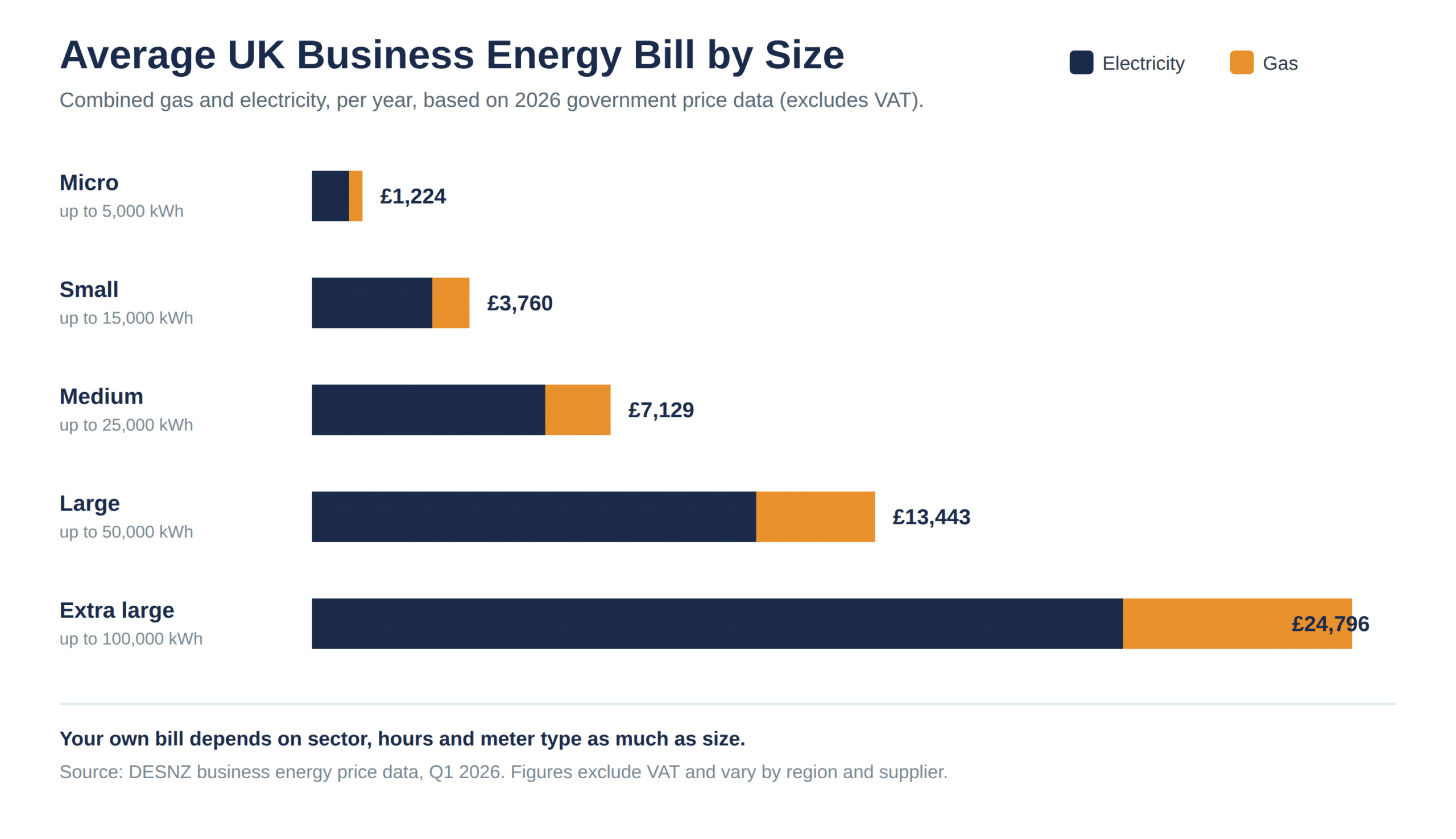
Combined gas and electricity runs from around £1,224 a year for a micro business up to nearly £24,796 for an extra large site, based on 2026 UK averages.
Average annual bill by business size
The table below splits the average bill into electricity, gas and a combined total across five common size bands. It uses DESNZ price data to Q1 2026 and excludes VAT.
| Business size | Electricity / year | Gas / year | Combined / year |
|---|---|---|---|
| Micro (up to 5,000 kWh) | £888 | £336 | £1,224 |
| Small (up to 15,000 kWh) | £2,884 | £876 | £3,760 |
| Medium (up to 25,000 kWh) | £5,563 | £1,566 | £7,129 |
| Large (up to 50,000 kWh) | £10,606 | £2,837 | £13,443 |
| Extra large (up to 100,000 kWh) | £19,356 | £5,440 | £24,796 |
Your own figure will move with region, meter type and exact consumption. It also depends on which of the panel of 30+ suppliers you sit with, and when you last compared.
What is a typical small business energy bill?
A typical small business using about 10,000 kWh of electricity and 2,500 kWh of gas pays roughly £3,290 a year combined, close to £274 a month.
That covers a lot of everyday setups: a café, a single retail unit, a salon or a one-site office. Push usage above that and the total climbs with it.
Unit rates for small businesses
Small businesses tend to pay around 28.76p/kWh for business electricity and roughly 6.5p/kWh for gas at this usage level. Those unit rates matter more than the headline total, since they are what you are really comparing at renewal.
What counts as a small business here
- Cafés and small retail: moderate electricity, low gas unless there is a kitchen.
- Hair and beauty: electricity-heavy, with very little gas.
- Small offices: lower overall use, mostly heating, lighting and IT.
What is a typical medium business energy bill?
A typical medium business using around 25,000 kWh of electricity and 10,000 kWh of gas pays about £7,129 a year, near £594 a month.
Typical businesses in this band
This band covers restaurants with a full kitchen, small manufacturing units, care settings and larger retail. Gas use climbs sharply here, because cooking and heating loads scale up fast.
Unit rates for medium businesses
Medium sites usually pay around 25p to 28p/kWh for electricity and roughly 6p/kWh for business gas, depending on exact size. Do not guess what a fair rate looks like: compare business energy prices in 60 seconds, or call 01242 32 31 31 for a no-obligation chat.
What affects the average energy spend for a business?
Sector, building type, opening hours and equipment shape usage far more than size alone, which is why two similar-sized firms can post very different bills.
The factors that move your bill most
- Sector and equipment: kitchens, refrigeration, machinery and 24-hour running all lift usage.
- Building age and insulation: older or leaky premises cost more to heat.
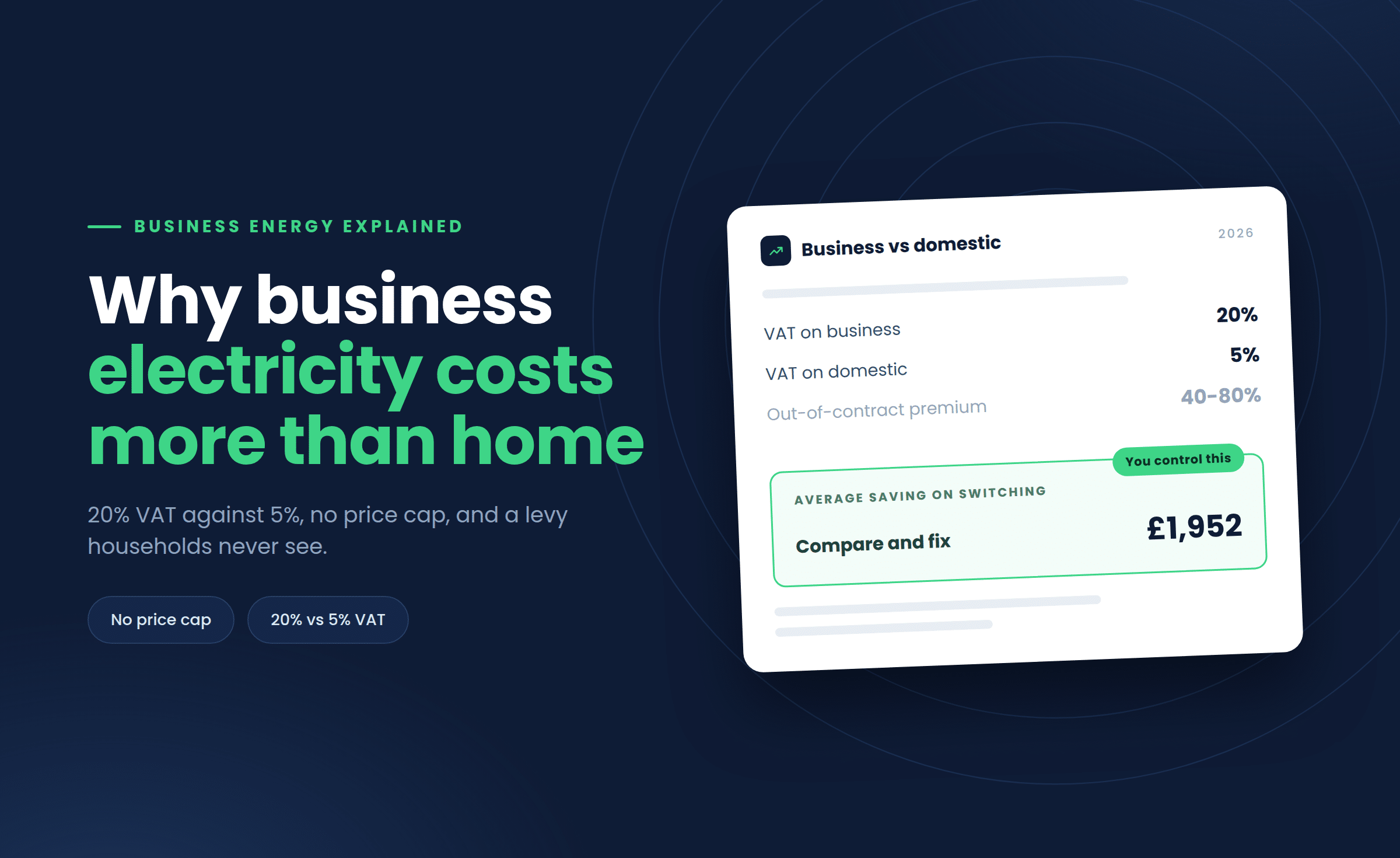
- Contract status: an out-of-contract rate runs 40% to 80% higher than a negotiated deal.
- Meter type: half-hourly settlement applies different charging above certain demand levels.
A 24-hour warehouse with refrigeration runs a completely different load to a 9-to-5 office of the same floor area. Sectors that heat and supply hot water around the clock feel this most, as our guide to reducing care home energy costs shows.
How do you know if your bill is above average?
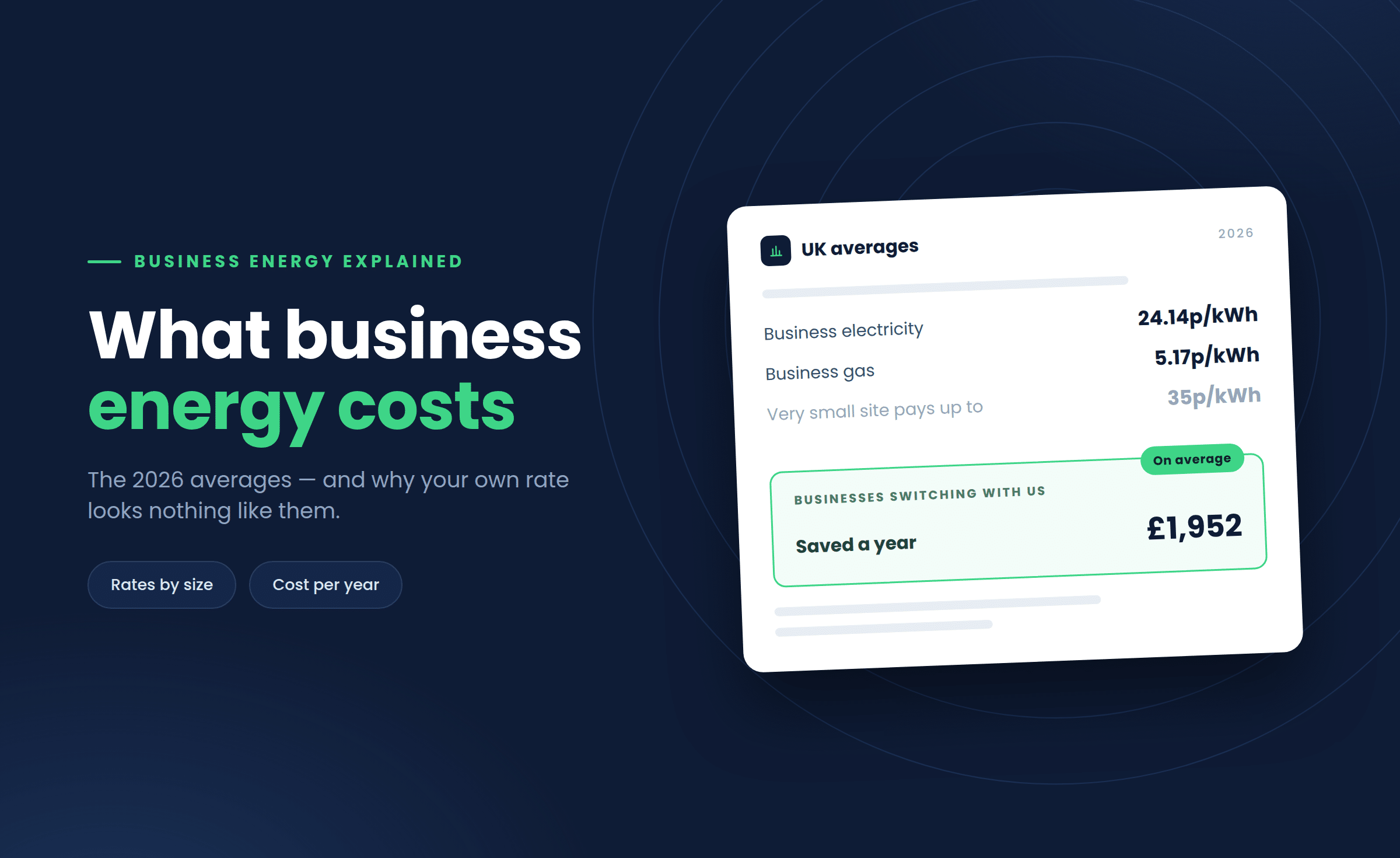
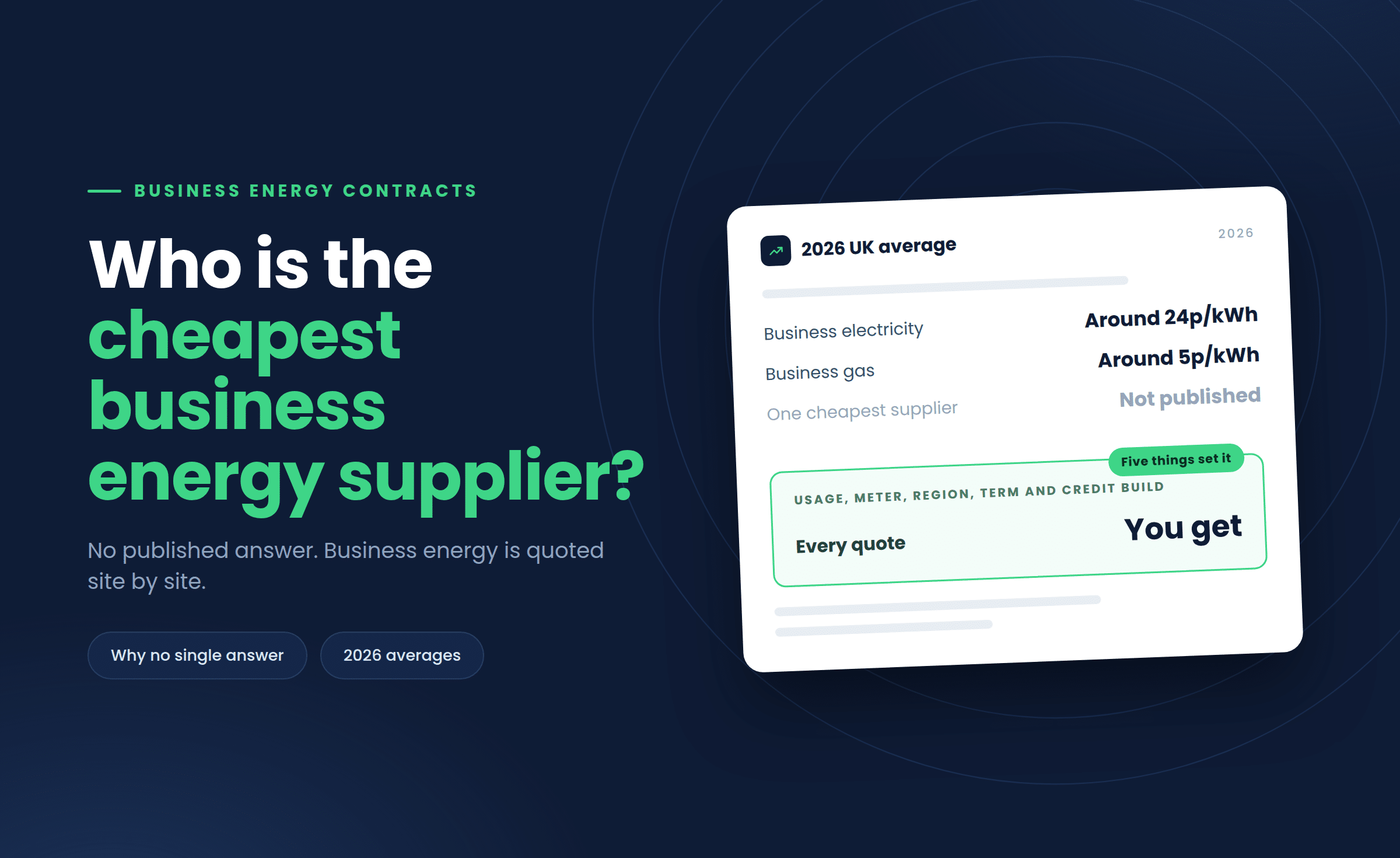
Check your unit rate against the current UK averages, around 24p/kWh for electricity and 6p to 7p/kWh for gas, then check your annual total against the size band closest to your usage.
A quick above-average check
| What to compare | UK benchmark (2026) |
|---|---|
| Electricity unit rate | Around 24p/kWh |
| Gas unit rate | Around 6p to 7p/kWh |
| Annual total | Your size band in the table above |
| Contract status | Out-of-contract runs 40% to 80% higher |
If your bill sits well above the figure for your band, and you have not compared the market in a year or so, an out-of-contract rate is the usual culprit. Our guide to how to read a business energy bill walks through exactly which lines to check first.
What makes up a business energy bill?
Your bill is built from four parts: a unit rate per kWh, a daily standing charge, the Climate Change Levy and VAT, all applied to your metered use.
The four cost lines on your bill
Knowing which line is which makes it far easier to spot where a high bill is coming from. The table below sets out what each part covers and how it is charged.
| Component | What it covers | How it is charged |
|---|---|---|
| Unit rate | The energy you actually use | Pence per kWh |
| Standing charge | Staying connected to the grid | Pence per day, fixed |
| Climate Change Levy | A government environmental tax | Pence per kWh, set by HMRC |
| VAT | Sales tax on the whole bill | 20%, or 5% for qualifying use |
The unit rate is where comparison bites hardest, since it is the biggest movable part of most bills. The standing charge and levy are harder to shift, though the levy can drop under a Climate Change Agreement.
How can a business bring its energy bill down?
Comparing the market before renewal is the single most effective step, and Utility Saving Expert customers save an average of £1,952 a year by switching.
Steps that trim the total
-
Compare early
Run quotes across the panel of 30+ suppliers before your renewal date.
-
Time the switch
A business switch takes about 4 to 6 weeks end to end, so plan it around renewal.
-
Check your estimates
Review your AQ or EAC against real usage so you are not billed on guesswork.
-
Ask about reliefs
A Climate Change Agreement can cut the levy if your sector qualifies.
Beyond switching, reviewing your standing charge and your Climate Change Levy position can shave more off the total. It is also worth asking Ofgem’s business energy advice what protections apply before you sign anything.
Ready to see where your bill should sit? A 60-second comparison shows what businesses like yours are paying now.