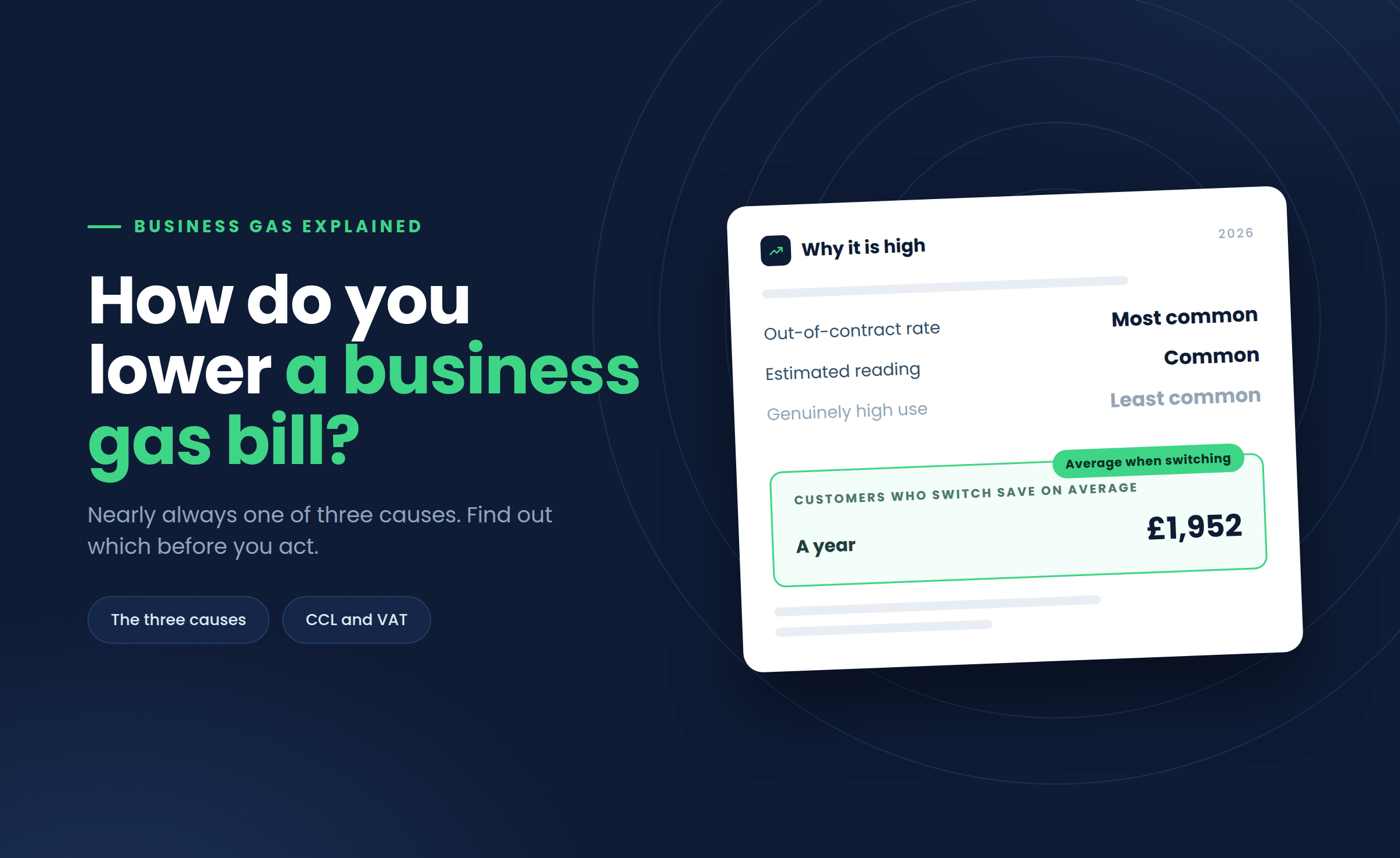

A sudden spike usually comes down to one of a handful of causes: your fixed contract ending and rolling onto an out-of-contract rate, an estimated or corrected meter reading, a change in how much energy you use, or a billing error. Out-of-contract rates typically run 40% to 80% above a negotiated deal.
One month the direct debit looks normal. The next, it has jumped by a hundred pounds or more with no obvious explanation.
An unexpected energy bill is rarely random, even though it feels that way when the invoice lands. There is almost always a specific trigger behind it.
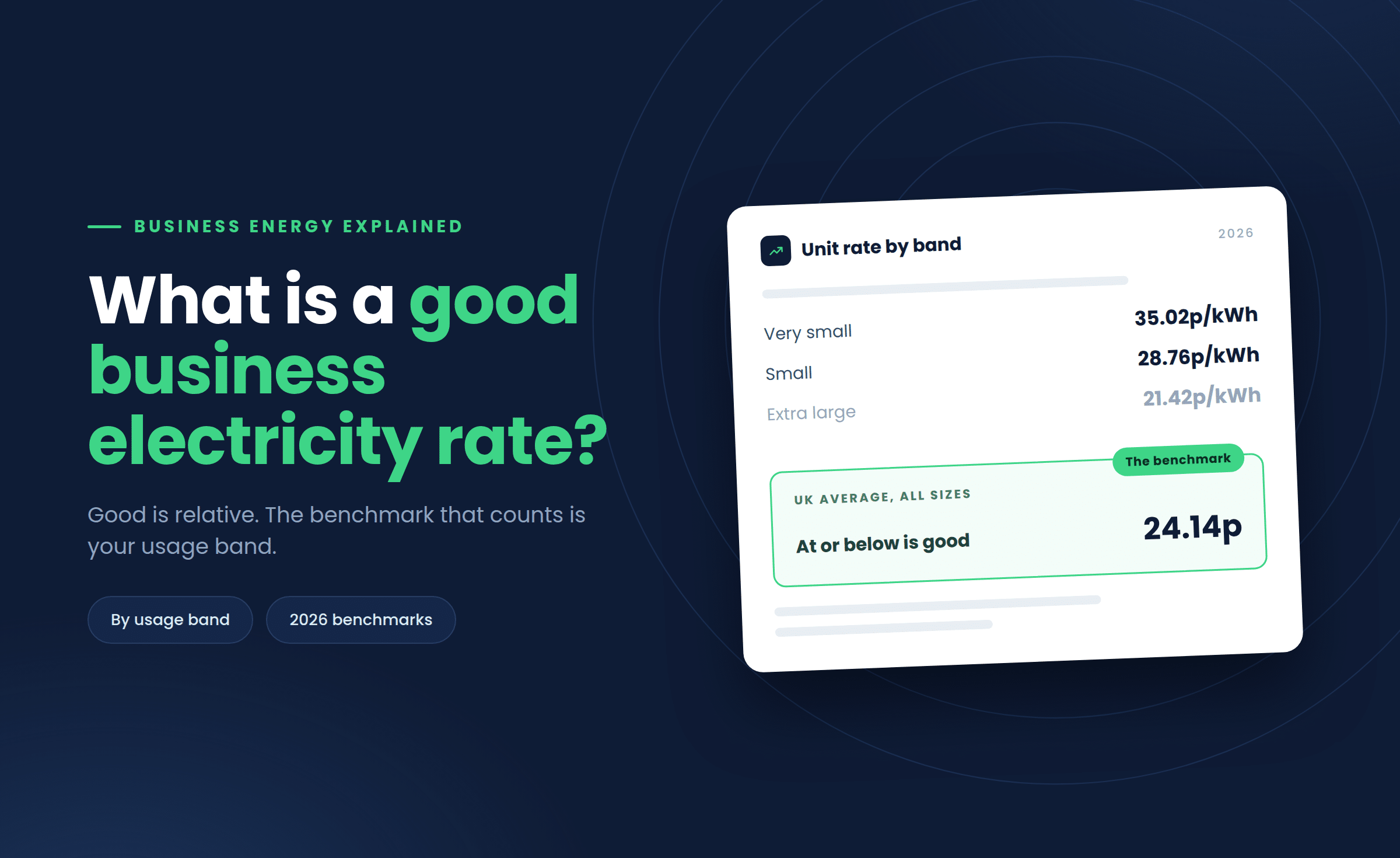
UK average business electricity sits at 24.14p/kWh, from DESNZ data, but a business that has slipped onto an uncompared rate can be paying well above that without realising anything has changed on paper.
Has your fixed-term energy contract ended?
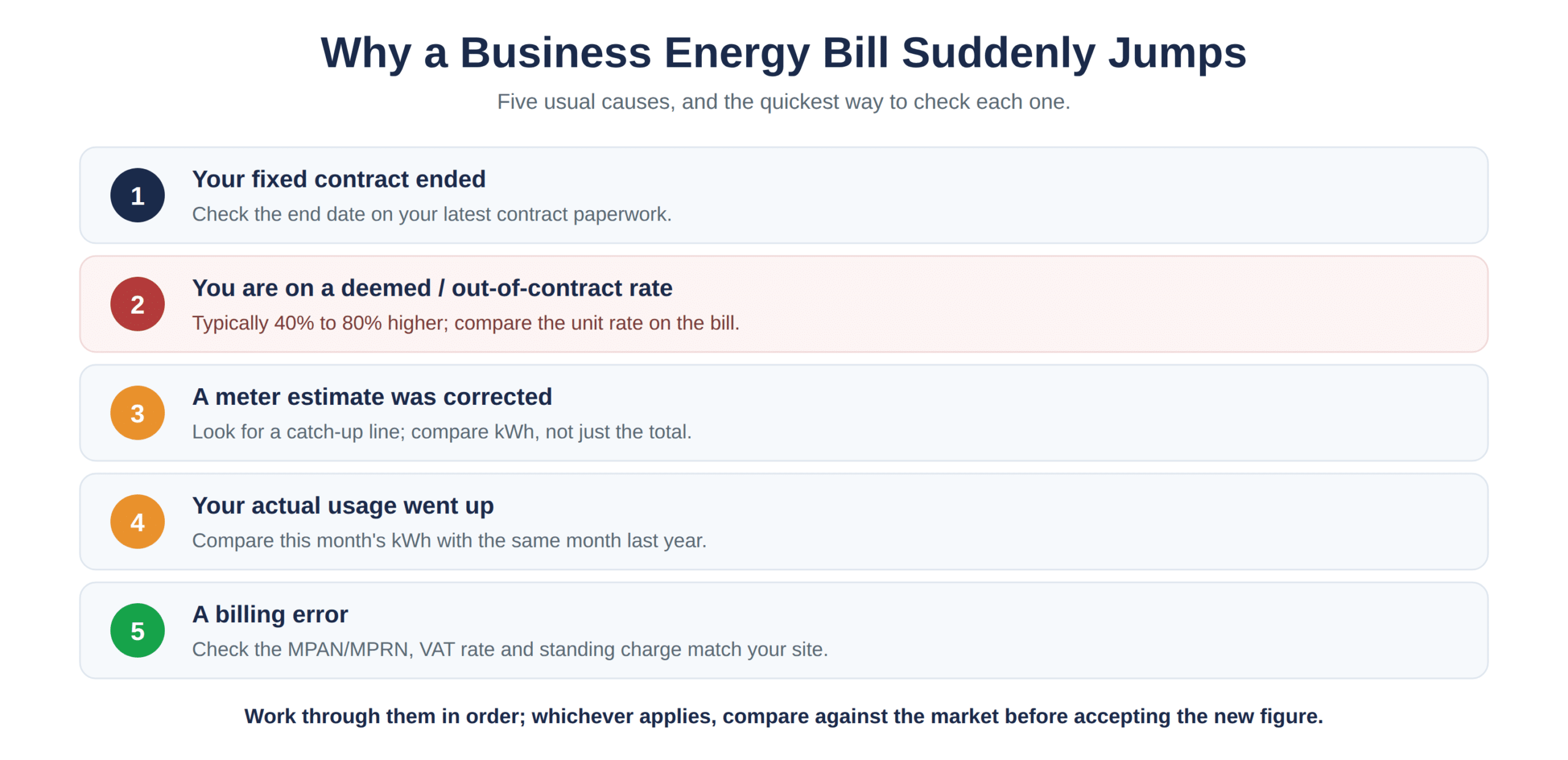
The single most common reason for a sudden jump is a fixed-term contract quietly expiring and rolling the business onto a much higher deemed or out-of-contract rate, often without a warning that stands out from routine correspondence.
Check your contract paperwork first
Suppliers are required to notify you ahead of renewal, but that notice often arrives as one email among dozens, easy to miss during a busy month. Our guide to business energy renewals explains what suppliers must tell you and when.
Check your most recent contract paperwork for the end date first. It is the quickest way to rule this cause in or out before digging further.
What does an out-of-contract or deemed rate actually cost?
Out-of-contract and deemed rates are typically 40% to 80% higher than a negotiated fixed deal, since suppliers price them to reflect the risk and admin cost of an unagreed, rolling arrangement rather than a committed term.
Your exact rate will vary
| Business size | Average negotiated rate (elec) | Typical deemed rate range |
|---|---|---|
| Very small (0-20 MWh) | 35.02p/kWh | 49p to 63p/kWh |
| Small (20-499 MWh) | 28.76p/kWh | 40p to 52p/kWh |
| Medium (2,000-19,999 MWh) | 25.00p/kWh | 35p to 45p/kWh |
| UK average, all businesses | 24.14p/kWh | 34p to 43p/kWh |
These ranges illustrate the scale of the gap rather than an exact quote. Your actual deemed rate depends on your supplier, region and meter type, and an out-of-contract rate is rarely where you want to stay.
Could a meter reading explain the jump in your bill?
An estimated reading that has run low for months, followed by an accurate reading or a correction, can produce a large one-off catch-up bill that looks like a sudden price rise but is really a usage correction.
Check the kWh, not just the total
- Look for a catch-up line: check whether the high bill includes a correction.
- Compare the kWh figure: not just the total cost, against your last few accurate bills.
- Submit readings regularly: or ask about a smart meter upgrade, to avoid repeat corrections.
This is common on sites without a smart meter, where readings depend on someone submitting them manually. A few missed submissions and the supplier’s estimate can drift well below actual usage.
Has your business’s actual energy use changed?
New equipment, extended opening hours, a change in headcount or seasonal heating and cooling demand can genuinely increase kWh usage, which shows up as a higher bill even at an unchanged unit rate.
Compare like-for-like periods
A restaurant adding extra covers, a warehouse running new refrigeration, or an office moving from hybrid to full-time attendance all pull more energy through the same meter. It is worth ruling this out before assuming the rate is the problem.
Comparing this month’s kWh against the same month last year, rather than against last month, controls for seasonal swings. Our guide to how to read a business energy bill shows where the usage figure sits, and comparing business electricity rates confirms whether the rate is the real issue.
Could this simply be a billing error?
Incorrect meter numbers, a wrongly applied VAT rate, duplicate charges or an error in the standing charge are all realistic explanations for a high bill, and none of them require you to simply accept the invoice as correct.
Check the meter references match
Check the MPAN or MPRN on the bill matches the meter physically on site. Mismatched references are a surprisingly common source of billing chaos, especially after a change of tenancy.
If something looks wrong after checking, formally disputing the charge is entirely reasonable and often resolves faster than people expect, and Ofgem’s business energy advice sets out your rights.