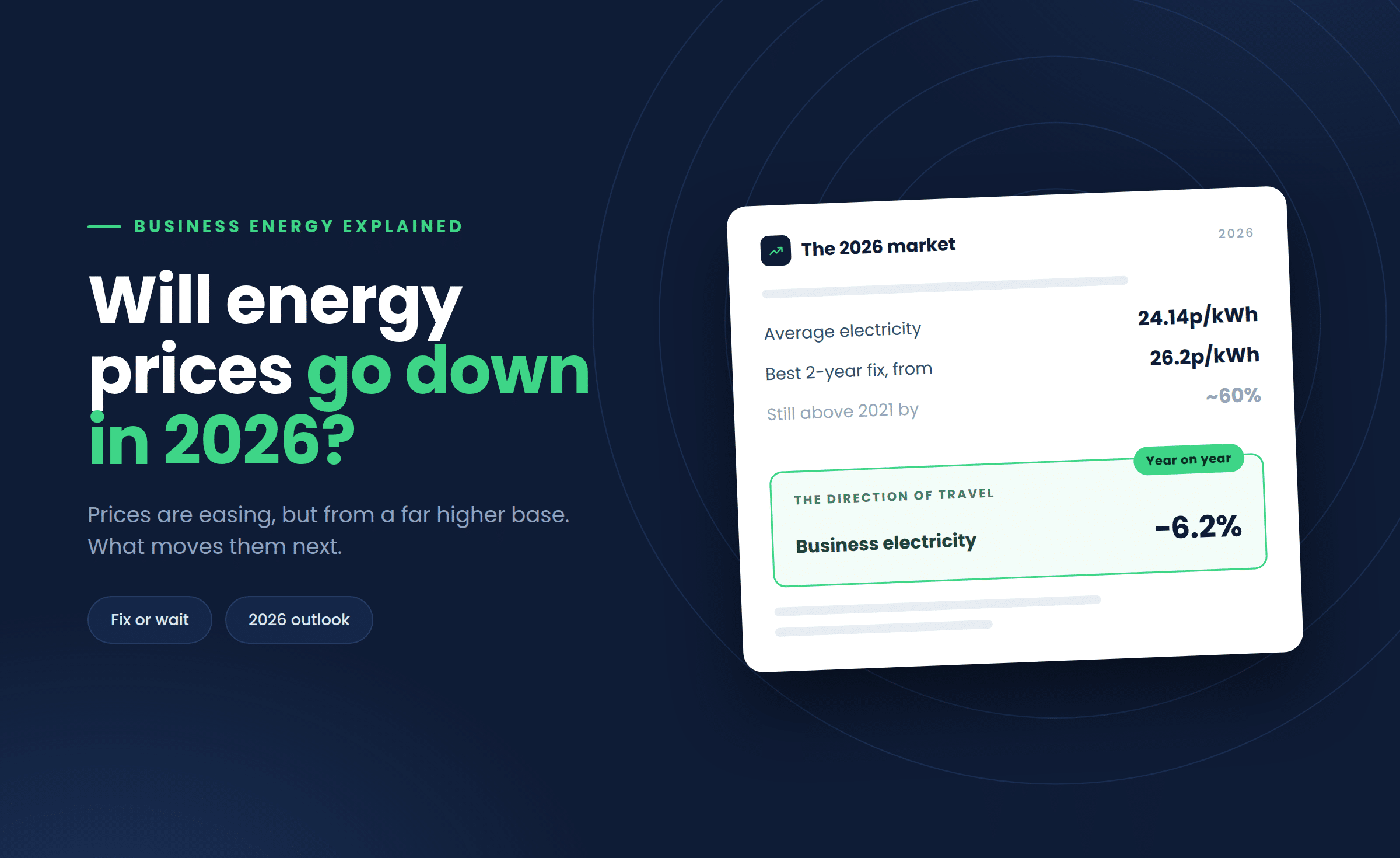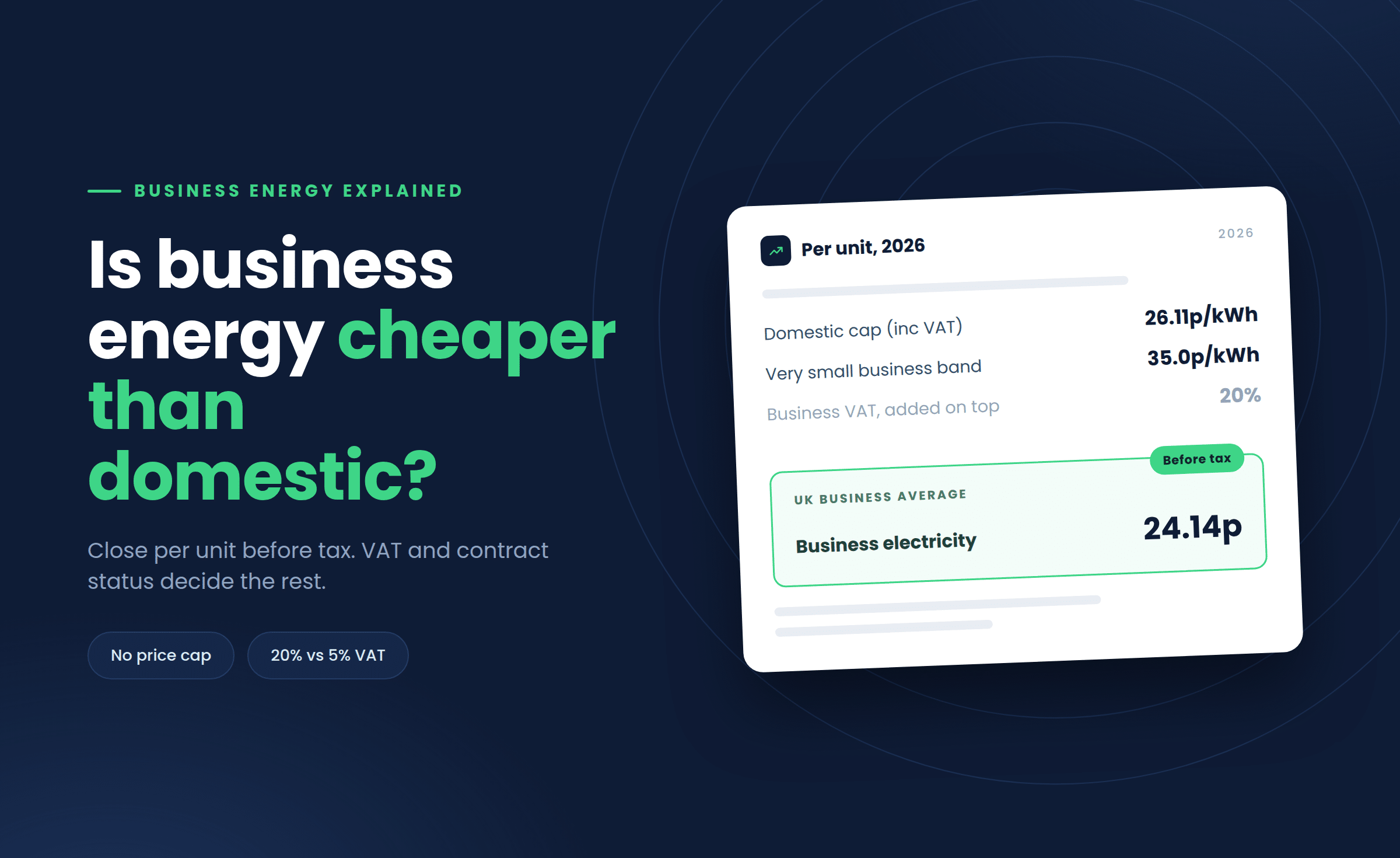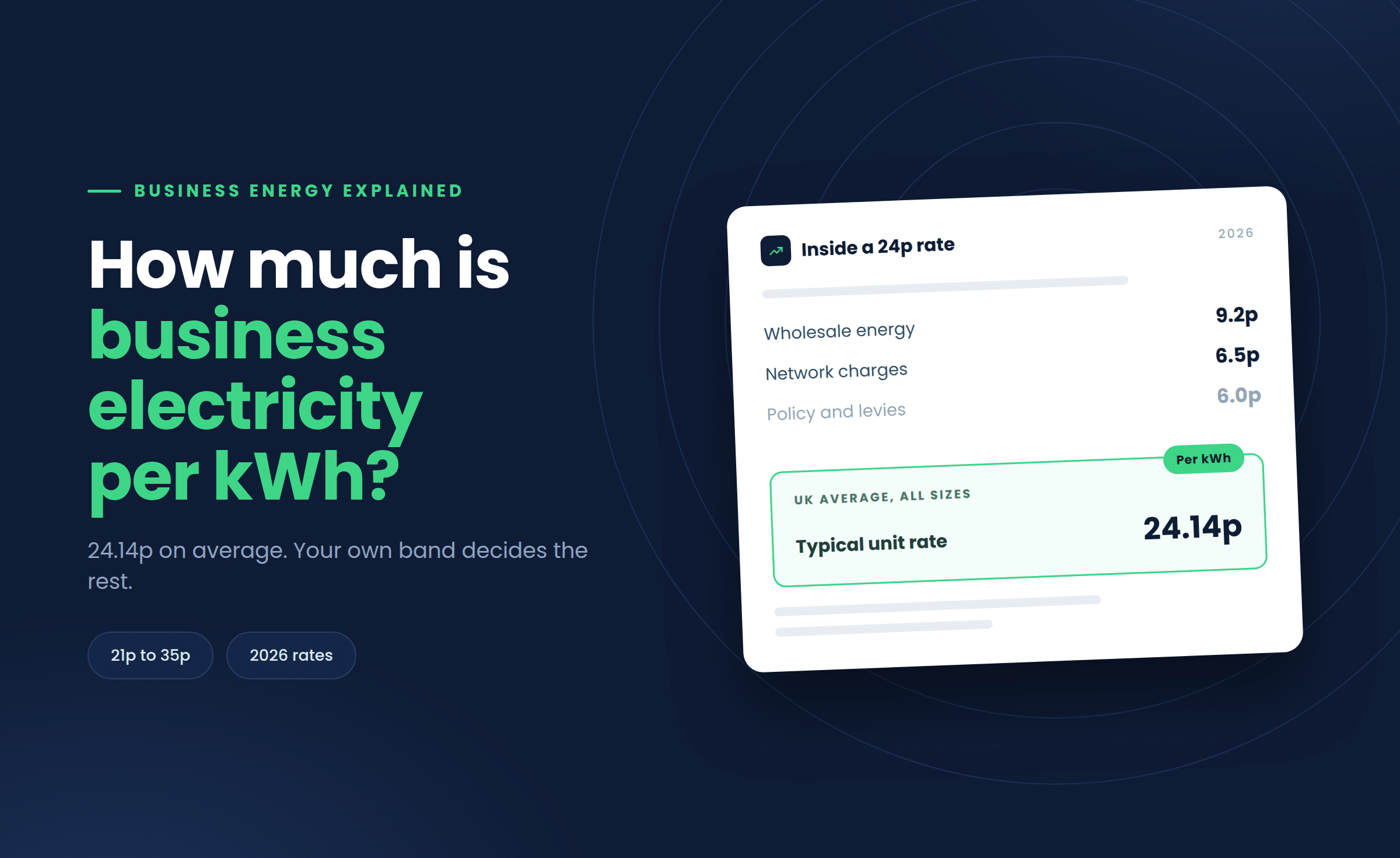

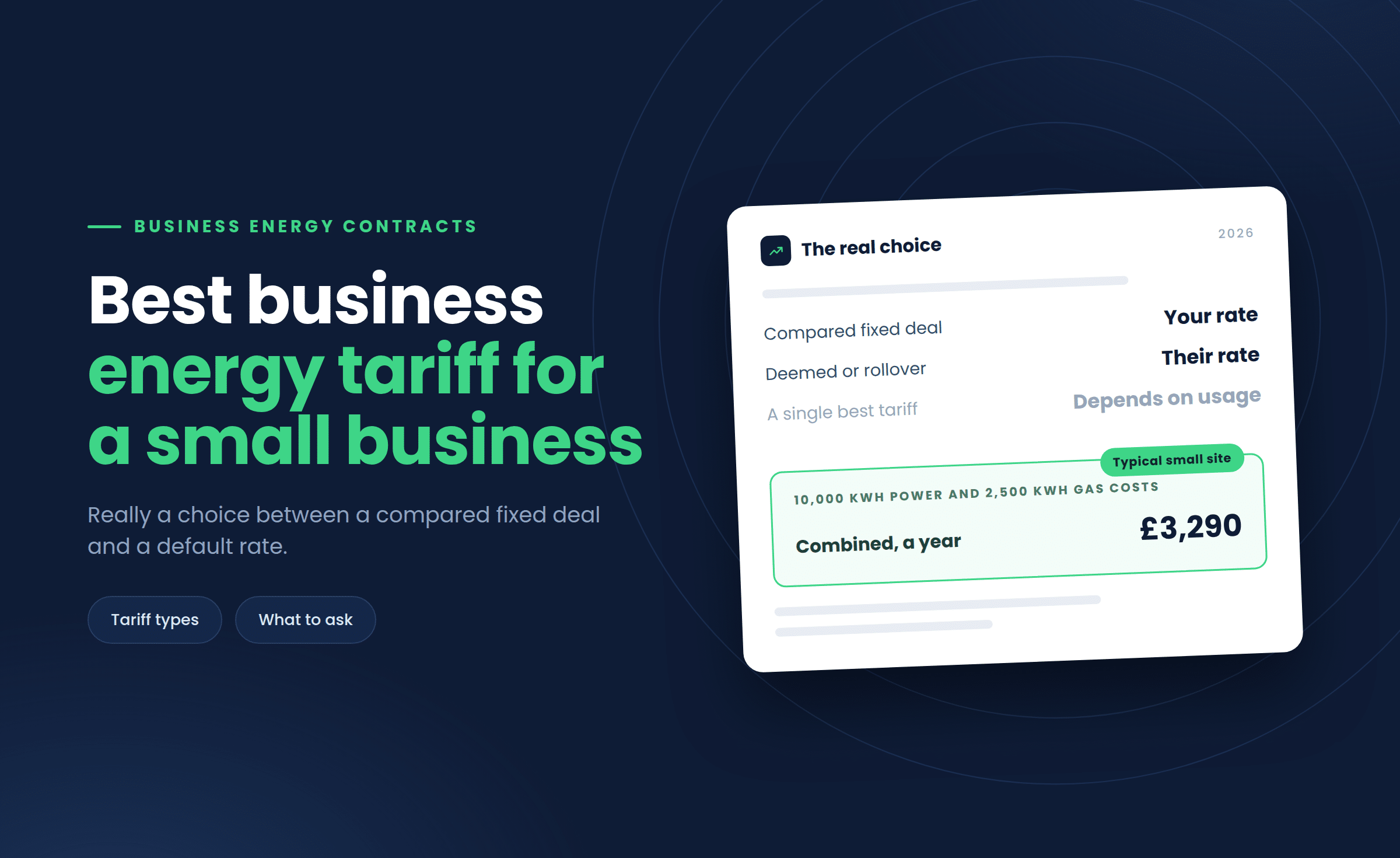
There is no single best business energy tariff, but for most small businesses it means a fixed-rate deal secured through comparison shortly before renewal, priced close to the current UK average of 24.14p/kWh electricity and 5.17p/kWh gas. What is best for you depends on usage, region and meter type.
Small businesses often assume there is one universally cheapest tariff waiting to be found. There is not, because pricing is personalised to your specific usage and risk profile.
What does exist is a reliable process for landing on the right tariff for your business, rather than the average one everyone else ends up with by default.
UK average business electricity is down 6.2% year on year, though it remains well above where it sat five years ago, so the market is genuinely moving and last year’s assumptions may no longer hold.
What types of business energy tariff can a small business choose?
Small businesses mainly choose between fixed-rate contracts, which lock in a unit rate for a set term, and deemed or rollover rates, which apply by default and cost considerably more.
Compare and fix, or drift
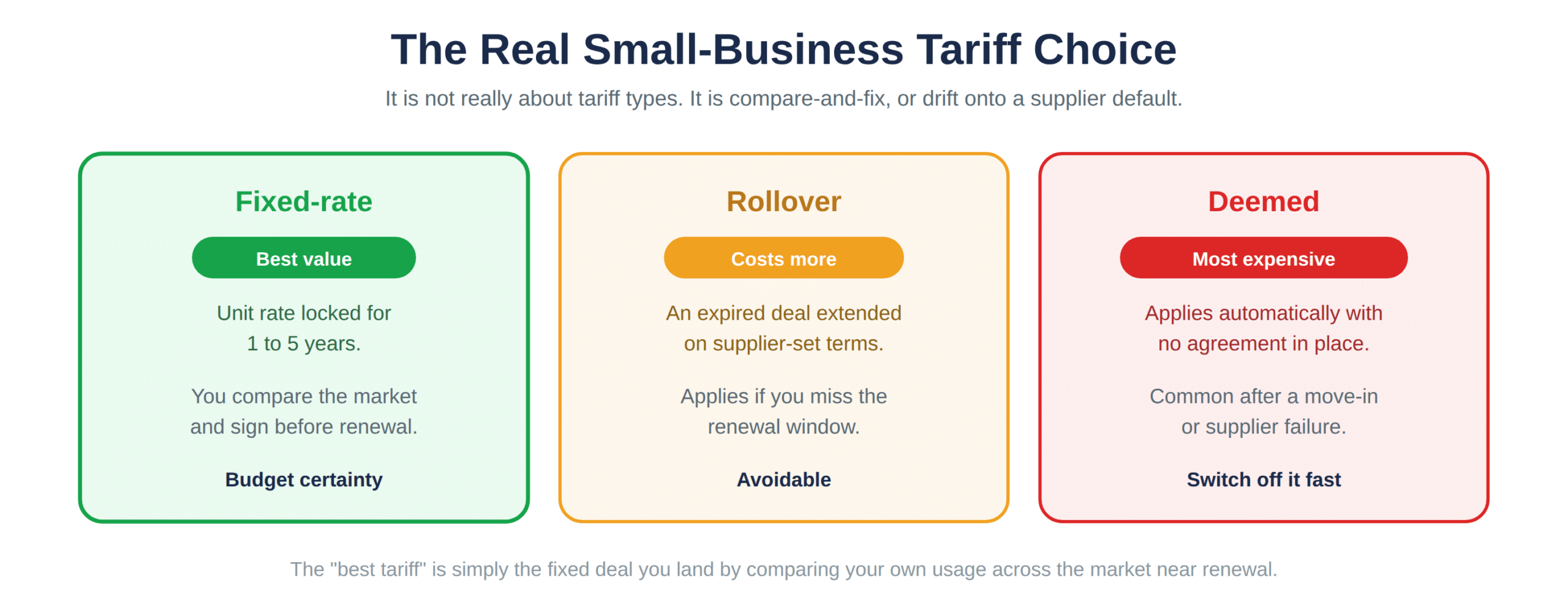
In practice the real choice is not between tariff types at all. It is between actively comparing and signing a fixed deal, or drifting onto whatever rollover or deemed rate your supplier applies when nothing is agreed.
- Fixed-rate: unit rate locked for 1 to 5 years.
- Deemed: applies automatically with no agreement in place.
- Rollover: extends an expired contract on supplier-set terms.
If you are a microbusiness, Ofgem’s rules stop a supplier auto-renewing you onto a locked new fixed term, but an expired deal can still roll onto a pricier variable rate, so comparing before renewal still pays.
How much should a small business expect to pay in 2026?
A typical small business spending around 10,000 kWh of electricity and 2,500 kWh of gas a year pays in the region of £3,290 combined annually, though your own figure depends heavily on actual usage.
How costs scale by size
| Business size | Annual electricity cost | Annual gas cost |
|---|---|---|
| Micro (up to 5,000 kWh) | £888 | £336 |
| Small (up to 15,000 kWh) | £2,884 | £876 |
| Medium (up to 25,000 kWh) | £5,563 | £1,566 |
| Large (up to 50,000 kWh) | £10,606 | £2,837 |
| Extra large (up to 100,000 kWh) | £19,356 | £5,440 |
These are averages, not quotes. The only figure that matters comes from a live comparison of business electricity and business gas using a recent bill, since region, meter type and supplier all move the number.
Suppliers on the wider market, from the large legacy names to challenger brands, all offer fixed-rate options, but their unit rates and standing charges differ. That spread is exactly why comparing beats accepting one renewal letter.
If the usage bands look unfamiliar, our guide to what a kWh is explains how consumption is measured and why it drives the whole bill.
What factors affect which tariff works out cheapest?
Your annual usage band, region, meter type and how close you are to your renewal date all affect which tariff comes out cheapest for your business.
Why very small users pay more
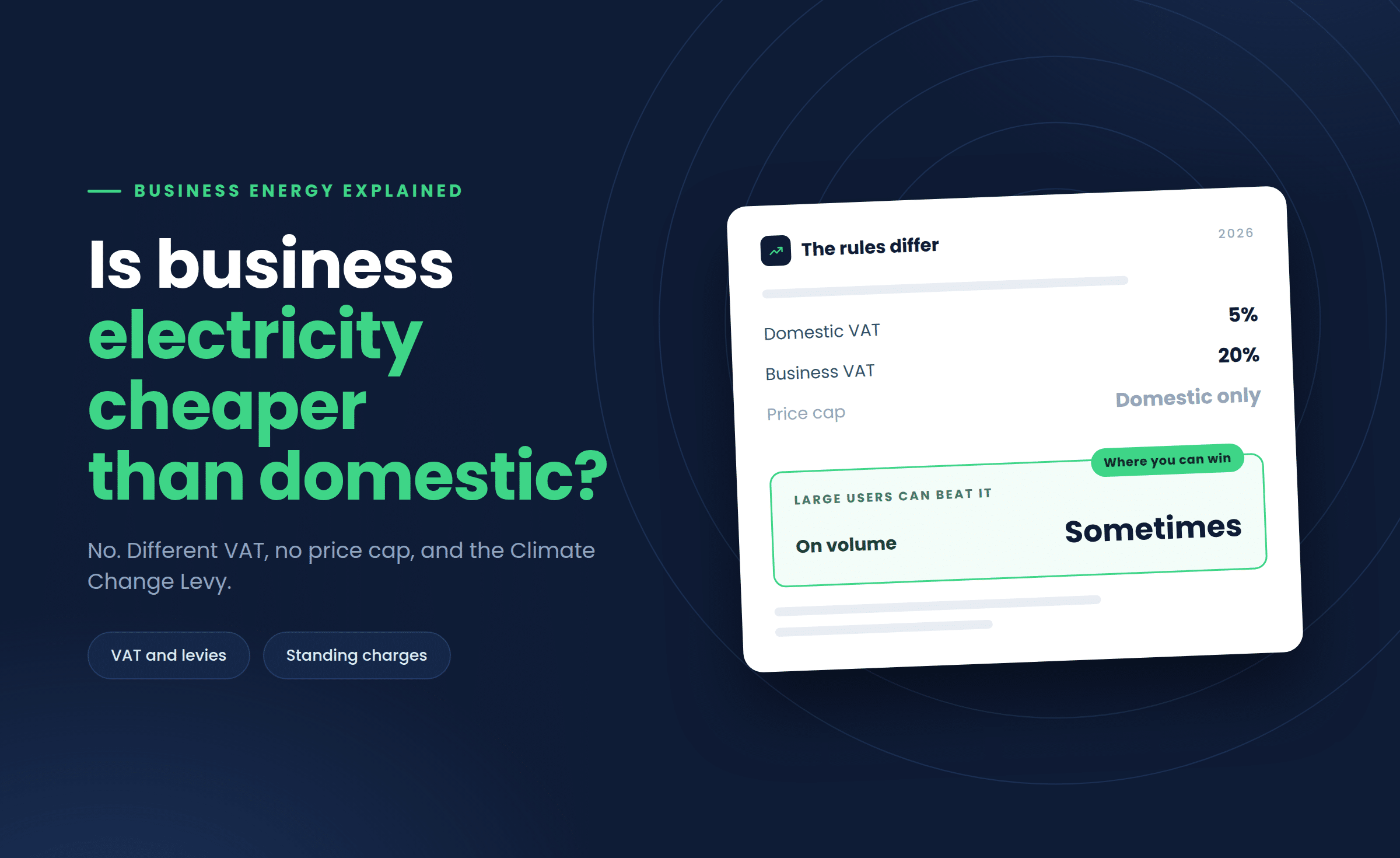
Very small users pay the highest unit rate, currently averaging 35.02p/kWh for electricity, because standing charges are spread across fewer units. The Climate Change Levy also applies to most bills unless your business qualifies for a reduction.
Meter type matters too: a half-hourly meter can open up different tariff structures than a standard profile-class meter.
How does a business tariff comparison actually work?
A comparison takes your usage details from a recent bill, checks them against live rates from a panel of suppliers, and returns quotes matched to your actual consumption rather than a generic estimate.
Getting an accurate result
The more accurate your usage figures, the more accurate the quotes, which is why a recent bill beats guessing every time.
- Have your details ready: a recent bill or your MPAN/MPRN reference.
- Compare the panel: across 30-plus suppliers rather than a single provider.
- Check both figures: the unit rate and the standing charge, not just the headline.
Businesses that compare through Utility Saving Expert save an average of £1,952 a year, switching typically completes in four to six weeks, and timing it near renewal gives the sharpest quotes.
What questions should you ask before choosing a tariff?
Ask about the exact unit rate, the standing charge, the contract length, any exit fees, and whether the Climate Change Levy is shown separately or already included in the headline price.
Compare the total, not the headline
Ask these of every quote, not just the one you are leaning towards, because a lower headline rate does not always mean the lowest total once standing charges are added. The government’s Climate Change Levy guidance explains how that charge is applied.
- Rate and charge: the exact unit rate and standing charge, including VAT and CCL treatment.
- Length and exit: how long the contract runs and the fee to leave early.
- Fixed or reviewable: whether the rate holds for the full term.
Small businesses that treat comparison as a routine task, rather than a one-off from years ago, consistently pay closer to the market average than the inflated rates that come from doing nothing.