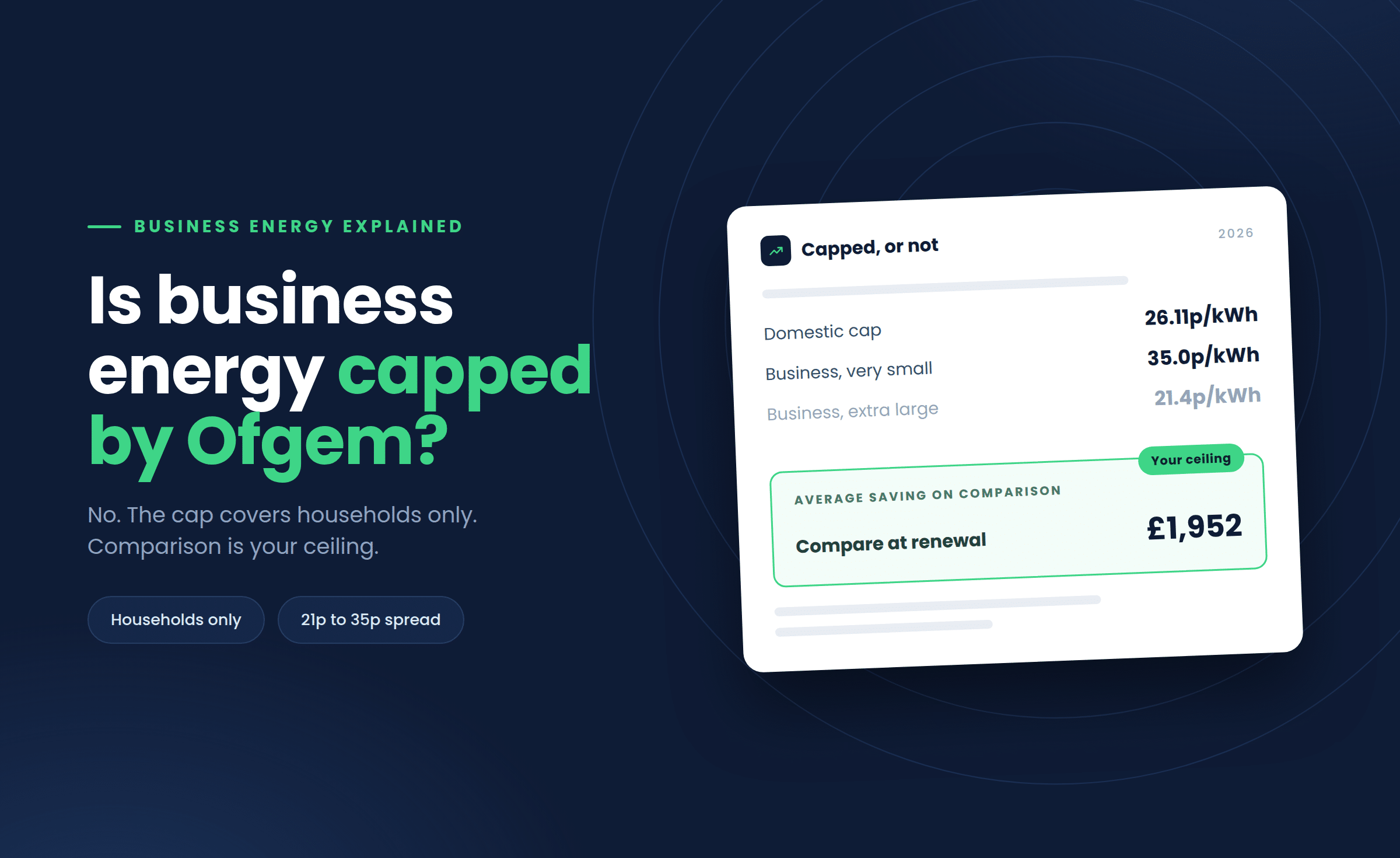

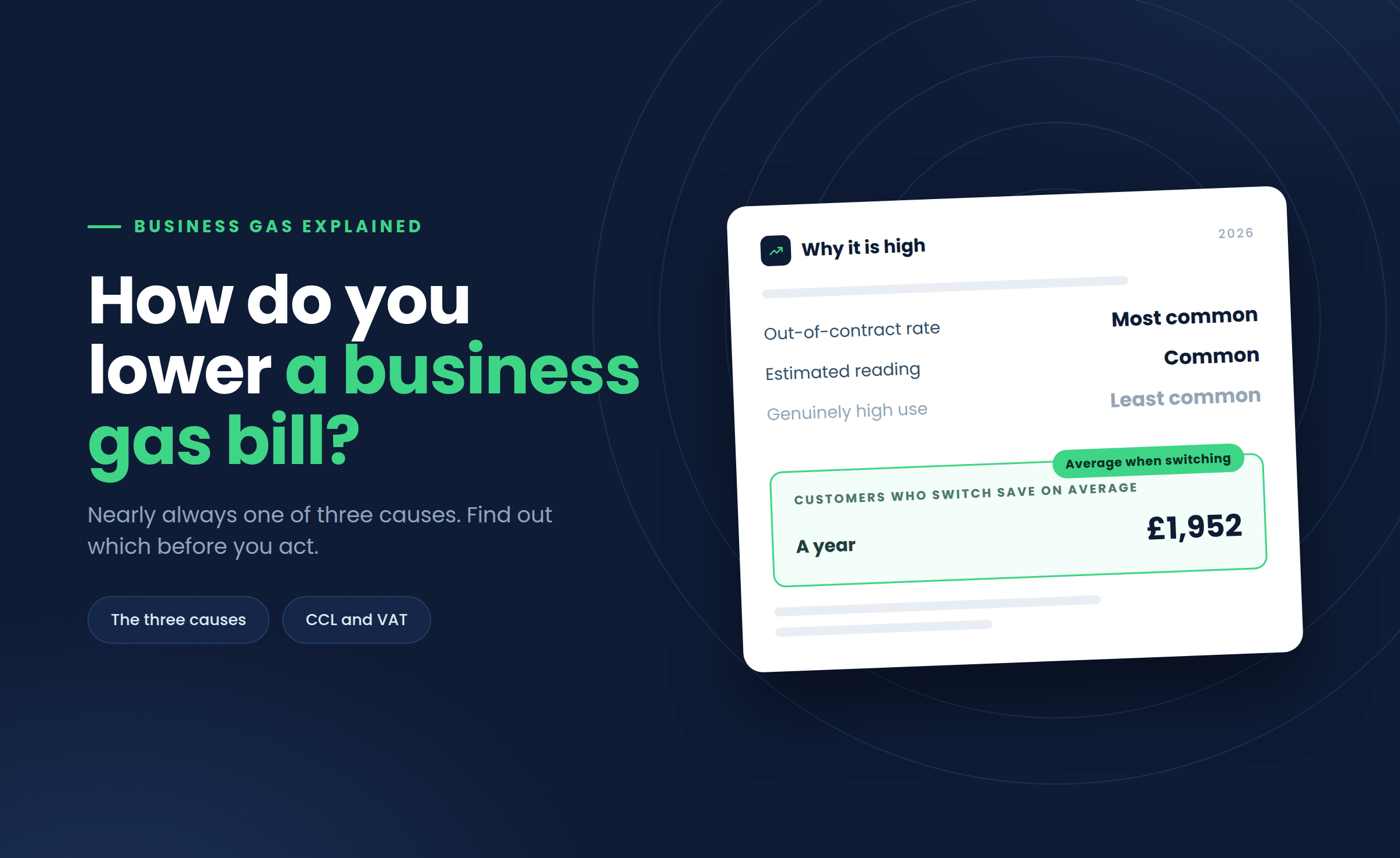
The fastest way to reduce business gas bill costs is to compare rates before your contract ends, check the bill itself for errors, and then look at consumption. Switching supplier alone saves Utility Saving Expert customers an average of £1,952 a year, before you have changed a single habit on site.
Most businesses assume a high gas bill means they are using too much gas. Sometimes that is true, but just as often the real problem is an expensive rate, an inflated standing charge, or an estimated reading never corrected.
It is worth separating the two problems, because the fixes are completely different. One is a five-minute comparison; the other takes weeks of behavioural change to show up on a bill.
UK average business energy is down 6.2% year on year but remains well above where it sat five years ago, so even a modest improvement against that backdrop is worth chasing.
Why is your business gas bill so high in the first place?
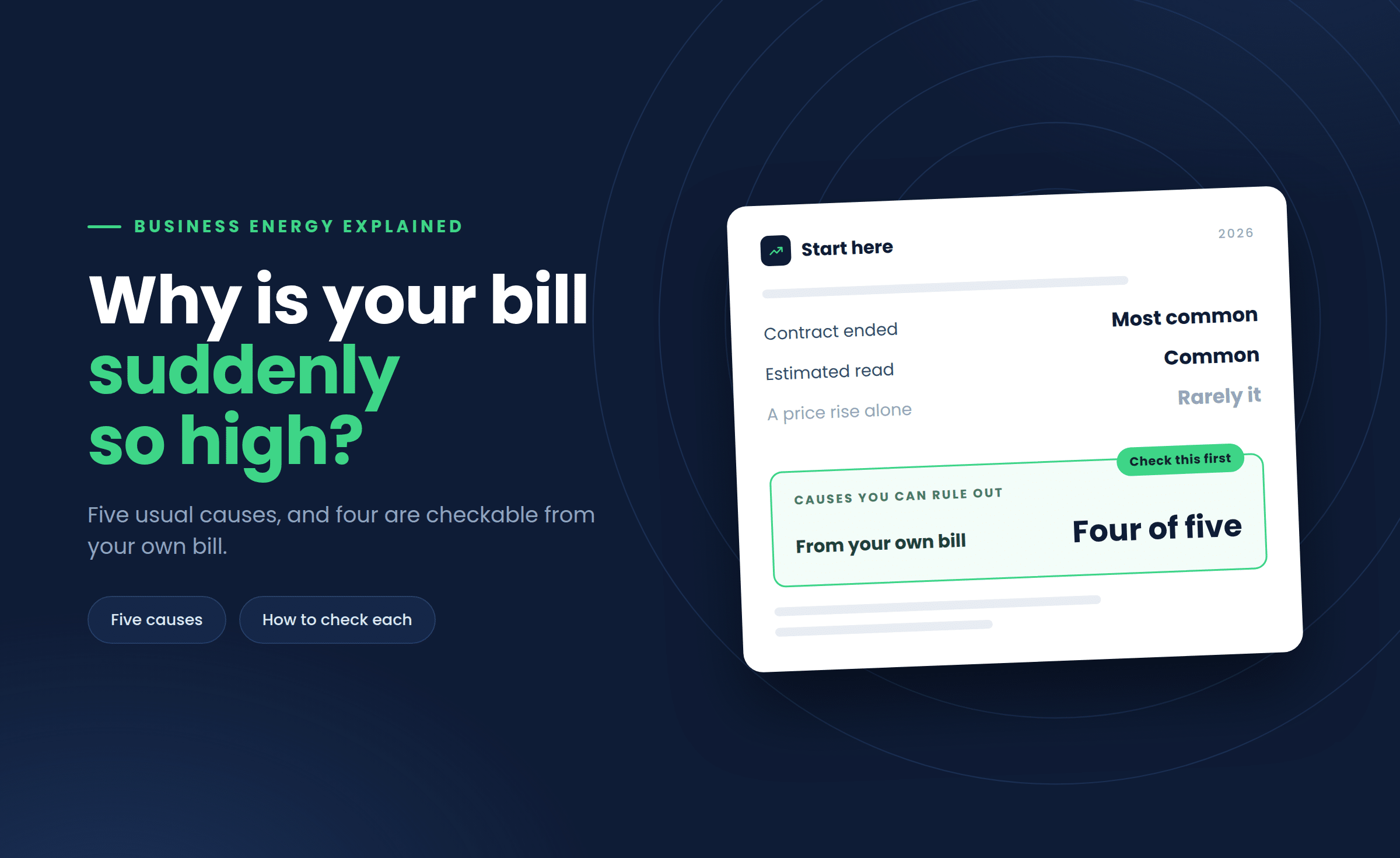
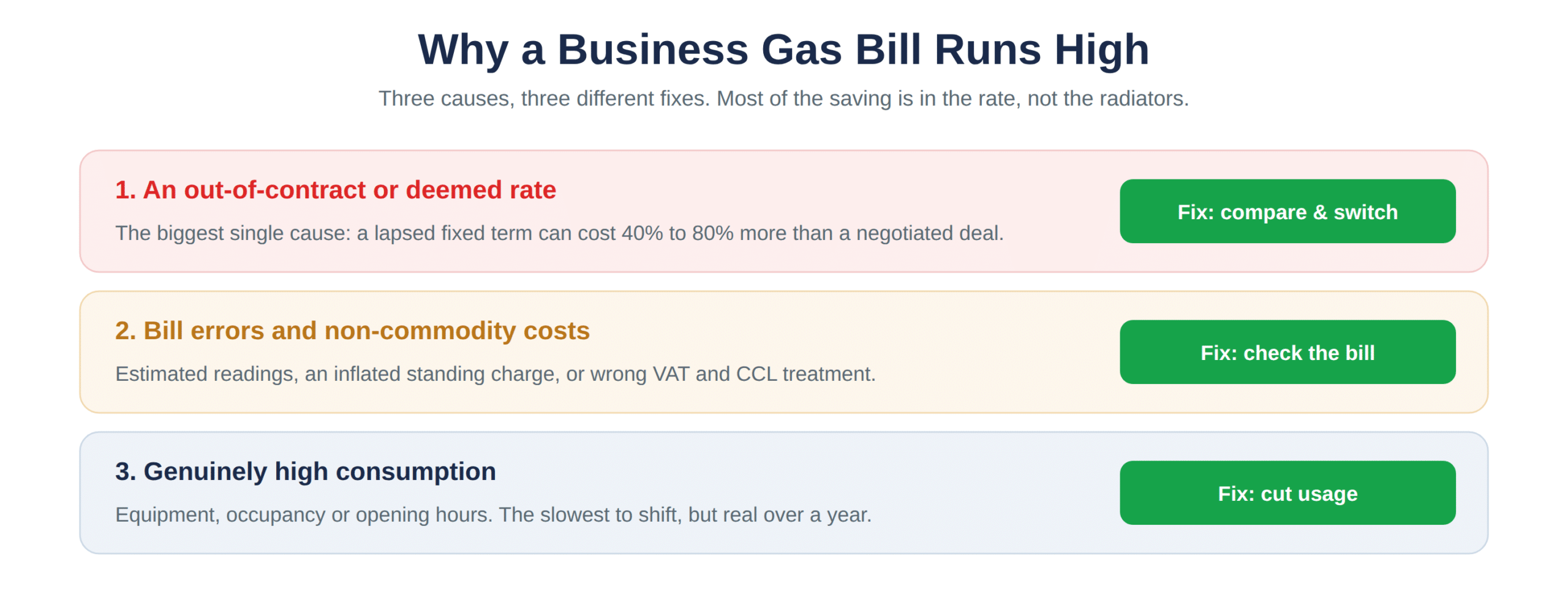
A high gas bill usually comes from one of three sources: an out-of-contract rate, an estimated reading overstating usage, or genuinely high consumption. Most businesses have never checked which of the three applies to them.
The usual culprits
- A deemed rate: sitting out of contract after your fixed term ended.
- Estimated readings: that do not reflect actual usage, especially after a change in hours.
- Non-commodity costs: standing charges that vary between suppliers and meter types.
- Genuine consumption: from equipment, occupancy or opening hours.
Our guide to how to read a business energy bill walks through each line item if you have never broken your bill down before.
| Cause | Typical saving | How fast it shows up |
|---|---|---|
| Out-of-contract rate | Large, the biggest single lever | Immediate once you switch |
| Bill errors, VAT/CCL, standing charge | Moderate | One or two billing cycles |
| Genuine consumption | Small but ongoing | Weeks to months |
How much could switching supplier save?
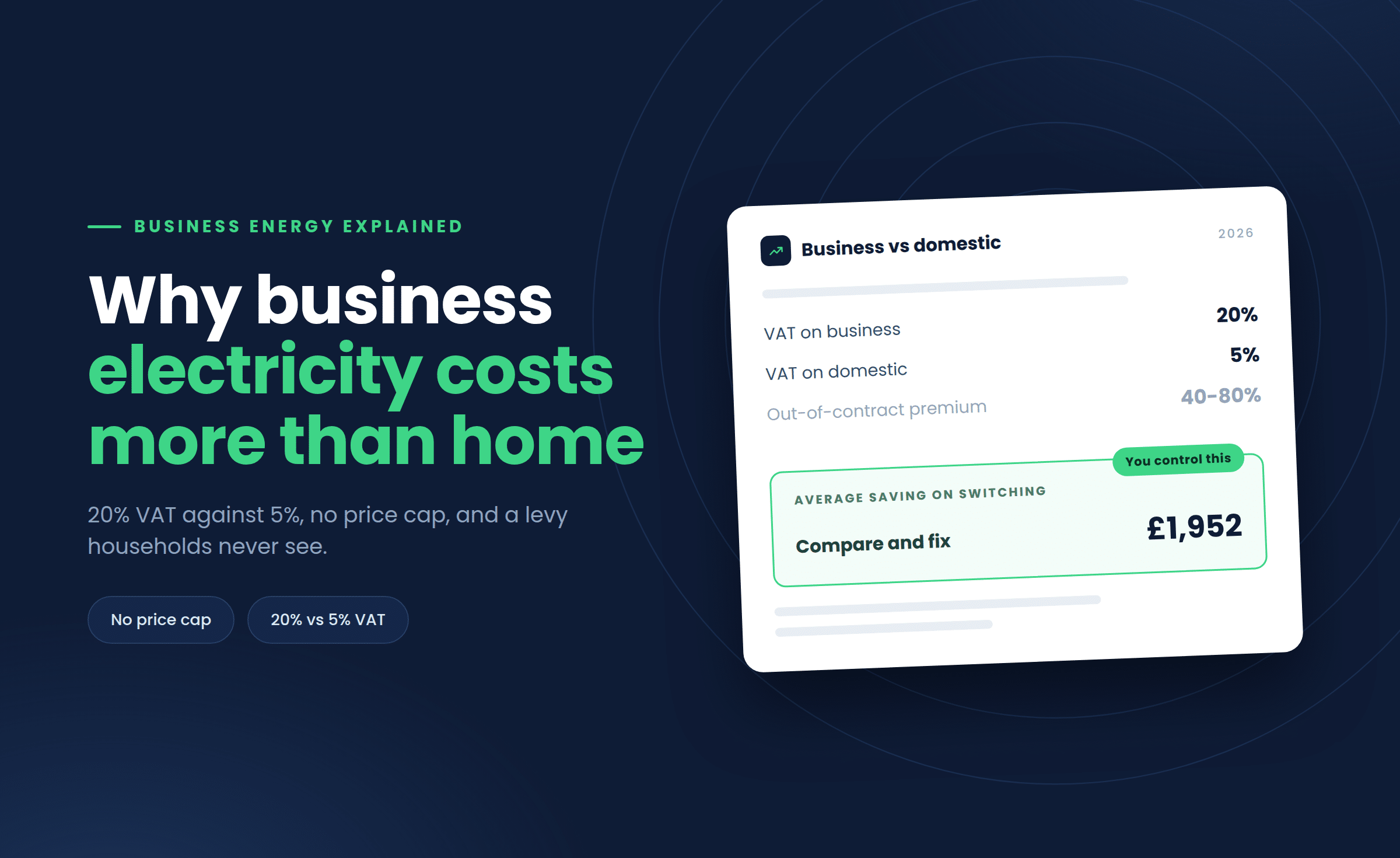
Businesses on an out-of-contract rate typically pay 40% to 80% more than they would on a negotiated deal. That gap alone accounts for most of the £1,952 average annual saving customers see when they switch.
Know your exact figure
These are 2026 averages from DESNZ data, and the only way to know your exact figure is a live comparison against a recent bill. Comparing business gas prices gives you that number in about 60 seconds.
What non-consumption costs are inflating the bill?
The Climate Change Levy and VAT are added regardless of how much gas you use, and both are frequently applied incorrectly. Getting these wrong is one of the most common reasons a bill looks higher than it should.
Check the CCL, VAT and standing charge
The Climate Change Levy is a fixed rate per kWh added to most business gas bills unless you hold a Climate Change Agreement or exemption, as the government’s CCL guidance sets out.
VAT is usually charged at 20%, but some businesses, including certain charities and low-usage premises, qualify for the reduced 5% rate. Our guide to VAT on business energy bills explains who is eligible and how to apply for a correction.
A standing charge that looks unusually high compared with a competitor’s quote is also worth querying, since it can vary by meter type and region even before usage is factored in.
How can you cut commercial gas costs without disrupting the business?
Small operational changes, servicing equipment, correcting estimated readings and monitoring usage patterns, chip away at consumption without touching how the business runs day to day.
Changes that do not disrupt trading
- Accurate readings: submit them monthly rather than accepting estimates.
- Annual servicing: keep boilers and heating equipment running efficiently.
- Right-set timers: match thermostats to actual opening hours, not an installer default.
- Watch the data: a half-hourly meter flags waste a monthly bill never will.
None of these transform a bill overnight, but together over a year they add up alongside whatever you save from switching. A half-hourly meter makes the patterns much easier to see.
When’s the best time to renegotiate your gas contract?
The 90 days before your contract’s end date is the window to compare and renegotiate, before you fall onto a deemed rate by default. Leave it later and you risk being auto-renewed onto worse terms.
A calendar reminder is the whole trick
Our guide to business energy renewals covers exactly when your renewal window opens, and our guide to switching business gas supplier walks through the switch itself. A broker can run it for you with a signed letter of authority.
Set a calendar reminder for 90 days out. It is the single easiest habit that keeps a business off expensive default rates.