
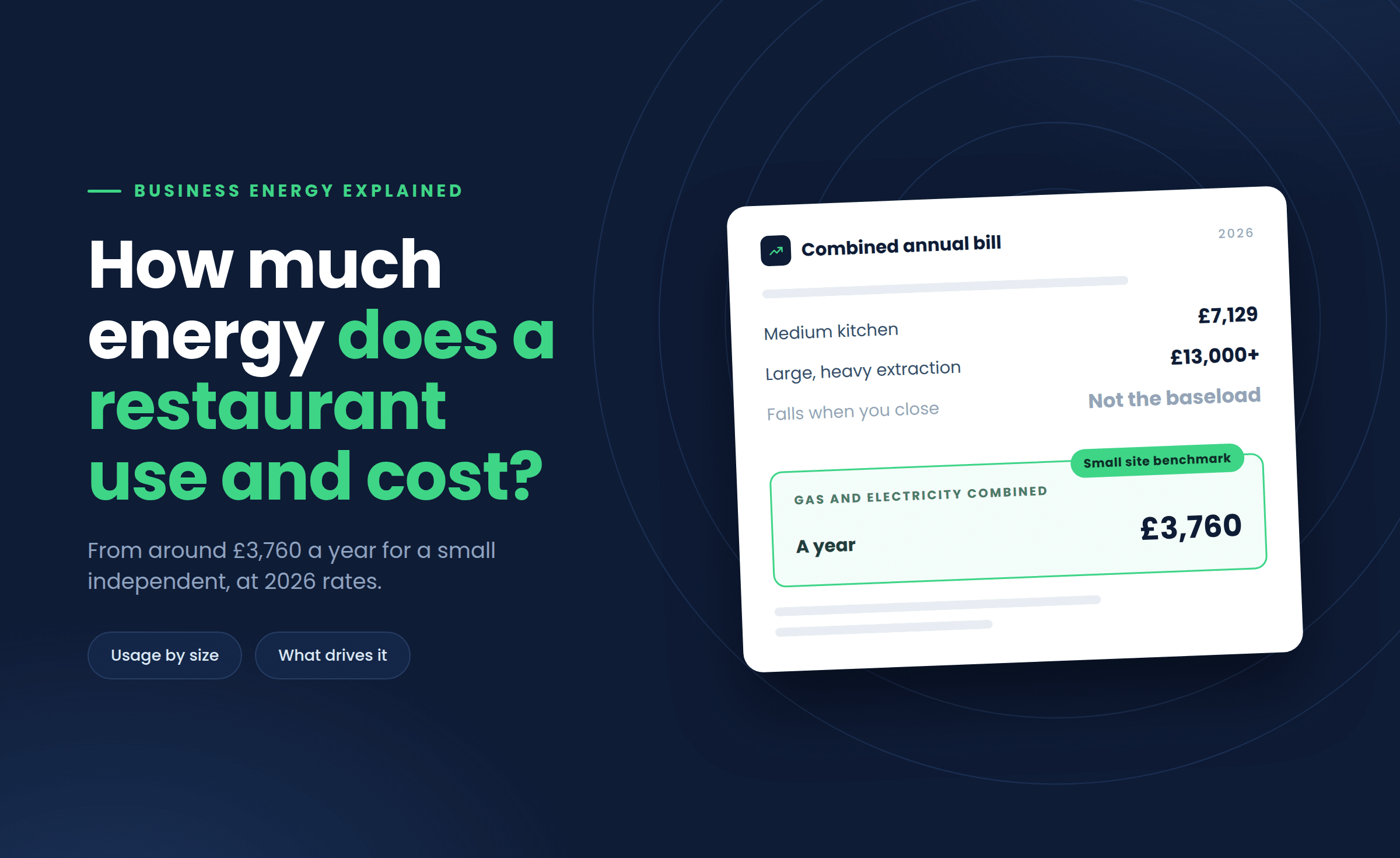
A small independent restaurant pays in the region of £3,760 a year for gas and electricity combined at 2026 average rates. A busier kitchen with heavier extraction and refrigeration sits in the medium or large band, where combined bills run from £7,129 up to well over £13,000.
Ask a restaurant owner where their energy goes and most point at the lights above the tables. The bigger number is usually hiding behind the pass, inside the walk-in fridge, and in the extraction canopy that runs long after the last table is cleared.
Restaurant energy usage is unusual because one building runs two operations at once: a kitchen that behaves like a small industrial cooking process, and a dining room that behaves more like retail space, as our catering sector guide explains.
UK business electricity prices are down 6.2% year on year, but still sit well above where they were five years ago. On the thin margins most restaurants run, the gap between a negotiated rate and a poor one can decide a good month from a bad one.
What does a typical restaurant’s energy usage look like?
Extraction, refrigeration and cooking equipment typically account for more than half of a restaurant’s total energy use, with heating, hot water and lighting making up most of the rest.
Why similar kitchens pay differently
The split between gas and electricity depends on the kitchen setup, so a gas-fired kitchen looks very different on the bill to an all-electric induction one. Our guide to how to read a business energy bill shows how to check where your own usage is concentrated.
| Area of the kitchen | Typical share | Why it runs so high |
|---|---|---|
| Extraction and ventilation | High | Canopy fans often run the full service and beyond, not just while cooking |
| Refrigeration and freezers | High | Compressors run 24 hours a day regardless of covers served |
| Cooking equipment | Medium to high | Griddles, fryers and combi ovens draw heavily during pre-heat and service |
| Hot water and dishwashing | Medium | Continuous demand through service, plus recovery between batches |
| Dining room and lighting | Lower | Still adds up over long hours, especially with older lamps |
What makes commercial kitchen energy costs so high?
Commercial kitchen energy costs are high because the equipment that keeps food safe cannot simply be switched off, and food hygiene rules mean chilled and frozen stock has to stay within set temperature bands around the clock.
The two biggest hidden costs
A walk-in fridge or freezer cycling overnight is one of the biggest hidden costs in the sector, and one of the least visible, since food hygiene rules mean it cannot be turned off. Extraction is the other, often wired to a single switch left on for the whole shift.
- Perished door seals: on fridges and freezers let cold air escape constantly.
- Full-speed extraction: fans running flat out regardless of how much cooking is happening.
- Idle equipment: combi ovens and fryers left on standby through slow afternoons.
The pattern is the same in most kitchens: a handful of pieces run almost continuously, and everything else spikes during service and drops close to zero overnight. Knowing which is which is the whole game.
What does energy cost for a restaurant your size?
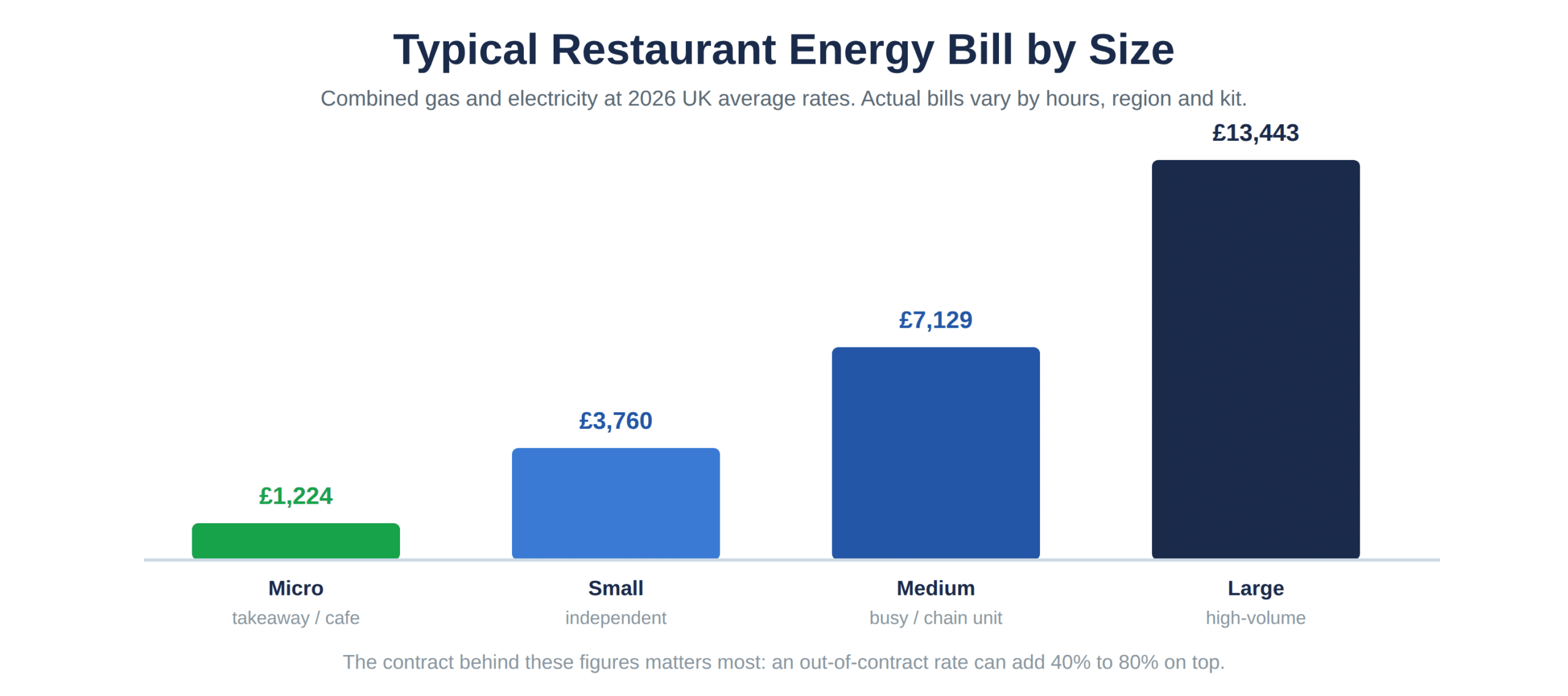
A small restaurant sits in the region of £3,760 a year for gas and electricity combined, a medium operation around £7,129, and a larger, higher-turnover kitchen can run past £13,000.
How to check your own numbers
These figures come from 2026 UK average rates and cover combined gas and electricity at each level. Your actual bill depends on region, meter type and hours, so compare business electricity rates against a recent bill to place yourself.
Where can a restaurant genuinely cut its energy bill?
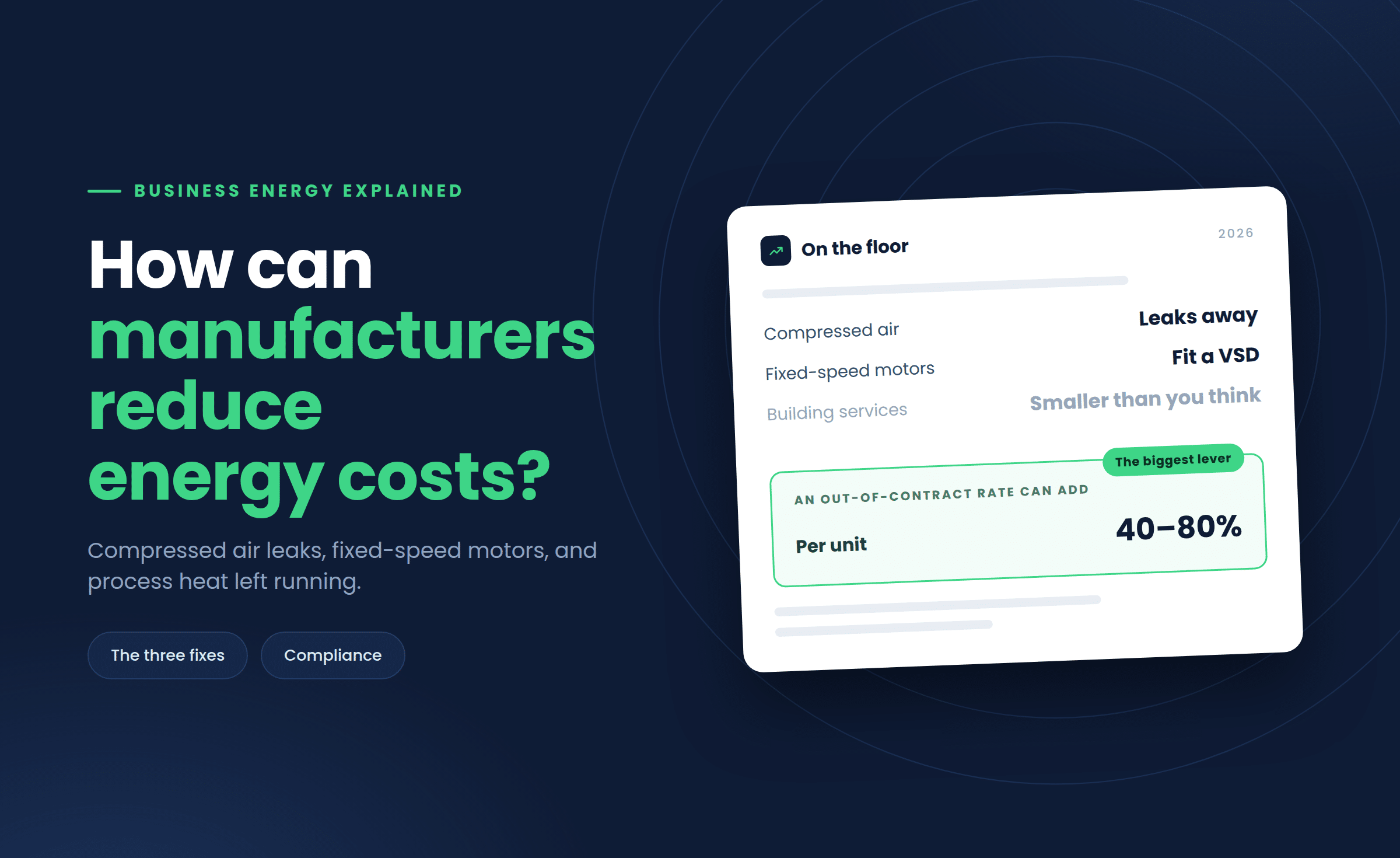
The single biggest lever for most restaurants is the contract itself, since an out-of-contract or deemed rate typically runs 40% to 80% higher than a negotiated deal, well ahead of anything achievable through kitchen tweaks alone.
Fix the contract, then the kit
- Demand-controlled ventilation: so extraction ramps down automatically outside peak service.
- Seal and defrost routine: check door seals and defrost on a schedule, not when frost builds up.
- Staggered start-up: heat griddles and fryers close to service, not idle all afternoon.
- LED throughout: which also cuts heat gain that air conditioning then fights.
None of this compromises food safety; it is about matching runtime to demand, which most kitchens have never had time to review. The Carbon Trust rates demand-controlled ventilation among the strongest catering efficiency measures.
Restaurants that took over a lease without formally switching are especially likely to sit on a deemed rate. Our guide to change of tenancy energy explains how to fix that quickly.
How does opening for longer hours change the bill?
Longer trading hours, brunch through to late dinner, extend the period when cooking and extraction run at full load, while the overnight refrigeration baseload stays fixed regardless of covers.
When the tariff no longer fits
A site open seven days a week for lunch and dinner will always cost more to run than one open five evenings only, even with identical equipment. That is simply more hours of high-draw kitchen operation.
It is worth reviewing standing charges and any time-of-use elements if your pattern has changed since you last switched. Larger sites on a half-hourly meter get the clearest picture of when energy is actually used.