
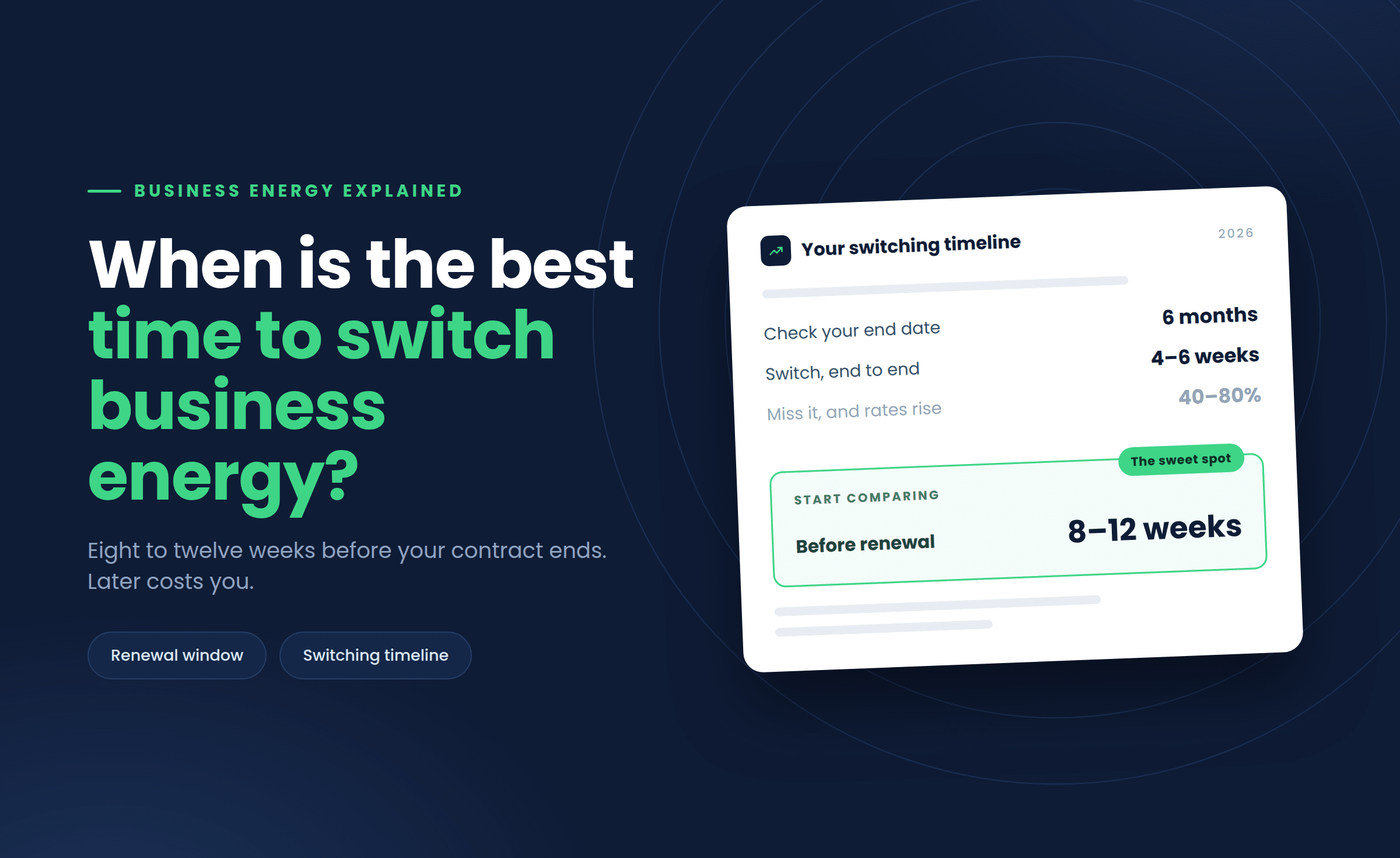
The best time to switch business energy is between one and six months before your current contract ends, with 8 to 12 weeks out the sweet spot for most businesses. Leave it later and you risk rolling onto an expensive out-of-contract rate.
Timing catches out more businesses than almost anything else in energy switching. Not because owners do not want to switch, but because renewal dates arrive quietly and suppliers rarely remind you.
Switch too early and some suppliers will not quote, since notice periods only apply within a fixed window before your end date. Switch too late and you have missed it, sometimes rolling automatically onto worse terms, which is also part of the wider should you fix now question.
Why does timing matter so much when switching business energy?
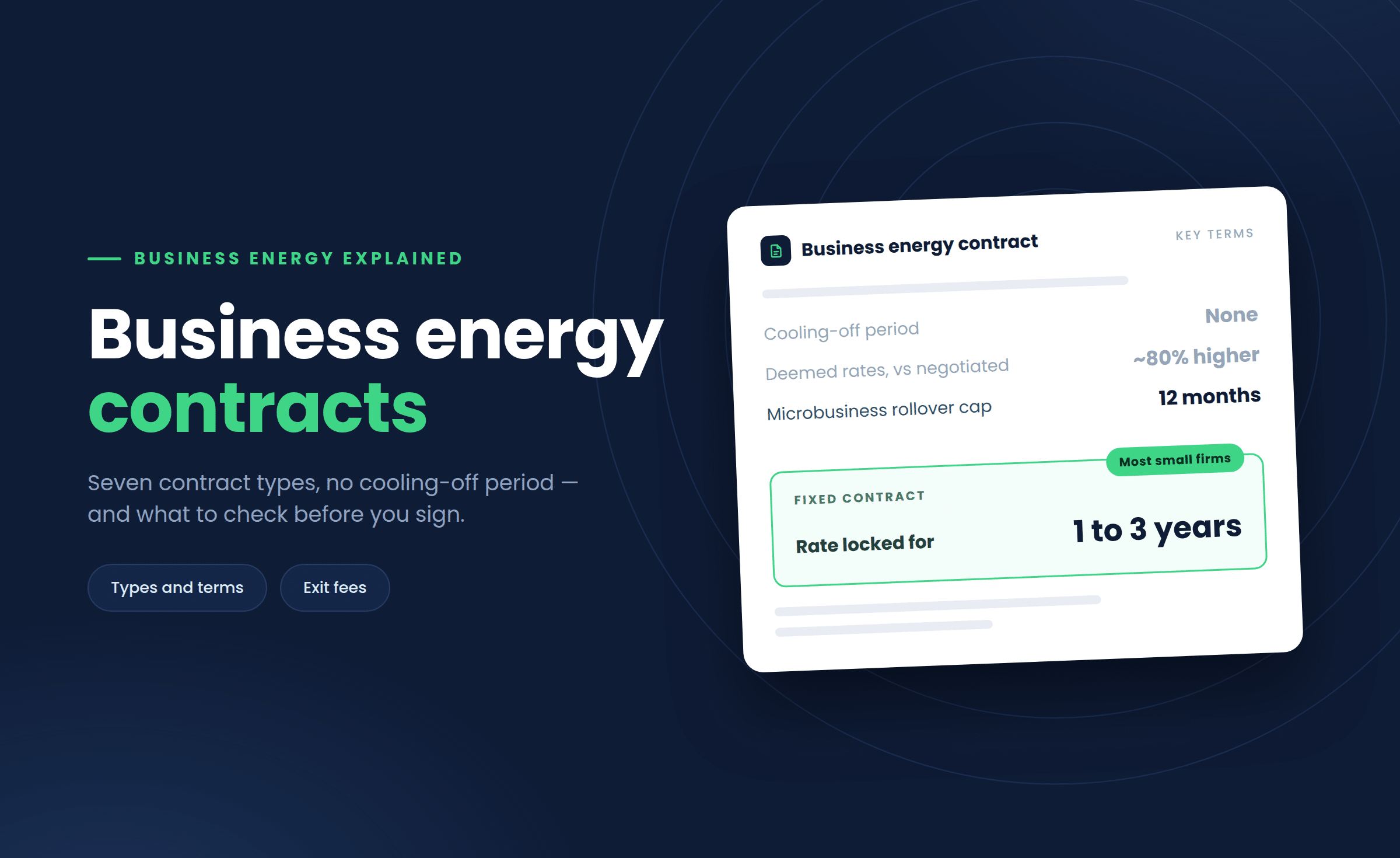
Business energy contracts have no cooling-off period and no automatic overlap with a new deal, unlike domestic tariffs, so getting the timing wrong can leave you on a deemed rate set entirely by your outgoing supplier.
Rolling onto a deemed rate
Unlike household energy, which rolls onto a capped variable tariff if you do nothing, a business contract that ends without a renewal usually rolls onto a deemed or out-of-contract rate. Our guide to deemed energy contracts covers exactly what that means and why it is almost always dearer than a negotiated deal.
How early should you start comparing before renewal?
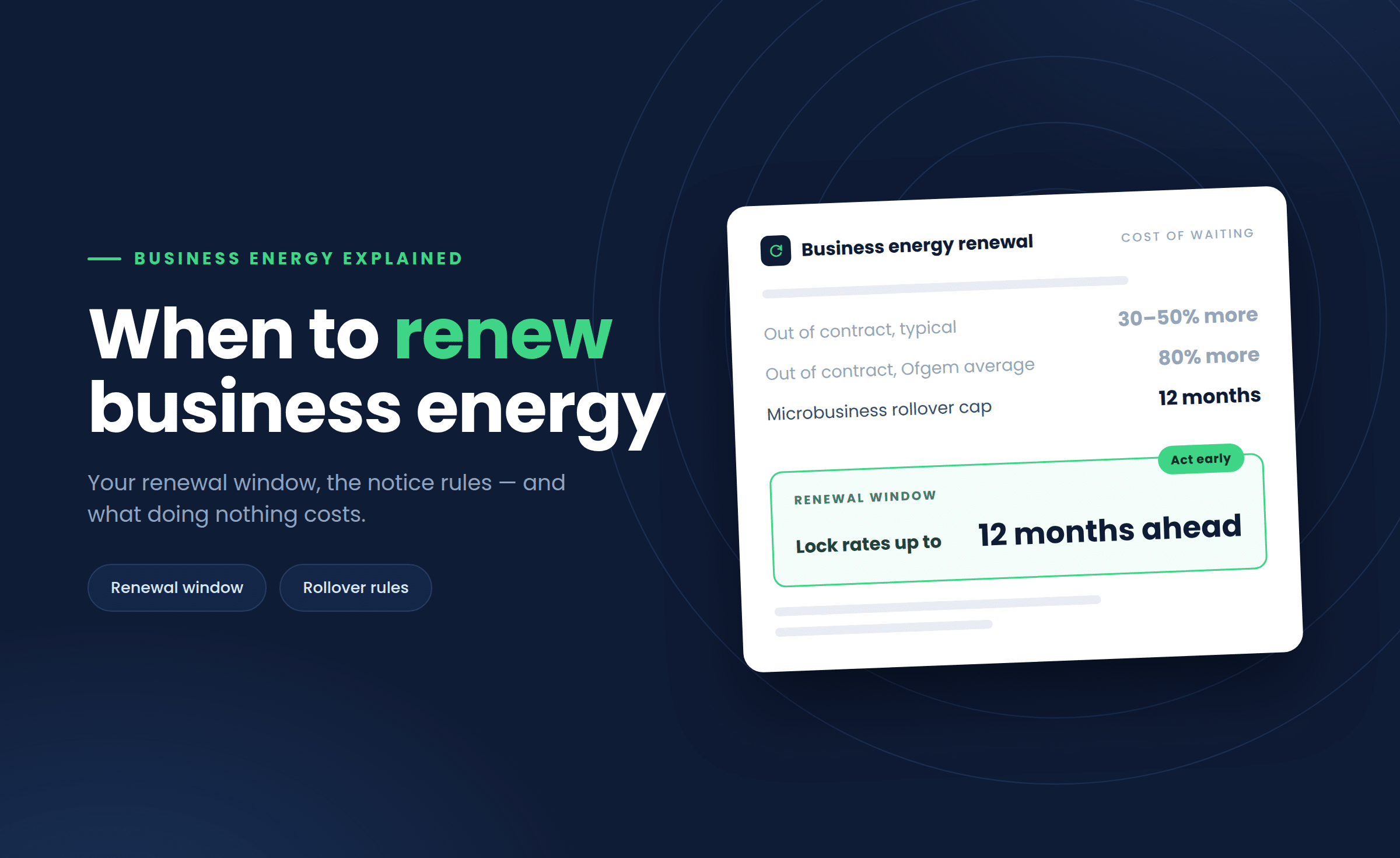
Most brokers recommend starting to compare 8 to 12 weeks before your contract ends, giving time to review quotes without triggering early exit issues, though some larger sites benefit from starting up to six months out.
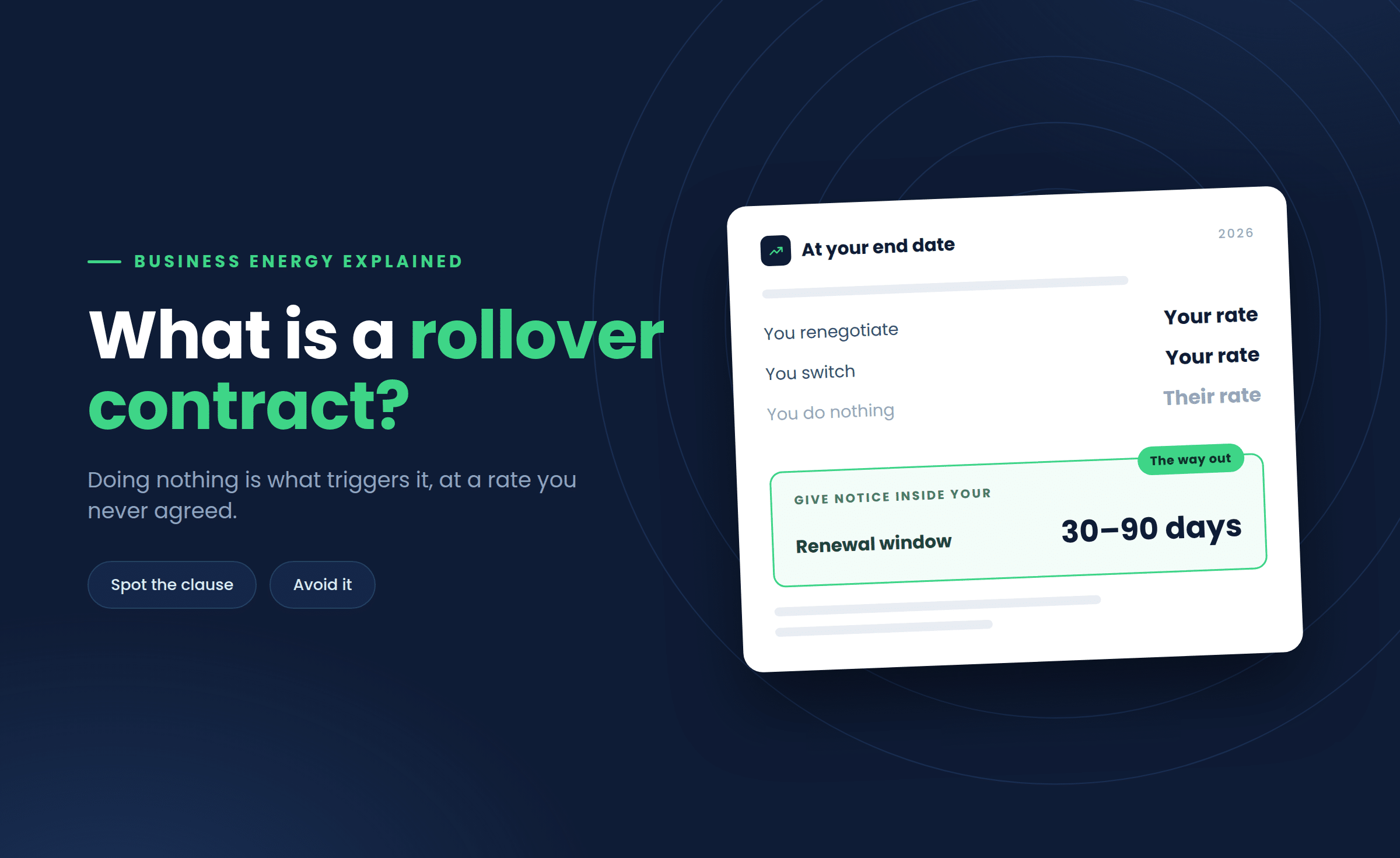
Contracts typically fall into a set renewal window, often the last 30 to 90 days before expiry, during which your current supplier must let you switch without penalty. Compare too far outside that window and your notice may not be valid yet.
Starting early does not mean committing early. It means having your bill, usage and end date to hand so you can move the moment your window opens, rather than scrambling as renewal looms.
Why the lead time is weeks, not days
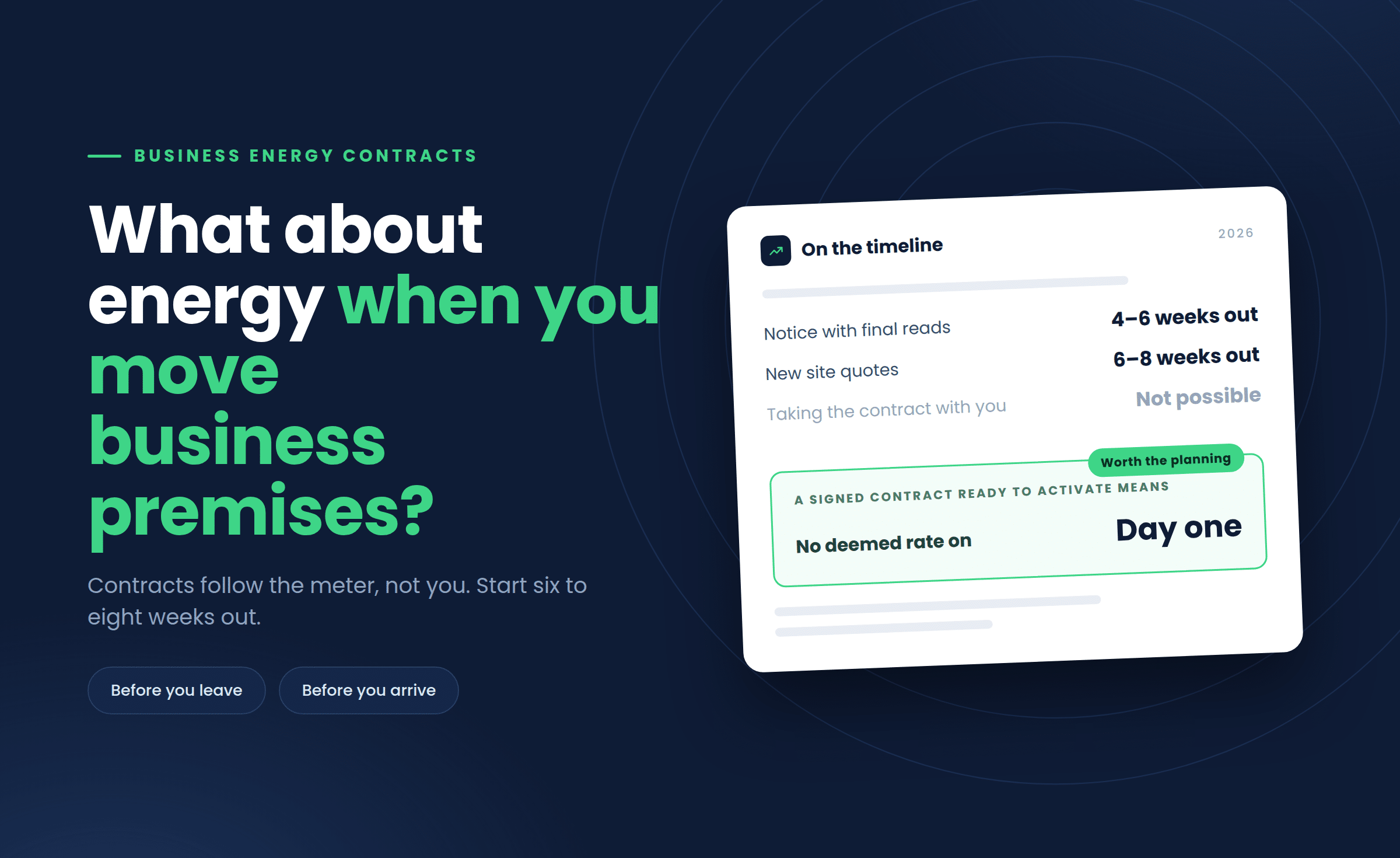
A business switch takes about 4 to 6 weeks from signing to go-live, because the new supply usually starts on your renewal date rather than the day you sign. The registration mechanics are quick, so working backwards from your renewal date is the safest way to plan.
What happens if you switch too late?
Miss your renewal window entirely and you are usually moved onto an out-of-contract or deemed rate, which typically runs 40% to 80% higher than a negotiated deal. That gap alone can cost a small business hundreds of pounds a year.
It is not a punishment, just what happens when there is no new contract in place and the site still needs supplying. Suppliers price that uncertainty into the rate, and it shows.
The frustrating part is how easily it happens. A renewal date passes unnoticed, no new deal is agreed, and the site quietly moves to the highest rate the supplier offers until someone acts.
What a deemed rate costs
- No fixed end date: it can run indefinitely until you act.
- Well above average: priced above the UK averages of 24.14p/kWh electricity and 5.17p/kWh gas.
- Still switchable: usually at any time, just from a worse starting rate.
Does the time of year affect business energy prices?
Wholesale prices move with the seasons, generally rising through autumn and winter as demand peaks and easing through spring and summer, but fixing at the exact cheapest month is more luck than strategy.
UK business electricity is broadly flat year on year but still around 60% higher than five years ago, from DESNZ price data, a reminder that the broader trend matters more than picking a perfect week.
Focus on your renewal window
The safer approach is to compare within your renewal window regardless of season. Balancing costs from the National Energy System Operator and Elexon settlement charges feed into rates year-round, not just at winter peaks.
Can you switch outside your renewal window?
In most cases no, not without triggering an early termination charge from your current supplier, though there are exceptions including business closures, change of tenancy and a few contract types with no fixed term.
Our guide to change of tenancy explains what happens to an existing contract if you move premises before your term ends, one of the few scenarios where an early switch is unavoidable.
| Exception | What it means |
|---|---|
| Change of tenancy | You take over or leave premises mid-contract |
| Business closure | The site stops trading altogether |
| No fixed term | Some rolling contracts carry no exit charge |
| Already out of contract | No fixed term to break, so switch anytime |
What if you are already out of contract?
If you have already rolled onto a deemed or out-of-contract rate, you can switch immediately with no notice period, since there is no fixed term to break. That is the one situation where timing works entirely in your favour, and Ofgem’s business energy advice confirms your right to move.
What does an ideal switching timeline look like?
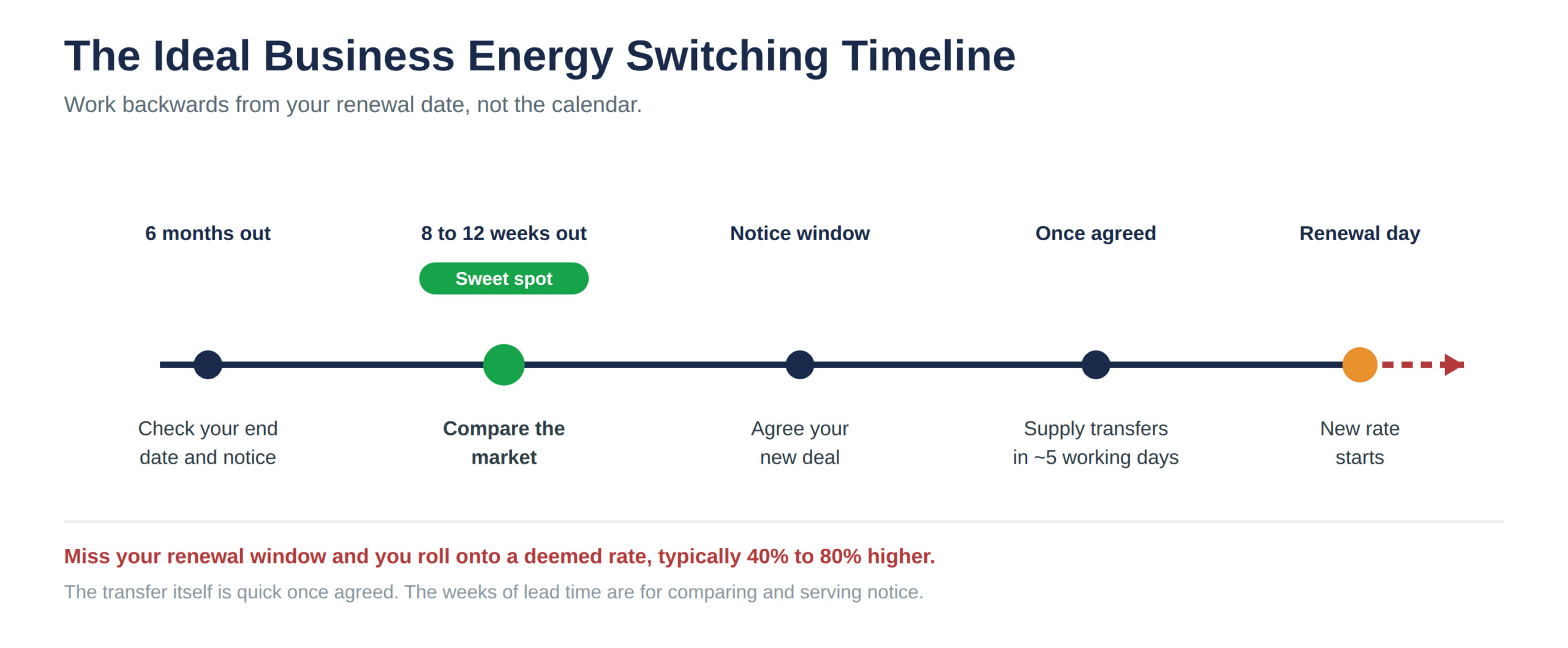
A well-timed switch starts with a diary reminder three months before renewal, then comparing quotes, choosing a supplier, and letting the transfer complete before your old contract ends.
A three-month plan
| Time before renewal | Recommended action |
|---|---|
| 6 months | Check your end date and notice period on your bill |
| 8 to 12 weeks | Compare live rates across the panel of 30+ suppliers |
| Within your notice window | Agree your new deal and submit the switch |
| Around 5 working days | The supply transfer completes once agreed |
| After renewal date | Risk of rolling onto an out-of-contract rate |
Time it well through your business energy renewal window and compare across a panel of business energy suppliers. Our guide on how long a switch takes covers the mechanics in full, and how to read a business energy bill shows where your end date sits.
Businesses that follow this pattern save an average of £1,952 a year through Utility Saving Expert, largely because they compare from a position of choice rather than urgency.