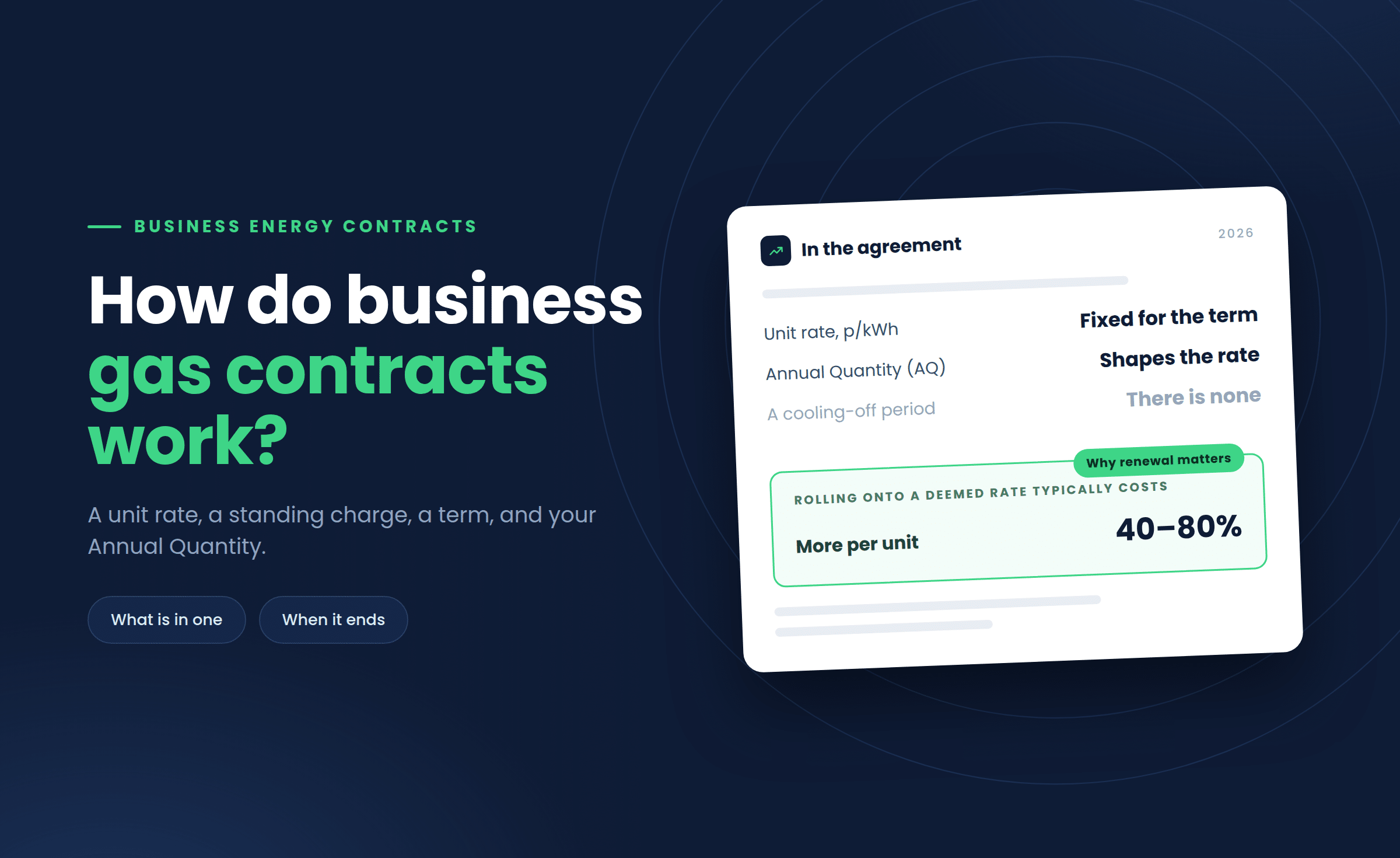

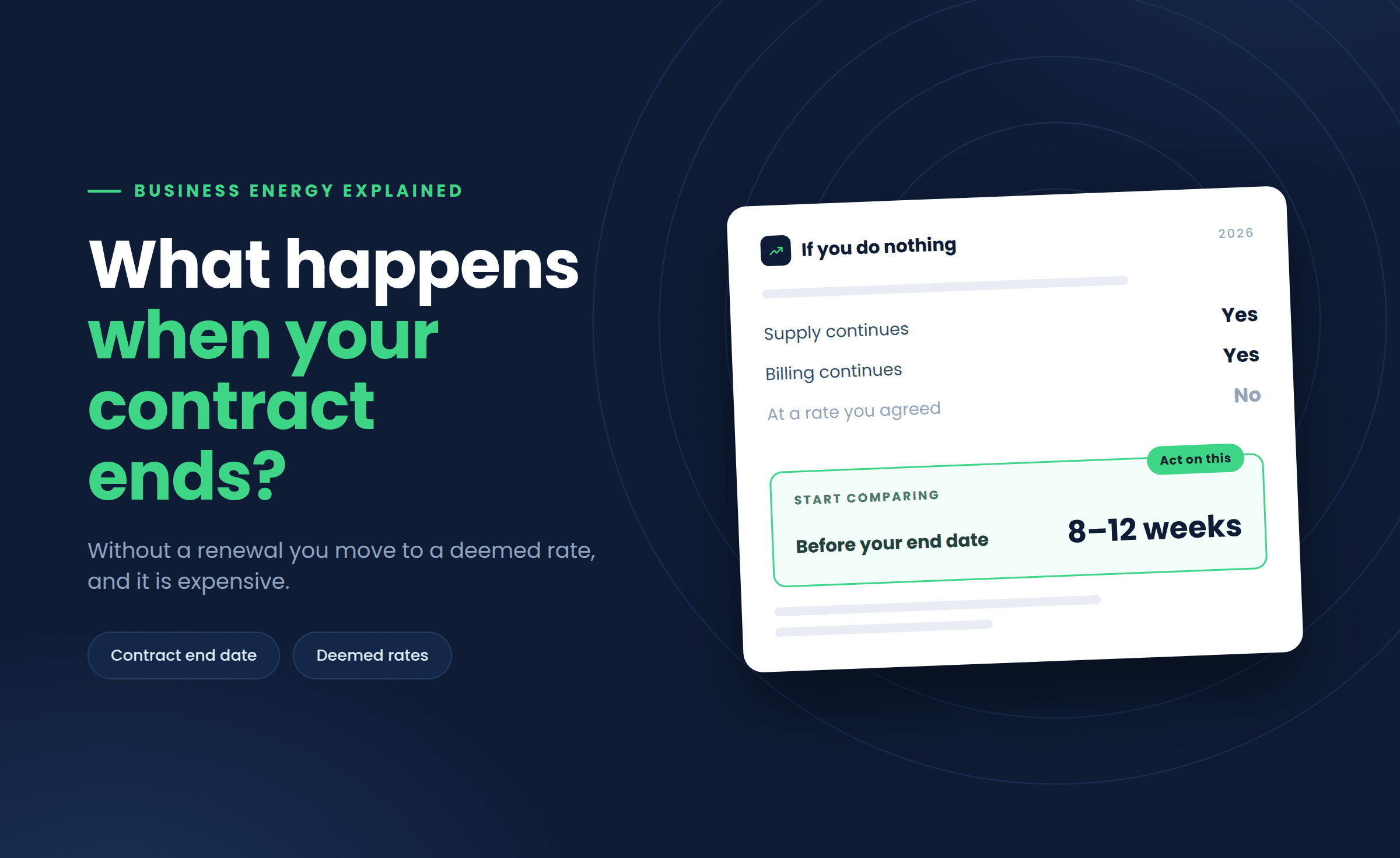
When a business energy contract ends without a renewal or a switch, the supplier automatically moves the account onto a deemed or out-of-contract rate, and those rates typically run 40% to 80% higher than a negotiated deal.
Every fixed business energy contract carries an end date, and that date matters far more than most owners realise until the bill arrives. There is no gap in supply and nothing visibly changes at the meter.
What changes is the price, quietly, in the background. Suppliers are not required to leave a site unsupplied just because a fixed deal has lapsed, so they move it onto a different tariff instead.
If you have ever wondered why costs jumped a few months after a renewal window passed, this mechanism is usually why. Here is exactly what happens on and after your end date, what it costs, and how to avoid being caught out.
What is a contract end date and why does it matter?
The contract end date is the day your fixed-term rate expires. Unless you have agreed a new deal before that date, your supplier is entitled to move you onto a different, usually more expensive, tariff.
Supplier notice before contract expiry
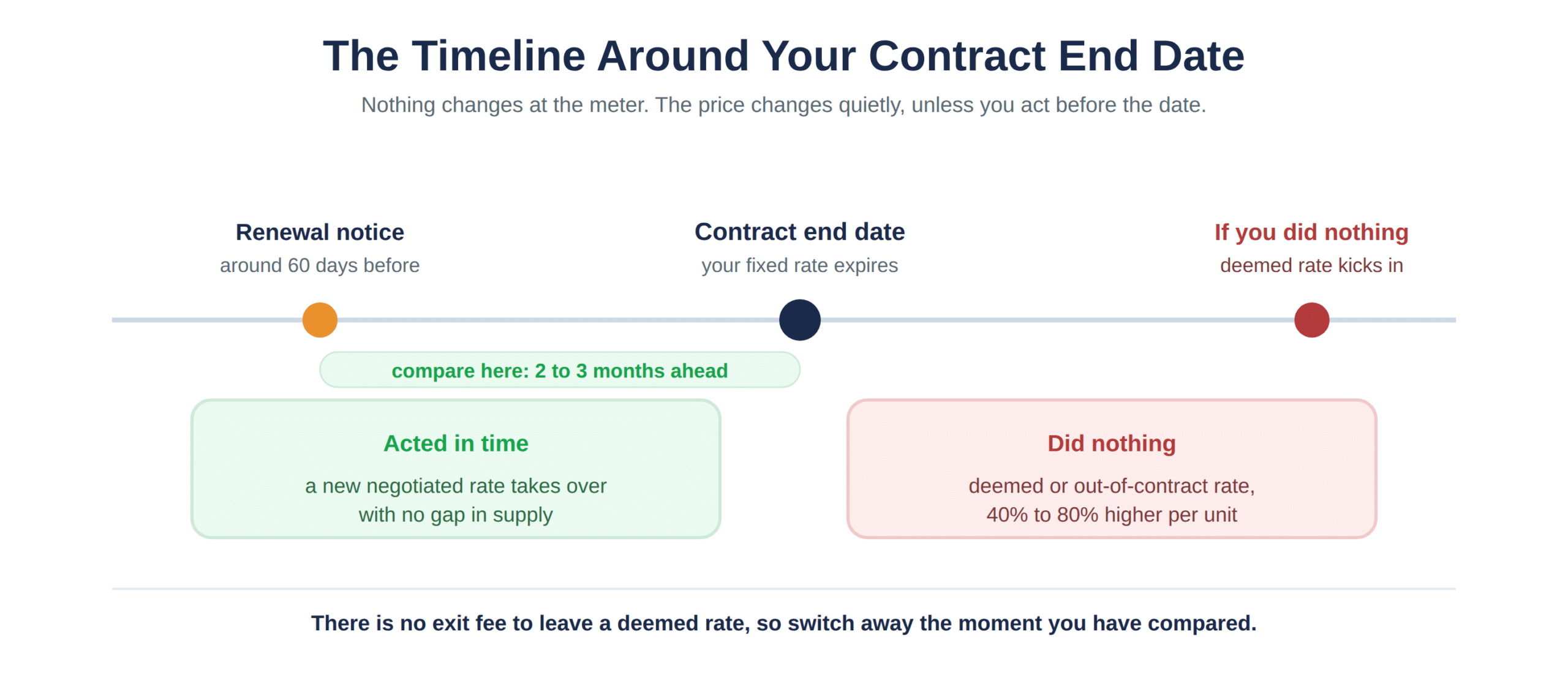
Suppliers are required to give notice ahead of expiry, often around 60 days before the end date, flagging your renewal options. Our guide to business energy renewals covers how that process works.
That letter or email is easy to miss among the rest of your business post. Missing it does not cancel the expiry, though: the date still arrives, and the supplier still acts on it.
What happens if you don’t renew or switch in time?
If you take no action, the supplier rolls your meter onto a deemed contract or an out-of-contract rate automatically. Supply continues uninterrupted, but the price per unit jumps sharply.
No cooling-off period at renewal
Unlike a domestic switch, a business contract usually has no 14-day cooling-off period once signed, and the same applies at renewal: there is no grace period once the old contract lapses either.
That is a meaningful difference from household energy, where regulatory protections cushion these moments. Business customers are treated as capable of managing their own contract dates, which is exactly why so many do not.
What is a deemed or out-of-contract rate?
A deemed contract is the rate a supplier applies automatically when there is no active agreement in place. Out-of-contract rates work the same way when a fixed deal simply lapses without a renewal.
Both are valid contracts
Both are legally valid under the Retail Energy Code even though nobody signed anything new, and both sit well above the rates available through active comparison, as our guide to deemed contracts explains.
- No fixed term: you can usually switch out immediately.
- No exit fees: there is no contract being broken.
- Above market: an out-of-contract rate is priced to discourage inertia.
How much more could a deemed rate cost your business?
Out-of-contract rates typically run 40% to 80% higher than a negotiated deal. For a medium business paying around £6,035 a year on electricity, that is an extra £2,414 to £4,828 a year for doing nothing.
What this looks like across sizes
| Business size | Typical negotiated annual electricity cost | Estimated cost on a deemed rate (40% to 80% higher) |
|---|---|---|
| Small (up to 15,000 kWh) | £3,620 | £5,070 to £6,520 |
| Medium (up to 25,000 kWh) | £6,035 | £8,450 to £10,860 |
| Large (up to 50,000 kWh) | £12,070 | £16,900 to £21,730 |
These figures are illustrative, at the UK average unit rate of 24.14p/kWh from DESNZ data, and exclude standing charges. Smaller sites often pay a higher per-unit rate, so a live comparison against a recent bill is the only accurate number.
Can you still switch supplier after your contract has ended?
Yes. Being on a deemed or out-of-contract rate does not lock you in: most have no fixed term and no exit fees, so you can switch as soon as you have compared and chosen a new deal.
The timeline once you decide
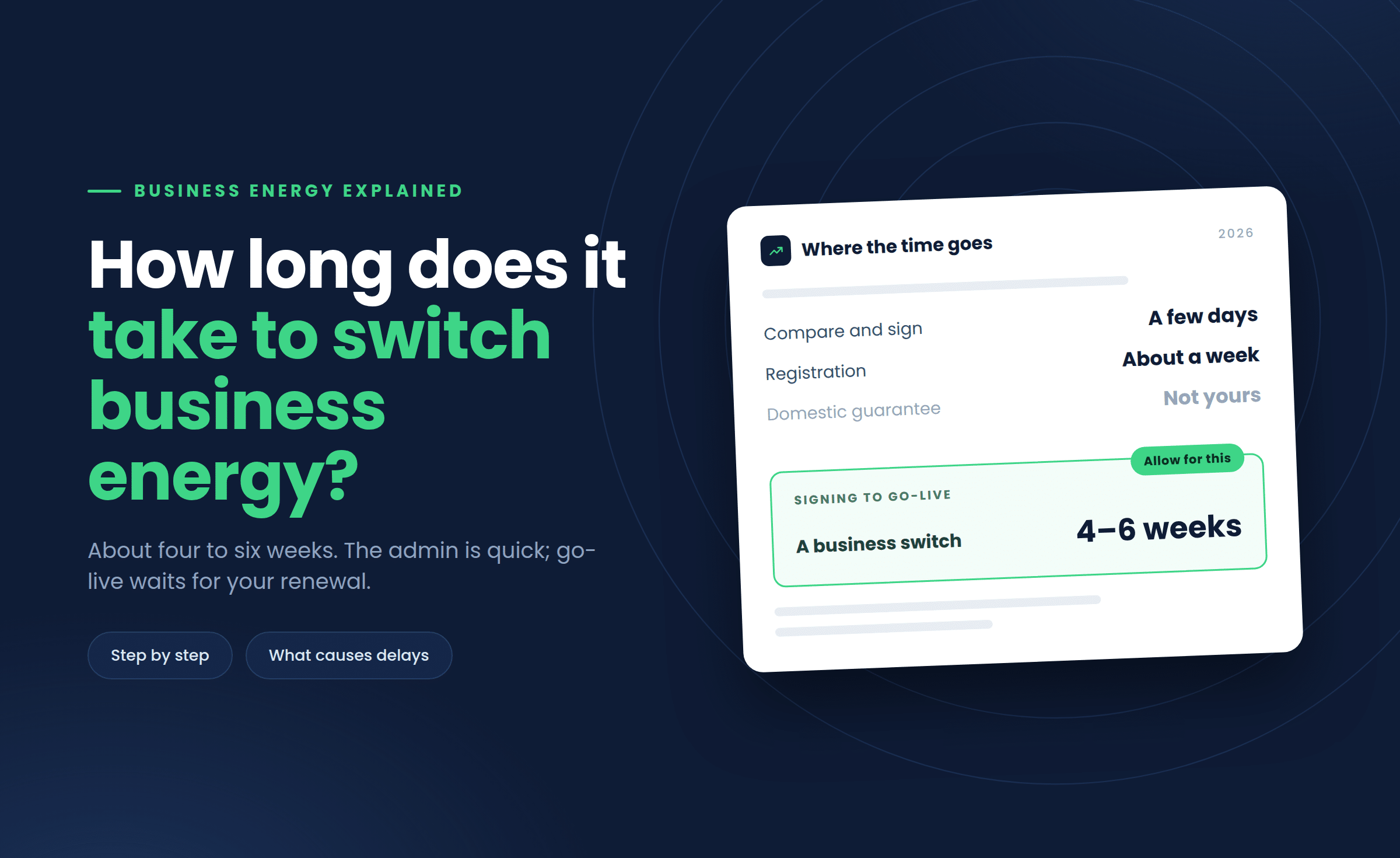
A typical switch takes 4 to 6 weeks to complete once you have accepted a new contract, so there is usually a short window on the deemed rate regardless. Businesses using a broker should have a letter of authority in place to speed the process up.
Comparing a panel of business energy suppliers is the quickest way to see what a fresh negotiated rate would look like against your current deemed one.
How far ahead should you start comparing before renewal?
Start comparing 2 to 3 months before your contract end date. That gives enough time to review offers, agree a new deal and complete a switch before ever touching a deemed rate.
A simple renewal routine
- Diarise the date: the moment a new contract starts.
- Request quotes early: 8 to 12 weeks ahead of expiry.
- Sign before it lapses: not after the current deal ends.
If you miss the window, compare immediately rather than staying on the deemed rate longer than necessary. When you compare, weigh the unit rate against the standing charge, not just the headline price.