
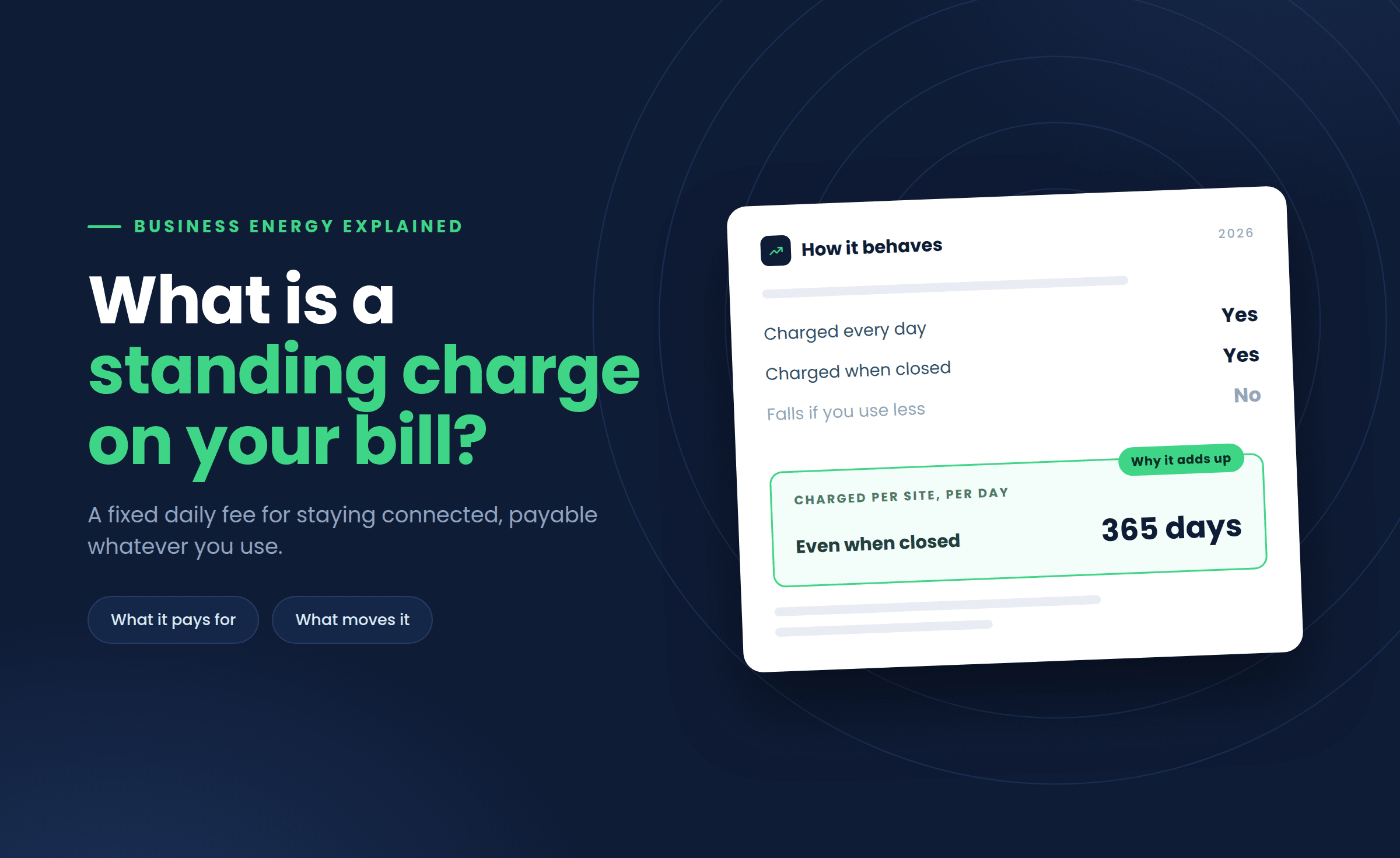
A standing charge is the fixed daily fee a business energy supplier charges for keeping a site connected to the gas or electricity network and available to supply. It is charged every day regardless of how much energy is actually used.
Look at any business energy bill and two very different charges sit side by side: one for the energy consumed, one simply for being connected at all. They are calculated in completely different ways.
Unlike the unit rate, the standing charge does not care whether the site used 10 kWh or 10,000 kWh that day. It is the same daily figure either way, which surprises plenty of business owners the first time they notice it.
Here is what a standing charge covers, how it is calculated, and what it actually means on a real business bill.
What does a standing charge actually pay for?
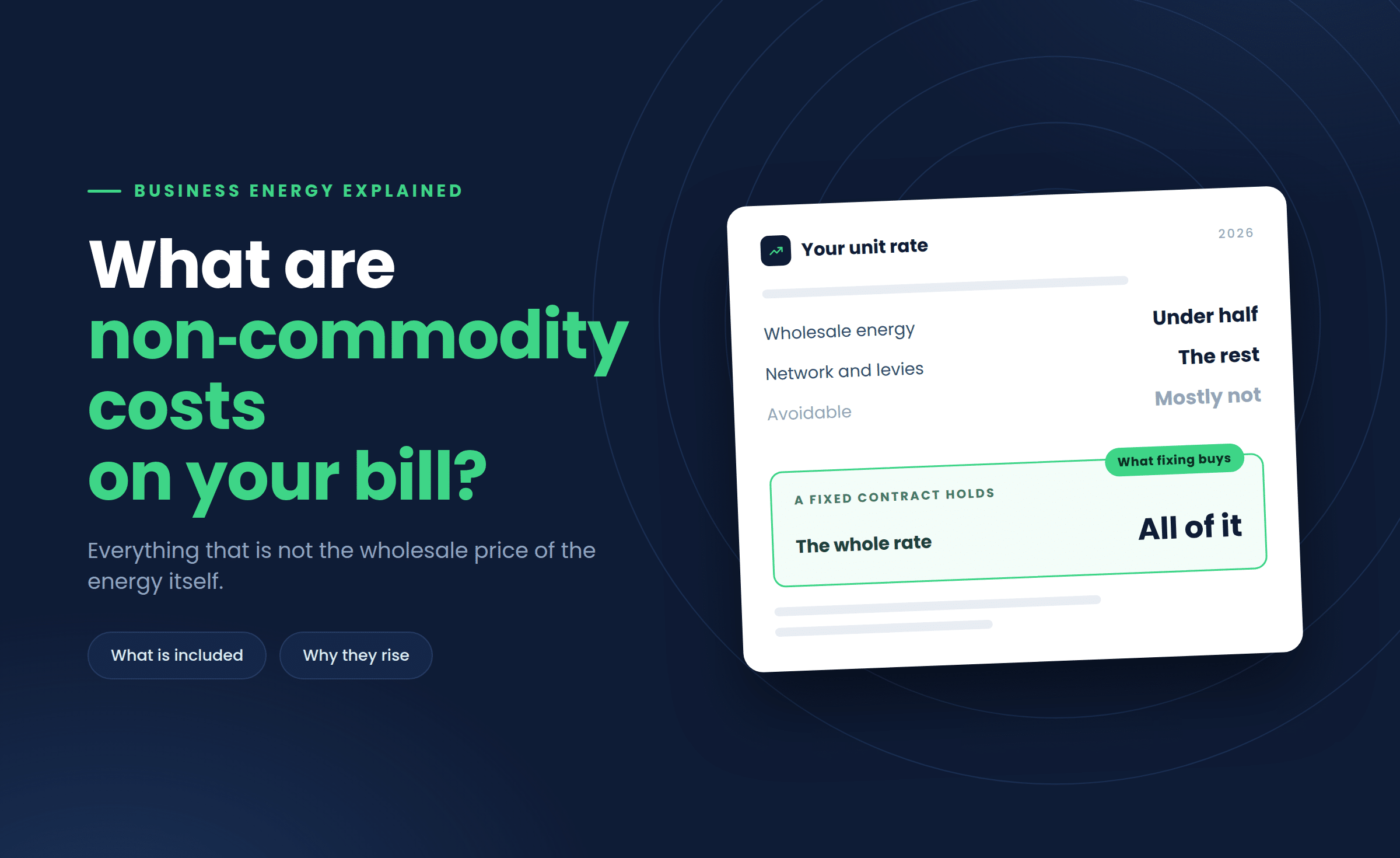
The standing charge covers the fixed cost of keeping your business connected to the network: distribution charges, metering, and a share of the supplier’s own operating costs, not the energy itself.
Where the money goes
A chunk flows to your local distribution network operator to maintain the physical wires and pipes. Another share covers system balancing costs managed by Elexon and NESO, and for gas sites an equivalent share funds the National Gas transmission network.
None of these costs disappear because a business used less energy that day, which is why the charge is fixed. Ofgem’s business energy advice sets out how these network and policy costs are recovered.
Meter reading, billing systems and account management also sit inside that daily fee. A supplier still has to issue a bill and process meter data even for a site using very little power.
How is a business standing charge calculated?
Suppliers set the standing charge based on meter type, region, network operator charges and cost to serve, then add their own margin. There is no single national figure applied to every business meter.
Why region changes the figure
Region matters because network charges differ by distribution area. A site on one network can see a different standing charge to an identical site under another, purely because the underlying network costs differ.
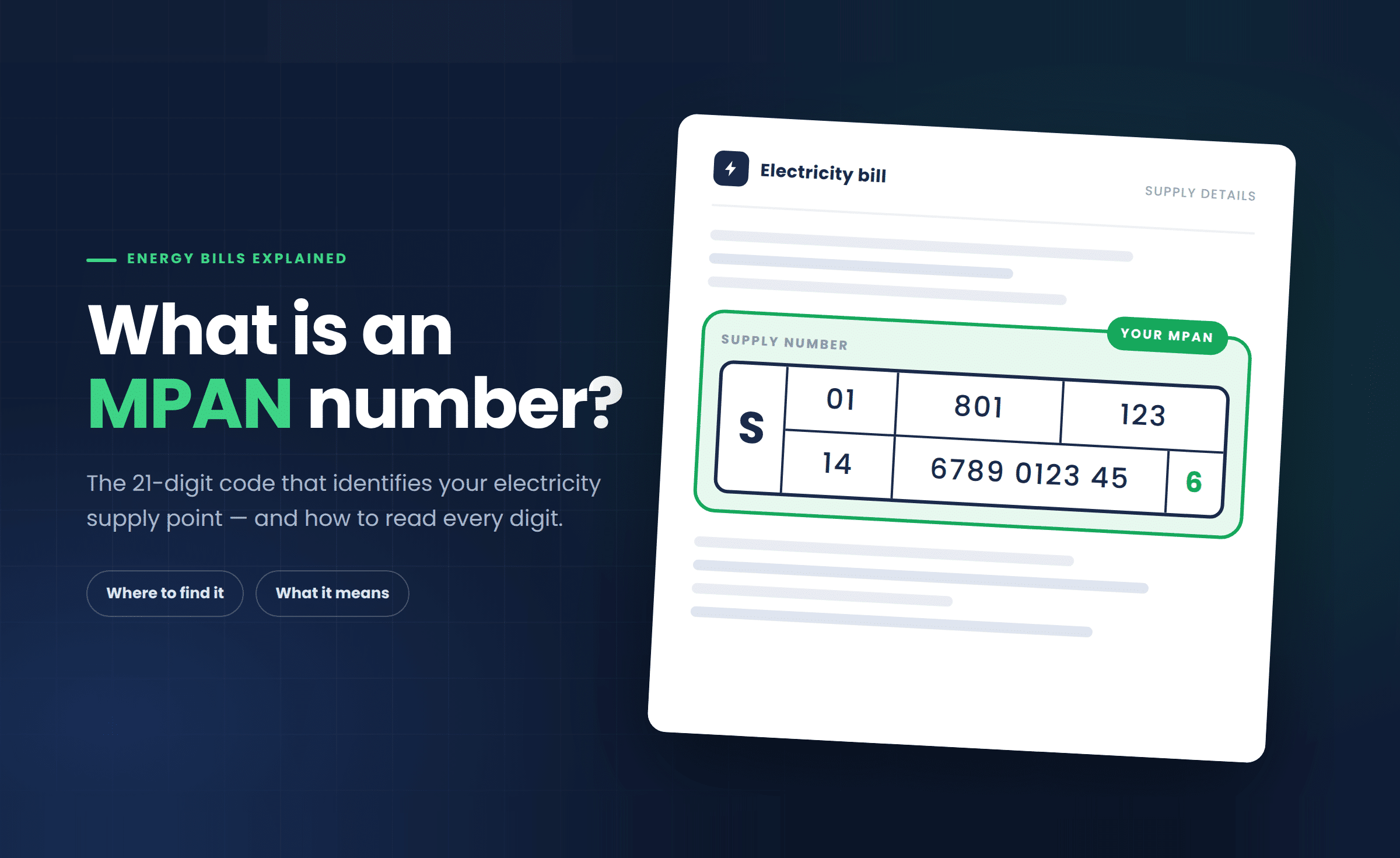
Your MPAN identifies which region a site sits in for electricity, and your MPRN does the equivalent for gas. Both feed directly into how a supplier prices the standing charge on a business electricity quote.
Does a standing charge change with meter type?
Yes. Half-hourly meters, non half-hourly meters and smart meters can each carry different standing charge structures, because they cost suppliers different amounts to read, settle and maintain.
Half-hourly versus profiled sites
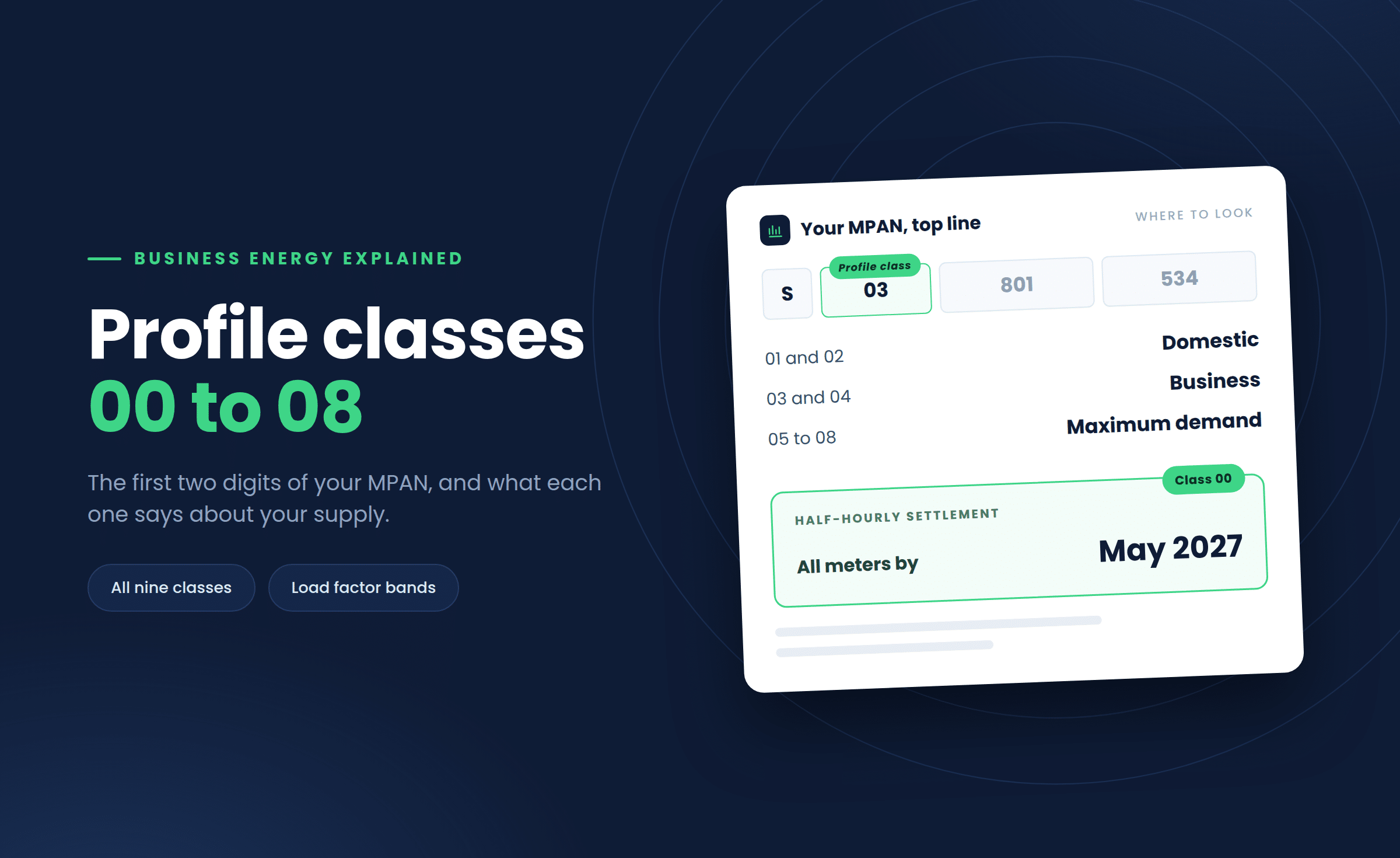
Sites on half-hourly meters typically see more granular, and sometimes higher, standing charges because of the extra settlement data involved. Smaller sites are usually billed against a profile class instead, using estimated consumption patterns rather than half-hourly readings.
Almost every business gas and electricity meter carries a standing charge as standard. Older independently connected sites can see it structured slightly differently, but the same fixed daily principle applies.
Does using less energy reduce the standing charge?
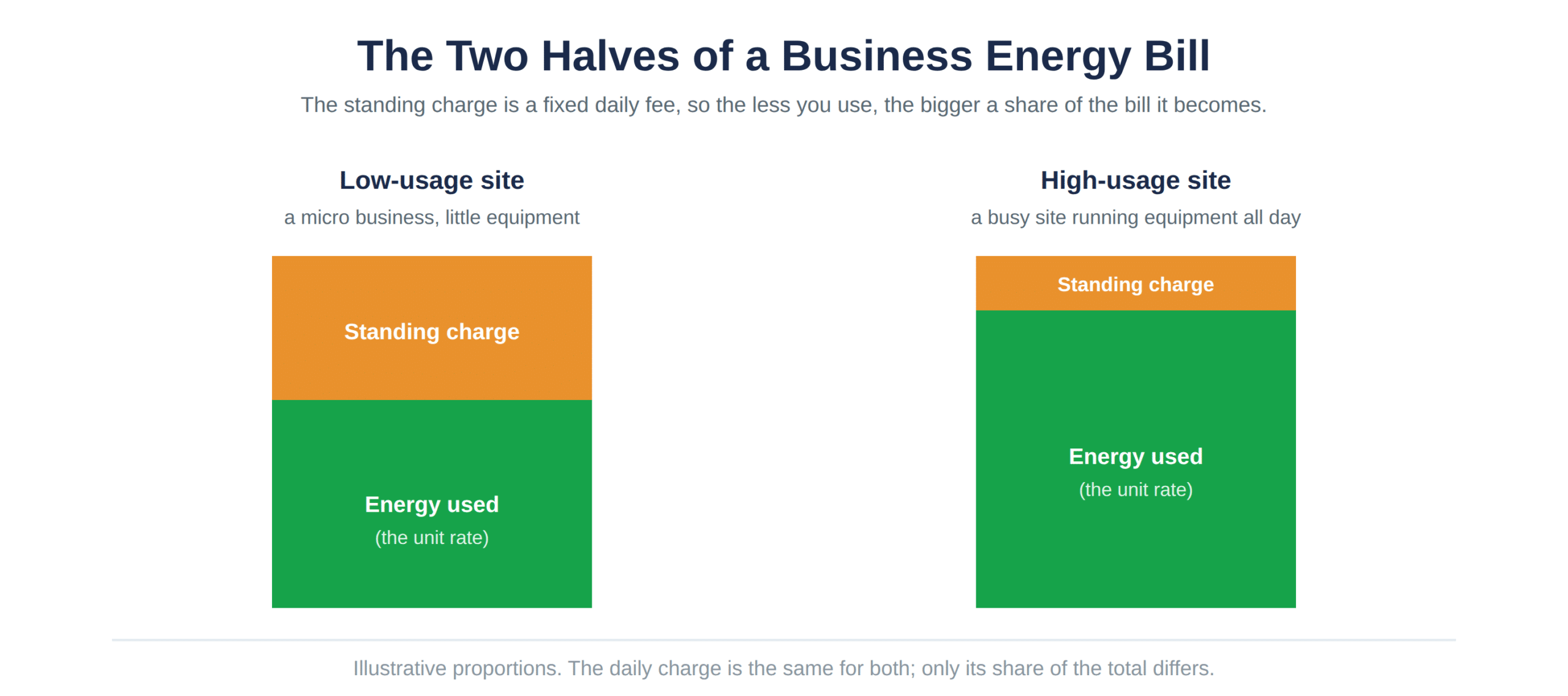
No. The standing charge stays fixed whatever your consumption, which is exactly why it can feel disproportionate for a business that uses very little energy across the year.
Why it hits micro businesses hardest
| Business size | Typical annual electricity use | How much the standing charge matters |
|---|---|---|
| Micro | Up to 5,000 kWh | A large share of a small bill |
| Small | Up to 15,000 kWh | A noticeable share |
| Medium | Up to 25,000 kWh | A modest share |
| Large | 50,000 kWh or more | A small share of a large bill |
The lower a business’s usage, the bigger a share of the total bill the standing charge represents. For a micro business barely running any equipment, the fixed daily fee can matter more than the unit rate, as our guide to micro business energy costs explains.
Can a business avoid paying a standing charge?
Not entirely, but some suppliers offer tariffs with a reduced or zero standing charge that folds the cost into a higher unit rate instead. Whether that is genuinely cheaper depends on your usage. Which supplier carries the lowest daily rate also shifts by region and meter type, as our guide to the cheapest standing charge for business electricity sets out.
Run the total both ways first
A full breakdown of how these tariffs work, and who they suit, is covered in our guide to zero standing charge tariffs. Before switching purely to dodge the charge, it is worth running the total cost both ways.
A tariff built around a higher unit rate can end up costing more once actual usage is factored in, particularly above micro-business consumption. Weighing the unit rate against the standing charge matters more than either figure alone.