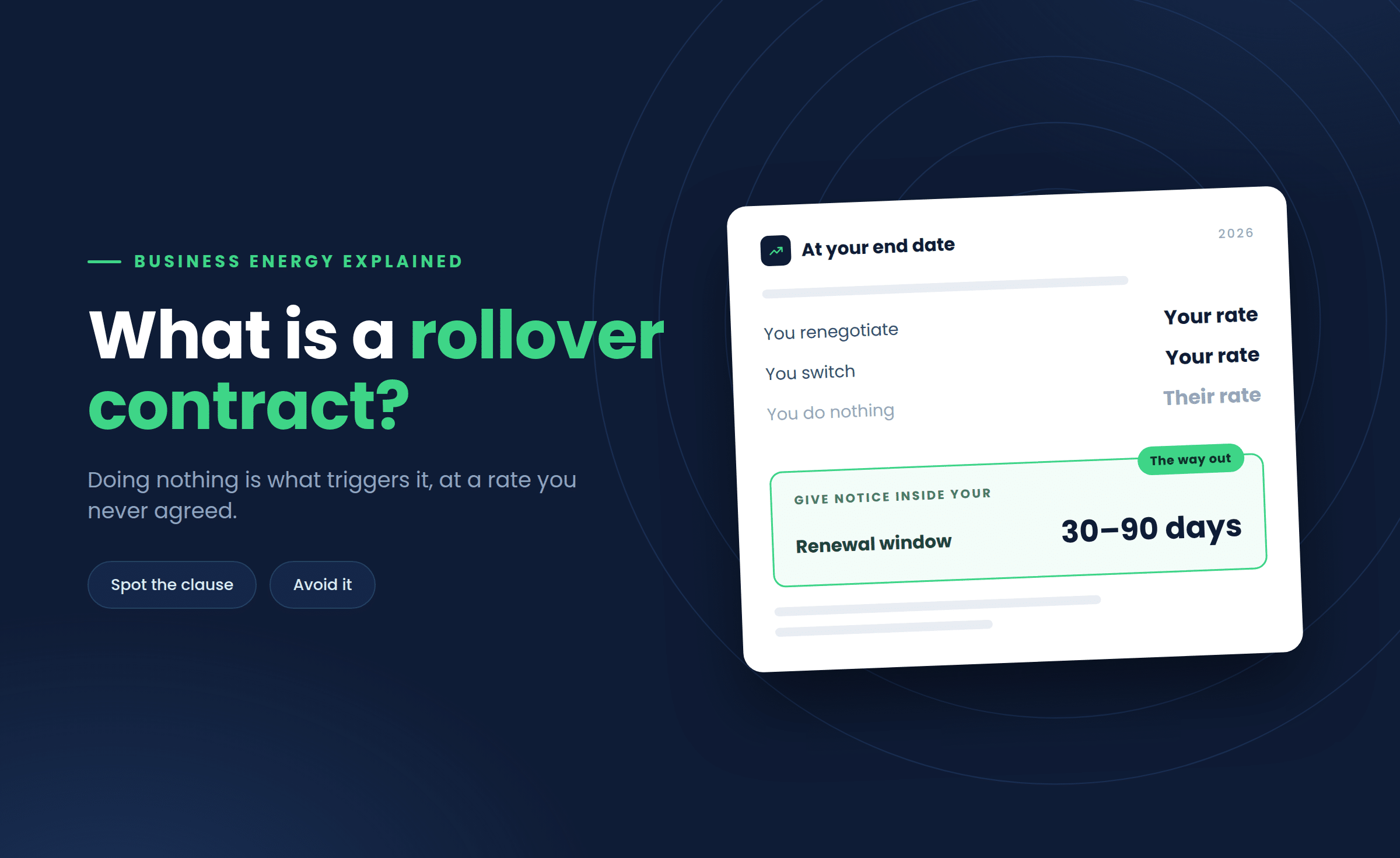

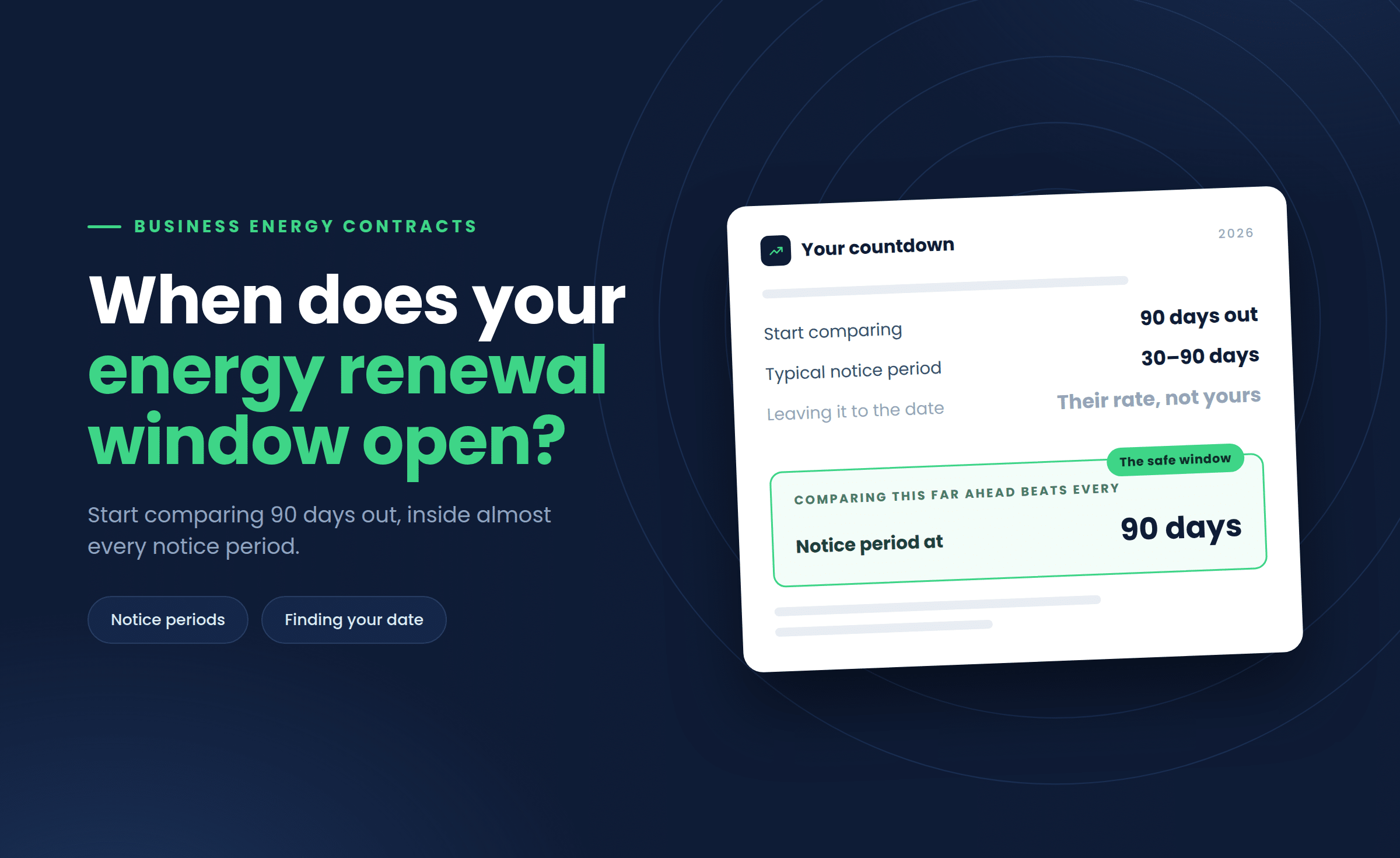
Your business energy renewal window is the period, typically 90 to 180 days before your contract ends, during which you can agree new terms without falling onto a rollover or out-of-contract rate. Miss it, and the default terms kick in automatically.
Most businesses only find out their renewal notice period exists the first time they miss it. By then it is usually too late to negotiate from a strong position.
Suppliers are not obliged to chase you down about this. A letter arrives, sometimes buried among routine post, and the clock is already running by the time you open it, which is why our guide to business energy renewals is worth reading early.
Getting the timing right is one of the simplest ways to control what you pay, and it costs nothing beyond a calendar reminder and a bit of planning.
Why do suppliers set a fixed renewal notice period?
Suppliers need advance notice so they can plan how much energy to buy on your behalf, since wholesale gas and electricity are purchased ahead of when you actually use them.
The rules behind the window
The Retail Energy Code sets out the rules suppliers follow around contract communications, including giving notice before a term ends. That structure exists industry-wide, but the practical reality is simple: there is a specific window, and missing it has a cost.
Microbusinesses get extra protection here. Under Ofgem’s rules for microbusinesses, suppliers can no longer force a fixed contract to auto-renew onto a locked new term, though an expired deal can still roll onto a pricier variable rate, so the window still matters.
When should you start comparing before renewal?
Start comparing 90 days before your contract ends. That is comfortably inside almost every supplier’s notice period and leaves time to switch supplier entirely if a better deal turns up elsewhere.
The timing sweet spot
Comparing too early has its own downside: quotes issued more than a few months out can go stale as wholesale prices move. Ninety days tends to be the sweet spot between accuracy and having enough runway to act.
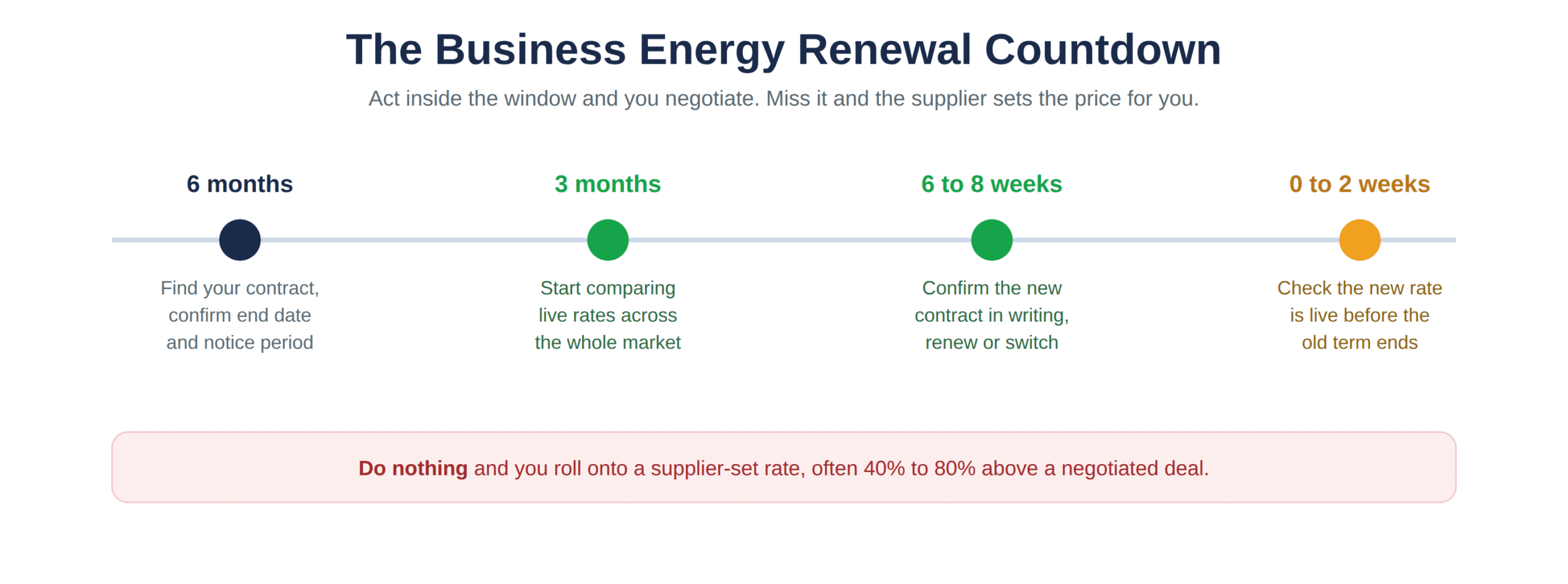
| Months before contract end | What to do |
|---|---|
| 6 months | Locate your contract and confirm your end date and notice period |
| 3 months | Start comparing live rates across the market |
| 6 to 8 weeks | Confirm your new contract in writing, whether renewing or switching |
| 0 to 2 weeks | Check your new supplier or rate is active before the old term ends |
What happens if your renewal window closes before you act?
If you do not act inside the notice period, most suppliers roll you onto a new contract automatically, at a rate set by them rather than one you have negotiated.
The cost of drifting
That rollover rate can run 40% to 80% above a properly negotiated deal, and our guide to business energy contracts covers how the mechanism works. You are not necessarily stuck once it happens, but you have lost the negotiating position you would have had by acting sooner.
The rollover is not a punishment so much as a default. It simply reflects that, with no new agreement in place, the supplier prices in the risk of an open-ended arrangement, and that risk premium lands on you.
How do you find your own renewal date and notice period?
Check your original contract paperwork or your most recent bill, both of which should state your contract end date and the notice period required to change supplier or terms.
Where to look, and the broker question
- Contract confirmation: the original email or letter states both dates.
- Recent bill: often restates the end date and notice terms.
- Your supplier: must confirm both on request if paperwork is missing, quoting your MPAN or MPRN.
If a third-party intermediary holds your letter of authority, ask them to confirm your renewal date directly rather than assuming they are tracking it for you. Half-hourly sites on a half-hourly meter sometimes carry longer notice than smaller accounts, so check your exact figure.
What should you do once the window opens?
Once your window opens, get quotes from across the market, not just your existing supplier’s renewal offer, and compare them against current UK averages before deciding.
Benchmark against the market
Current averages sit at 24.14p/kWh for electricity and 5.17p/kWh for gas across all business sizes, though your rate depends on usage band, meter type and region. An out-of-contract rate, the one you would land on by doing nothing, often runs 40% to 80% higher than a negotiated deal.
Businesses that compare through Utility Saving Expert at this stage save an average of £1,952 a year, and a completed switch typically takes four to six weeks from start to finish.
The single most useful habit is to set a reminder the day you sign, 90 days ahead of the end date. Done once, the renewal window stops being a scramble and becomes a routine five-minute review.